The blockchain industry is evolving from a single-chain ecosystem to a multi-chain one. With a growing number of DeFi protocols, NFT platforms, and on-chain applications deployed across various public chains and Layer2 networks, users frequently need to migrate assets between multiple blockchains. Securely and efficiently transferring assets across chains has become a critical requirement in the multi-chain era.
In the cross-chain infrastructure space, cBridge stands out as a core product from Celer Network. Unlike traditional cross-chain bridges that rely on lock-and-mint mechanisms, cBridge leverages a liquidity network and the State Guardian Network (SGN) to build a cross-chain transfer system that delivers a more seamless user experience. As a key component of Celer's cross-chain ecosystem, cBridge provides foundational support for multi-chain liquidity connections and cross-chain application development.
What Is cBridge?
cBridge is a cross-chain bridge protocol from Celer Network, designed primarily for transferring digital assets between different blockchains.
As the multi-chain ecosystem expands, users' assets are often scattered across multiple networks. Relying on a single blockchain is no longer sufficient to meet application demands, making cross-chain infrastructure an increasingly vital part of the blockchain landscape.
cBridge is designed to reduce the complexity of migrating assets between different blockchains while improving both efficiency and user experience. Through a unified cross-chain framework, users can move assets seamlessly across multiple public chains and Layer2 networks.
What Are the Differences Between cBridge and Traditional Cross-Chain Bridges?
Traditional cross-chain bridges typically operate on a "lock assets — mint synthetic assets" model.
In this model, assets on the source chain are locked in a smart contract, while the target chain generates a corresponding amount of synthetic assets. The entire process relies on cross-chain verification mechanisms for state synchronization.
cBridge, in contrast, adopts a liquidity network model. When users send assets, the liquidity pool on the target chain directly releases the corresponding assets to the user, without needing to mint synthetic tokens each time.
This architecture improves capital efficiency and reduces the complexity involved in cross-chain transfers.
Where Does a Cross-Chain Transfer Begin?
The cross-chain process starts when a user submits a transfer request.
First, the user connects a wallet and selects the source chain, target chain, asset type, and transfer amount. For example, a user may want to transfer USDC from Ethereum to Arbitrum.
The system then calculates the estimated amount to be received and the associated fees, based on the liquidity pool status, cross-chain route, and network conditions.
Once the user confirms the transaction, the cross-chain process officially begins.
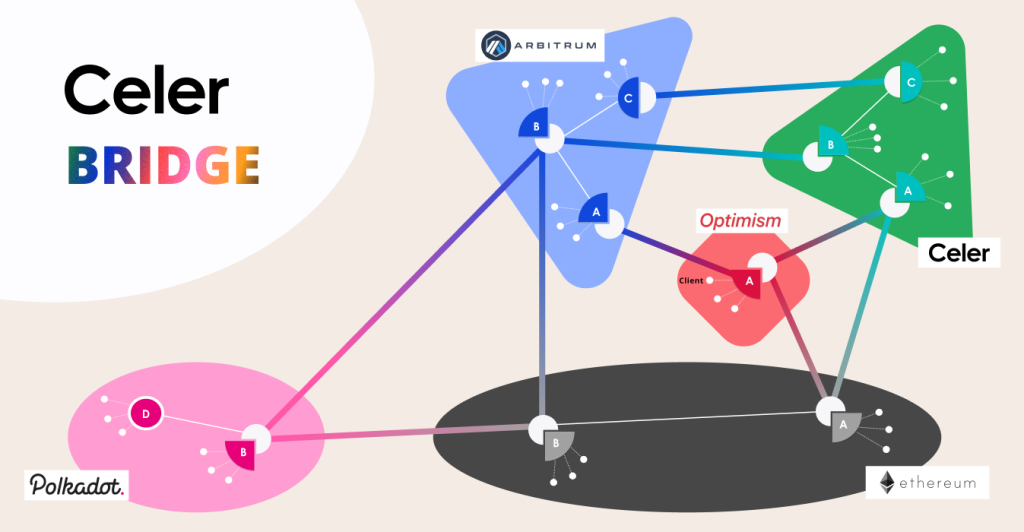
Step 1: Source Chain Assets Enter the Cross-Chain System
After the user initiates a transaction, the assets are sent to a designated smart contract or liquidity pool on the source chain.
The blockchain records the transaction and generates corresponding on-chain events.
These events contain key data such as the transfer amount, target chain information, receiving address, and timestamp.
The cross-chain system then begins processing these state changes.
Step 2: SGN Monitors and Confirms Cross-Chain Events
Once the assets enter the cross-chain system, the State Guardian Network (SGN) begins verification.
SGN nodes continuously monitor cross-chain events across multiple blockchain networks. When a new transfer request is detected, the verification nodes collect relevant data and check the event's authenticity.
Verification includes confirming that the transaction executed successfully, the asset amount is correct, and the target chain information meets requirements.
After verification is complete, SGN synchronizes the relevant state across the entire verification network.
Step 3: Cross-Chain Message Is Sent to the Target Chain
After state confirmation, the cross-chain message is transmitted to the target chain.
This process is part of the cross-chain communication mechanism. The state changes generated on the source chain must be correctly identified and executed by the target chain.
SGN coordinates the message synchronization process to ensure the target chain receives a credible state proof.
Only verified messages are accepted by the target chain.
Step 4: Target Chain Releases Corresponding Assets
When the target chain receives the verification result, the asset release process begins.
If using the liquidity network model, the target chain's liquidity pool sends the corresponding amount of assets to the user's specified address.
For the user, this means the cross-chain operation is complete, allowing them to use the assets on the target chain for trading, DeFi, or other applications.
The entire process typically requires no additional manual intervention.
Step 5: Protocol Completes Backend Liquidity Settlement
After the user receives the assets, the cross-chain system continues with internal settlement.
Because liquidity pool balances on different chains change with user activity, the protocol must continuously rebalance funds.
These operations are usually handled automatically by the liquidity network and related mechanisms.
Backend settlement helps maintain funding supply across chains, ensuring that future cross-chain transactions can proceed smoothly.
What Role Does SGN Play in the Cross-Chain Process?
SGN is a critical component of cBridge's security framework.
One of the biggest challenges for cross-chain bridges is verifying the authenticity of states across different blockchains. Since a blockchain cannot directly verify data from another chain, a trusted verification layer is essential for coordination.
SGN uses a decentralized verification network to confirm the authenticity of source chain events and synchronizes the results to the target chain.
This approach reduces the risks associated with centralized verification models while enhancing the reliability of cross-chain operations.
What Role Do Liquidity Providers Play in cBridge?
Liquidity providers are essential participants in cBridge's operation.
They supply funds to liquidity pools on different blockchains, enabling the protocol to release assets quickly on the target chain.
When a user initiates a cross-chain transaction, the assets on the target chain typically come from the liquidity pool, rather than waiting for a complex re-minting process.
Thus, liquidity providers form the foundation of cBridge's cross-chain capability.
What Fees Are Incurred in a Cross-Chain Transfer?
Cross-chain transfers typically involve multiple costs.
First, there is the source chain network fee, which covers the cost of executing the blockchain transaction.
Second, there is a cross-chain service fee to support protocol operations and liquidity network maintenance.
Some target chain operations may also incur additional network fees.
Actual fees depend on network congestion, asset type, and the cross-chain route.
What Factors Affect Cross-Chain Transfer Speed?
Cross-chain transfer speed is influenced by several factors.
The transaction confirmation time on the source chain is often the most significant factor. Network congestion can prolong confirmation.
The SGN verification process and cross-chain message synchronization also take time.
Additionally, the target chain's state and the liquidity pool's available funds affect the final arrival speed.
How Does cBridge Ensure Cross-Chain Security?
Security is a top design priority for cross-chain bridges.
cBridge builds a multi-layered security system using smart contracts, the liquidity network, and the SGN verification network.
Smart contracts manage on-chain logic, SGN verifies cross-chain states, and the liquidity network provides fund support.
This layered architecture reduces the risk of single points of failure and enhances the overall security of the cross-chain system.
What Is the Relationship Between cBridge and Celer Inter-Chain Messaging?
cBridge handles cross-chain asset transfers, while Inter-Chain Messaging (IM) manages cross-chain message delivery.
Together, asset cross-chain and message cross-chain form Celer's cross-chain interoperability suite.
When building cross-chain applications, developers can use cBridge for asset movement and IM for cross-chain communication between smart contracts.
Combined, they support more complex multi-chain application scenarios.
Summary
cBridge is a cross-chain bridge protocol from Celer Network that enables asset movement between different blockchains through a liquidity network, the State Guardian Network (SGN), and cross-chain messaging mechanisms.
A complete cross-chain transfer typically involves multiple steps: depositing assets on the source chain, SGN state verification, cross-chain message synchronization, asset release on the target chain, and backend liquidity settlement.
FAQs
What steps does a cBridge cross-chain transfer go through?
A complete transfer usually goes through five main stages: depositing assets on the source chain, SGN state verification, cross-chain message synchronization, asset release on the target chain, and backend liquidity network settlement.
What is SGN responsible for in the cross-chain process?
The State Guardian Network (SGN) verifies the authenticity of cross-chain events, synchronizes state information, and coordinates cross-chain message execution. It is a key component of cBridge's security architecture.
Does cBridge use a lock-and-mint model?
cBridge primarily uses the liquidity network model for cross-chain transfers, though the specific implementation may vary depending on the supported assets and networks.
Why do cross-chain transfers need a liquidity pool?
The liquidity pool directly releases assets to users on the target chain, improving cross-chain efficiency and eliminating the wait time for asset minting in traditional cross-chain bridges.
What is the difference between cBridge and ordinary cross-chain bridges?
In addition to supporting asset cross-chain transfers, cBridge works together with Celer Inter-Chain Messaging to form a cross-chain interoperability infrastructure, enabling developers to build multi-chain applications with cross-chain communication capabilities.







