The expansion of the new energy vehicle, energy storage, and clean energy markets is steadily driving demand for lithium batteries. Since lithium is a critical raw material for power batteries, lithium mining companies, battery manufacturers, and new energy supply chain firms are forming a highly interdependent market structure.
From an industry perspective, LIT tracks not only lithium price fluctuations but also the overall health of the global new energy supply chain. Shifts in lithium supply and demand, battery technology advancements, and new energy vehicle sales trends are key factors influencing LIT’s price movements.
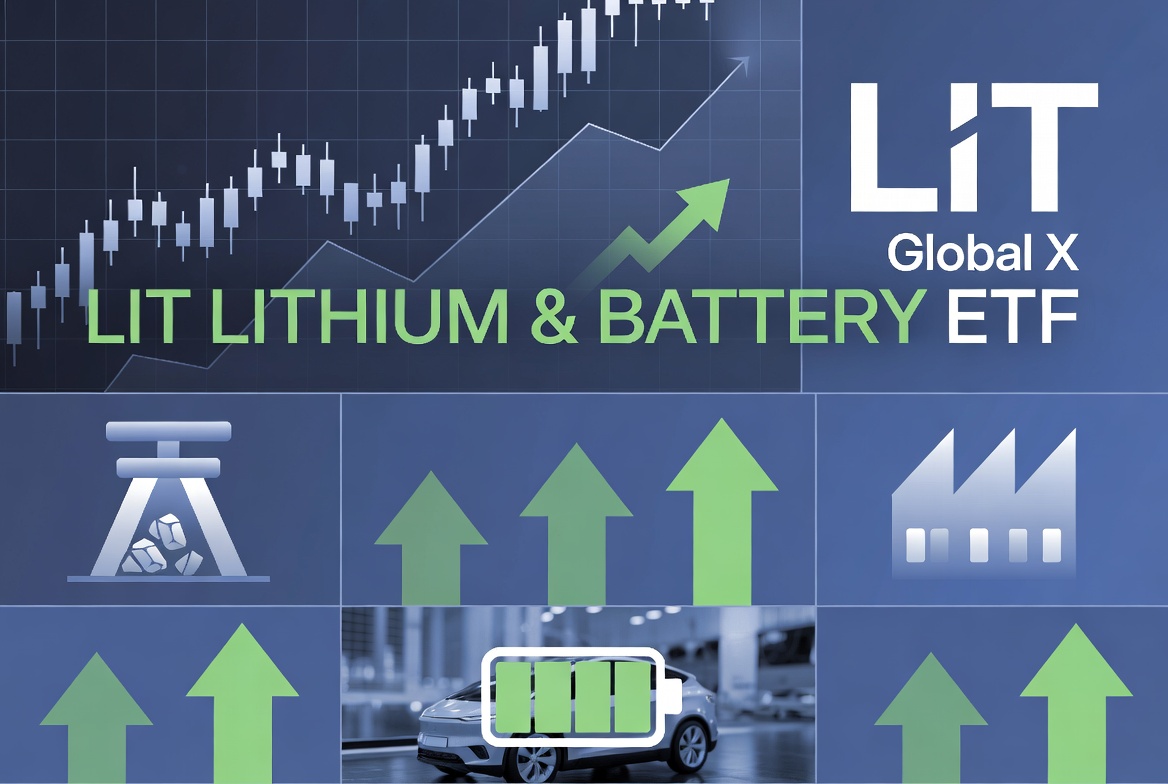
Core Positioning of LIT
LIT’s core mission is to track the market performance of companies across the global lithium battery supply chain. Unlike broad-based ETFs, LIT zeroes in on lithium resources and battery systems within the new energy sector.
Structurally, LIT functions as a “new energy supply chain ETF.” Its holdings typically include not only lithium miners but also battery materials producers, battery manufacturers, and other players in the new energy ecosystem.
This design means LIT does not rely on any single company’s performance; instead, it reflects the broader dynamics of the entire lithium battery value chain.
The market logic behind LIT essentially mirrors the long-term global demand for energy storage systems and lithium resources in the new energy era.
Why LIT Tracks the Lithium Battery Supply Chain
LIT’s focus on the lithium battery supply chain stems from the fact that lithium batteries have become a cornerstone of the new energy market. New energy vehicles, energy storage systems, and portable electronics all rely on lithium-ion technology for energy storage.
While traditional energy systems depend on oil and fossil fuels, the new energy industry prioritizes electrical energy storage. As a result, lithium has emerged as a vital industrial commodity for the modern era.
From a value-chain perspective, rising new energy vehicle sales typically boost demand for power batteries, which in turn drives growth across lithium mining, battery materials processing, and battery manufacturing.
This interconnected dynamic has forged a cohesive market ecosystem around the lithium battery supply chain, and LIT seeks to track these industry shifts through an ETF structure.
LIT’s portfolio is built around lithium resources and the battery value chain. Unlike traditional index ETFs that emphasize market-cap weighting, LIT prioritizes thematic coverage.
First, LIT allocates to lithium mining companies responsible for resource extraction and raw material supply. Next, it includes battery materials firms and power battery manufacturers. Some new energy vehicle supply chain companies may also be included.
The table below outlines LIT’s typical value chain breakdown:
| Value Chain Segment |
Primary Role |
| Lithium Miners |
Supply lithium resources |
| Materials Companies |
Process battery materials |
| Battery Manufacturers |
Produce power batteries |
| New Energy Companies |
Deploy battery systems |
This structure means LIT does not simply track lithium prices—it captures the full spectrum of the global lithium battery supply chain.
How Lithium Mining Companies Affect LIT’s Volatility
Lithium mining companies are a key driver of LIT’s volatility, given lithium’s role as a critical raw material for power batteries. As the new energy vehicle and storage markets expand, demand for lithium resources typically rises in tandem.
Lithium miners generate revenue primarily from extraction and sales. When lithium prices climb, their profitability often improves, making their stock prices a significant influence on LIT’s performance.
Meanwhile, global lithium supply and demand dynamics shape market expectations for the entire new energy supply chain. Tight supply can pressure the cost structure of power batteries.
This means lithium price fluctuations affect not only miners but also the broader lithium battery ETF market.
How Battery Manufacturing Companies Generate Revenue
Battery manufacturers are another major component of LIT. Unlike lithium miners, which rely on resource prices, battery companies focus on technology, production scale, and downstream demand.
As new energy vehicle sales grow, automakers require large volumes of power batteries, making battery revenue highly correlated with vehicle sales.
Energy storage markets also drive demand: large-scale storage systems, home batteries, and renewable energy grids all depend on lithium-ion technology.
From a business standpoint, battery manufacturers aim to gain a competitive edge through mass production and technological advancement. These dynamics further influence LIT’s volatility.
What Sets LIT Apart from New Energy ETFs
The key difference between LIT and traditional new energy ETFs lies in their sector focus. Traditional new energy ETFs often cover solar, wind, grid infrastructure, and equipment, while LIT concentrates specifically on the lithium battery supply chain.
Traditional new energy ETFs are more like “comprehensive energy transition ETFs,” whereas LIT emphasizes lithium resources, battery manufacturing, and energy storage.
As a result, LIT is generally more sensitive to lithium prices and new energy vehicle market trends. Shifts in lithium supply and demand directly impact the profitability and expectations of the supply chain.
This focused approach means LIT’s industry concentration is typically higher than that of broad-based new energy ETFs, which can lead to greater volatility.
Main Use Cases for LIT
LIT is primarily used to track the new energy supply chain and lithium resource markets. Many investors turn to LIT to gauge the performance of global new energy vehicles and power batteries.
It is also widely regarded as a representative ETF for the new energy supply chain. Factors such as lithium prices, battery demand, and energy storage market trends all influence LIT’s performance.
From a market perspective, LIT reflects both the lithium resource market and the long-term demand for energy storage in the global energy transition.
Additionally, some investors use LIT to monitor upstream resources and midstream battery manufacturing activity.
Summary
LIT (Global X Lithium Battery ETF) is a thematic ETF focused on lithium resources, battery manufacturing, and the new energy supply chain. Its market performance is shaped by lithium prices, new energy vehicle sales, and global energy transition trends.
Compared to traditional new energy ETFs, LIT places greater emphasis on the lithium battery supply chain and energy storage systems, making it more sensitive to changes in lithium supply and battery market developments.
As the new energy market continues to grow, the importance of lithium, battery manufacturing, and energy storage is rising. LIT serves as a key tool for market participants to observe the new energy supply chain.
FAQ
What is the LIT ETF?
LIT is a thematic ETF that invests in lithium resources, battery manufacturing, and new energy supply chain companies, designed to track the global lithium battery industry.
Why is LIT sensitive to lithium prices?
Lithium is a critical raw material for power batteries. Changes in lithium prices affect the profitability of miners and the overall sentiment around the new energy supply chain.
Does LIT invest in lithium miners?
Yes, LIT typically holds shares of lithium mining companies, as they are a key upstream segment of the lithium battery value chain.
How is LIT different from a regular new energy ETF?
LIT is more narrowly focused on lithium resources and power batteries, while regular new energy ETFs often cover broader areas such as solar, wind, and equipment.
Why do new energy vehicle sales affect LIT?
New energy vehicle production requires significant volumes of power batteries, which depend on lithium. Therefore, changes in vehicle sales directly impact LIT’s performance.