The blockchain industry initially centered on crypto-native assets, yet the vast majority of value in global financial markets still resides in real-world assets (RWAs) like real estate, bonds, funds, credit products, and commodities.
Traditional asset markets have long struggled with issues such as illiquidity, low cross-border efficiency, high entry barriers, and long settlement cycles. Unlike conventional asset digitization platforms, Plume focuses not only on tokenizing assets but also on ensuring their liquidity and composability once they enter the on-chain financial ecosystem. Through its RWAfi infrastructure, real-world assets can engage in lending, yield protocols, liquidity pools, and cross-chain applications, unlocking a broader range of financial use cases.
What Is RWA Tokenization?
RWA tokenization is the process of converting ownership, income rights, or other economic interests in real-world assets into digital tokens on the blockchain, managed and circulated via smart contracts.
Tokens themselves are not direct equivalents of the underlying assets; rather, they represent a bundle of rights linked to those assets.
For instance, a tokenized real estate property can represent ownership shares or income rights through blockchain tokens. Investors holding these tokens gain the corresponding rights to the underlying real-world asset.
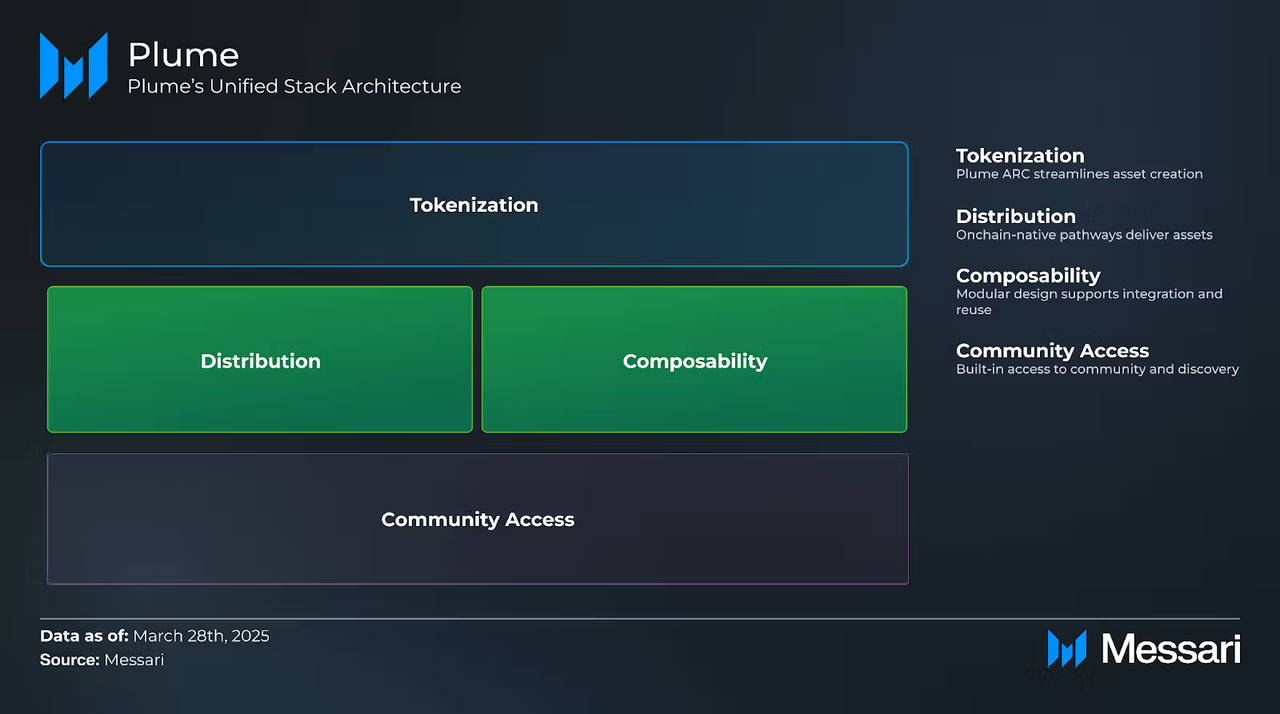
On the Plume network, tokenization goes beyond simply recording an asset on-chain—it enables those assets to actively participate in on-chain financial activities.
What Is the RWA Tokenization Process on Plume?
Plume's on-chain asset onboarding process typically unfolds across six core stages:
-
Asset Screening and Evaluation
-
Legal Structure Design
-
Asset Verification and Custody
-
On-Chain Token Issuance
-
Compliance Management and Access Control
-
DeFi Ecosystem Integration
Each stage represents a critical link between real-world assets and the blockchain, together forming a complete RWA lifecycle.
How Does the Asset Screening and Evaluation Phase Work on Plume?
Not all real-world assets are suitable for tokenization.
Issuers must first ensure the assets have clear title, stable value drivers, and verifiable legal ownership.
Common asset types include:
-
Treasury Bonds
-
Real Estate
-
Private Credit
-
Corporate Bonds
-
Infrastructure Projects
-
Commodities
-
Carbon Credits
Before assets go on-chain, they typically undergo valuation, risk assessment, and compliance review by third-party institutions.
This process sets the foundation for subsequent issuance and market circulation.
How Does Plume Verify Asset Authenticity?
The credibility of real-world assets is the bedrock of the RWA ecosystem.
Plume establishes verification mechanisms across multiple layers:
Third-Party Audits
Professional firms verify asset authenticity, ownership, and financial records.
Custody Services
Assets are typically held by independent custodians, reducing issuer-side control risk.
Off-Chain Data Synchronization
Oracles and data providers continuously stream asset status updates to the blockchain.
Periodic Disclosure Mechanisms
Asset operational data, yield performance, and risk events are regularly updated and disclosed.
These measures collectively ensure consistency between on-chain tokens and the underlying real-world assets.
How Is On-Chain Token Issuance Completed?
Once asset verification and legal structuring are finished, the process moves to on-chain issuance.
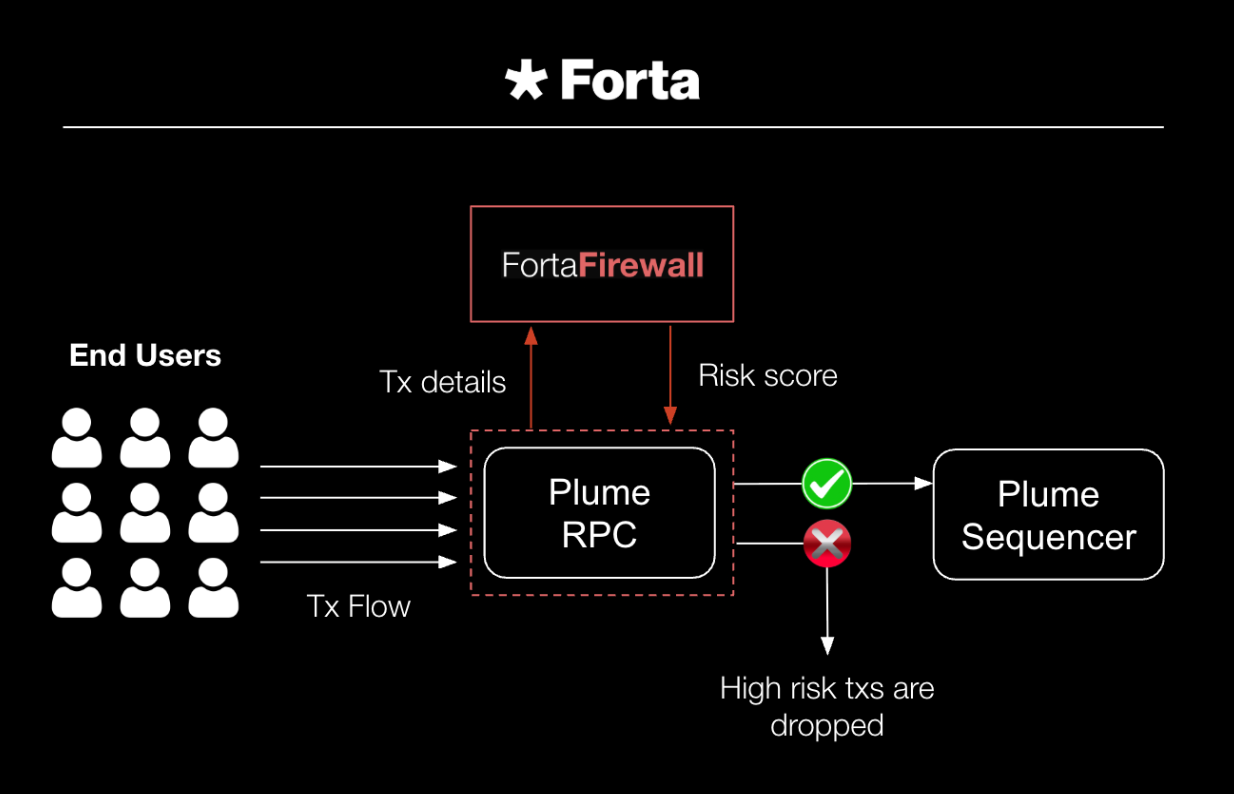
Plume provides specialized issuance tools that allow issuers to create digital tokens representing real-world asset rights.
Smart contracts define:
After issuance, the asset formally enters the blockchain network, gaining programmable financial properties.
How Does Plume Handle Compliance?
Real-world assets are often subject to securities regulations, anti-money laundering (AML), and know-your-customer (KYC) requirements.
Plume embeds compliance modules directly into its infrastructure layer.
Investor Identity Verification
Users accessing specific assets must complete identity verification.
Access Control
Different regions or investor categories may have different access rules.
Transfer Restrictions
Some assets may limit transferability or holder eligibility.
Regulatory Adaptation
Issuers can adjust asset management rules based on local laws.
This design enables real-world assets to meet regulatory requirements while entering the on-chain market.
What Happens to Assets After Entering DeFi?
Traditional RWA platforms typically conclude their workflow after asset issuance.
Plume's RWAfi model goes further by actively driving assets into on-chain financial activities.
Real-world asset tokens can be used for:
-
Lending protocol collateral
-
Yield aggregation strategies
-
Liquidity pool construction
-
Automated asset management
-
Cross-chain liquidity networks
Through these use cases, RWAs gain financial composability comparable to native crypto assets.
This is a key differentiator between RWAfi and traditional RWA models.
How Does Plume's RWA Tokenization Differ from Traditional Asset Securitization?
| Comparison Dimension |
Plume RWA Tokenization |
Traditional Asset Securitization |
| Issuance Method |
Blockchain issuance |
Financial institution issuance |
| Trading Time |
Near real-time settlement |
Fixed trading hours |
| Market Scope |
Global on-chain market |
Regional markets |
| Liquidity |
Access to DeFi |
Reliance on traditional markets |
| Income Distribution |
Automated via smart contracts |
Manual or institutional processing |
| Programmability |
High |
Low |
Asset securitization primarily focuses on financing, whereas RWAfi emphasizes ongoing circulation and utilization within the digital financial ecosystem.
Summary
Plume's RWA tokenization framework spans asset screening, legal structuring, verification, on-chain issuance, compliance, and DeFi integration. The overarching goal is not just to put RWAs on-chain, but to enable them to continuously circulate and generate value within the blockchain financial system.
Compared to traditional RWA projects, Plume's RWAfi model prioritizes financial composability, allowing real-world assets to participate in lending, yield management, and cross-chain movements just like native crypto assets.
FAQs
What does RWA tokenization mean?
RWA tokenization refers to mapping the rights of real-world assets—like real estate, bonds, and private credit—into digital tokens on the blockchain, managed and distributed via smart contracts.
What steps are involved in Plume's RWA tokenization process?
Plume's tokenization process typically includes asset screening, legal structure design, asset verification, custody arrangements, on-chain issuance, compliance management, and DeFi ecosystem integration.
Why do real-world assets need a custodian?
Custodians safeguard real-world assets and monitor their status, ensuring that the rights represented by on-chain tokens are genuine and reducing asset management risk.
What types of assets does Plume support?
Plume supports real estate, Treasury bonds, private credit, corporate bonds, commodities, infrastructure projects, and other real-world assets with clear property rights and income structures.