As artificial intelligence, space technology, advanced manufacturing, and other sectors continue to attract capital, the rising valuations of private companies have drawn growing attention from the market. Yet the traditional private equity market has long been marked by high entry barriers, limited liquidity, and strict access restrictions.
The emergence of PreStocks offers a new practical example for the development of tokenized equity and on-chain capital markets. By combining an SPV structure, blockchain settlement systems, and around-the-clock trading markets, PreStocks aims to address some of the key challenges in traditional Pre-IPO investing, including high participation thresholds, insufficient liquidity, and difficulties in cross-border access.
What Is PreStocks?
For a long time, Pre-IPO equity investment has mainly been available to venture capital firms, family offices, high-net-worth investors, and company insiders. Ordinary investors have often found it difficult to access high-growth technology companies during their expansion stage and could usually only invest through public markets after those companies went public.
As a result, a significant part of enterprise value creation has taken place within the private market.
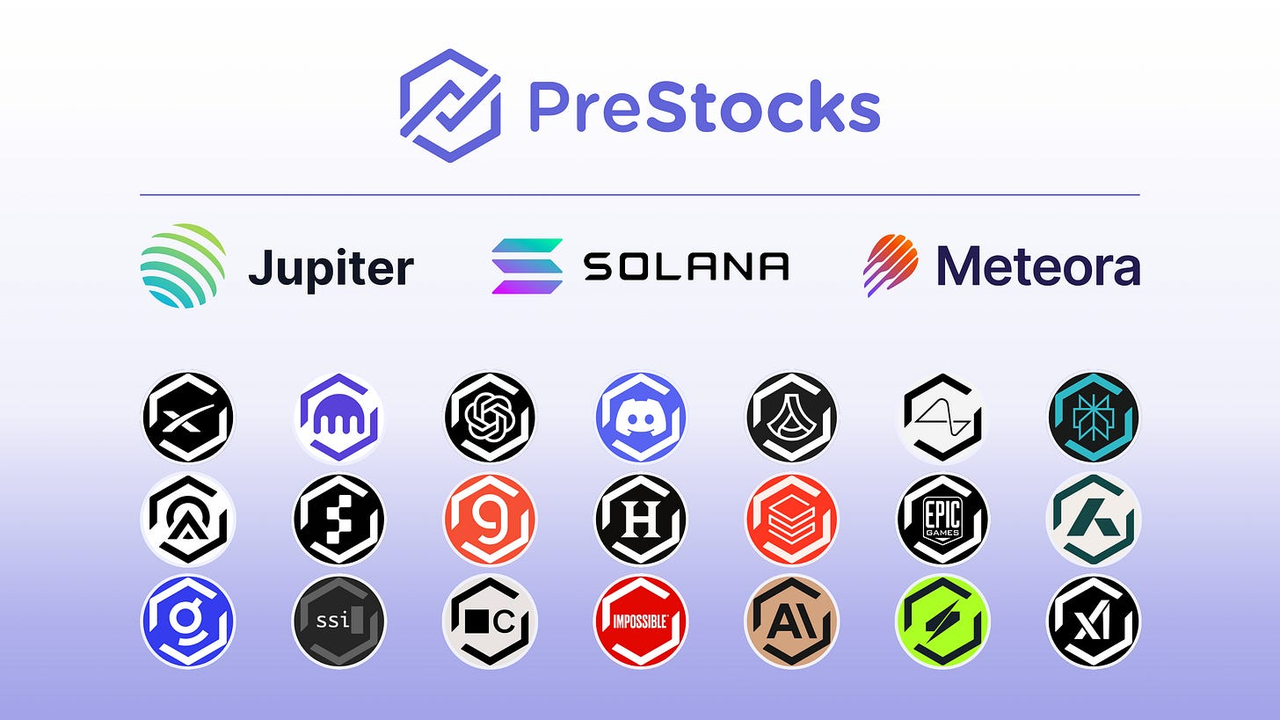
PreStocks is a platform focused on tokenizing the economic interests of Pre-IPO companies. It uses blockchain technology to map the value of private companies into on-chain assets, allowing users to gain exposure to popular technology companies that would traditionally be available only in private markets. The platform currently covers closely watched private companies such as OpenAI, SpaceX, Anthropic, Anduril, and Neuralink, and it builds its trading infrastructure on the Solana network.
How Does PreStocks Work?
The core mechanism of PreStocks is built on an SPV, or Special Purpose Vehicle, structure.
The platform uses independent legal entities to hold interests related to the target companies, then maps the economic value of those interests into tokens on the blockchain. Users are not buying official shares of the target company. Instead, they are buying on-chain assets that represent exposure to the corresponding economic interests.
At the trading level, PreStocks uses the Solana network to provide a fast, low-cost settlement environment. Tokens can be traded on-chain around the clock, without being limited by traditional securities market trading hours.
What Role Does the SPV Structure Play in PreStocks?
The SPV is a key component of the PreStocks operating model.
Traditional private equity transactions often involve complex legal agreements, share registration procedures, and investor qualification reviews. The role of the SPV is to centrally manage the relevant interests and hold the target assets through a single entity.
Once the SPV holds enterprise interests, the platform can issue on-chain tokens based on the corresponding economic value. After holding these tokens, users can gain economic exposure linked to changes in the target company’s valuation, without directly becoming shareholders of the company.
This structure is widely used in real-world asset tokenization and is also applied when mapping assets such as real estate, bonds, and fund shares onto the blockchain.
How Are PreStocks Tokens Different from Real Stocks?
Many users easily confuse tokenized stocks with real stocks, but the two are fundamentally different.
Real stocks represent partial ownership of a company and usually include voting rights, dividend rights, and shareholder rights. PreStocks tokens mainly reflect exposure to the economic value of the relevant company and do not directly grant users shareholder status.
Therefore, holding PreStocks tokens corresponding to OpenAI or SpaceX does not mean the holder owns registered shares in those companies.
What Types of Assets Does PreStocks Support?
PreStocks mainly focuses on some of the world’s most closely watched private technology companies.
These companies typically have strong market attention, established financing histories, and clear growth expectations, making them important targets in the tokenization market.
Common asset categories currently include:
| Company |
Sector |
Traditional Pre-IPO Platform |
| OpenAI |
Artificial Intelligence |
OTC agreement trading |
| SpaceX |
Space Technology |
Several days to several weeks |
| Anthropic |
Artificial Intelligence |
Limited hours |
| Anduril |
Defense Technology |
Equity agreement |
| Neuralink |
Brain-computer Interface |
Relatively limited |
| Figure AI |
Robotics |
|
| Polymarket |
Prediction Market |
|
These companies have not yet been publicly listed in traditional capital markets, so their price discovery mainly depends on private market transactions and financing activities.
Traditional Pre-IPO platforms are usually open only to accredited investors and often require high minimum investment amounts.
Participants typically need to complete investments through complex legal document signing, qualification reviews, and long lock-up arrangements.
Compared with traditional Pre-IPO platforms, PreStocks places greater emphasis on on-chain asset liquidity and a digital trading experience.
| Dimension |
PreStocks |
Traditional Pre-IPO Platform |
| Trading Method |
On-chain trading |
OTC agreement trading |
| Settlement Time |
Real-time settlement |
Several days to several weeks |
| Market Hours |
24/7 |
Limited hours |
| Asset Form |
Tokenized interests |
Equity agreement |
| Liquidity |
Relatively higher |
Relatively limited |
This model does not change the nature of the underlying assets, but it does change how value moves and how trading takes place.
Potential Applications of PreStocks in the DeFi Ecosystem
One of the key advantages of tokenized assets is composability.
Traditional private equity is usually difficult to use as a base asset in financial protocols, while on-chain tokens can be connected to lending, liquidity pools, derivatives, and asset management protocols.
In the future, tokenized Pre-IPO stocks may become an important part of on-chain capital markets, working alongside stablecoins, tokenized treasuries, and other RWA products to build new financial infrastructure.
If the related ecosystem continues to develop, on-chain stock assets may gradually form an independent secondary market and financial services system.
What Risks and Challenges Does PreStocks Face?
Although the tokenized Pre-IPO market is innovative, it still faces several challenges.
The first is liquidity risk. Some token markets may have limited scale and insufficient trading depth, which can amplify price volatility.
The second is valuation risk. Private companies do not have public market prices, so asset values usually depend on financing rounds, private transactions, and market expectations.
In addition, the SPV structure itself brings legal and operational risks. Investors need to understand how assets are held, how rights and interests are attributed, and what legal framework applies.
Finally, the regulatory environment is still evolving. Regulatory requirements for securities tokenization and the digitization of private equity vary across jurisdictions, and this remains a long-term challenge for the entire industry.
Conclusion
PreStocks is a platform focused on tokenizing the economic interests of Pre-IPO companies. Through an SPV holding structure and blockchain technology, it maps the value of private companies into tradable on-chain assets. Its core goal is to improve market access efficiency and asset liquidity while preserving the underlying value logic of traditional private equity.
As an important example in the development of RWA and on-chain capital markets, PreStocks shows how blockchain can connect traditional private markets with the digital asset ecosystem. However, tokenized equity is still at an early stage of development, and liquidity, valuation systems, legal structures, and the regulatory environment remain key issues for the industry to continue exploring.
FAQs
Do PreStocks Holders Have Voting Rights?
Usually, they do not. PreStocks tokens mainly reflect economic interests, while voting rights and corporate governance rights remain with the relevant holders under the underlying legal structure.
What Does SPV Mean in PreStocks?
SPV stands for Special Purpose Vehicle. This legal entity is responsible for holding the relevant assets and mapping their economic value into on-chain tokens. It is one of the core pieces of infrastructure behind how PreStocks operates.
These companies are private technology companies that have not yet gone public but have extremely high market attention. After PreStocks obtains exposure to the relevant economic interests through a legal structure, it maps those interests into on-chain assets for market trading.
Can PreStocks Be Redeemed for Real Stocks?
Whether they can be converted into real stocks depends on the specific product design and legal structure. Most tokenized equity products mainly provide exposure to economic interests and do not directly correspond to redeemable corporate shares.