


TL;DR
US indices posted broad-based gains led by a 1.19% tech rally in the Nasdaq, which coincided with a weaker US Dollar Index falling to 98.942 as investors adjusted their monetary policy expectations.
Treasury yields retreated with the 10-year yield falling to 4.437%, signaling temporary inflation relief that, along with Middle East uncertainty, propelled gold prices to a strong close at $4,538.160.
Despite solid 2.5% Q1 GDP growth and a moderate market tone, the core PCE remaining sticky at 2.8% reinforces the Fed’s position to maintain interest rates at elevated levels to avoid economic deterioration.
Spot BTC ETFs recorded USD 1.42bn of net outflows, the second-largest weekly outflow on record.
STRC remained under pressure, with all trading volume occurring below par. Meanwhile, growing interest in Strive’s SATA appears to be drawing capital toward alternative Bitcoin treasury yield-generating products.
XLM surged 83% following Stellar’s partnership with the DTCC to support tokenized assets, while HYPE gained 18% on continued ETF inflows and Grayscale’s progress toward launching a Hyperliquid Staking ETF.
The CFTC issued guidance on regulated crypto perpetual futures trading.
Paxos became the first crypto-native firm to receive an SEC clearing agency registration.
Samsung invested $408m in Upbit operator Dunamu.
Macro Overview
Tech-Led Equity Rally Defies Sticky Inflation Amid Softer Dollar and Easing Yields
US indices posted strong gains last week, with all three major benchmarks advancing in tandem. The technology sector recaptured investor favor, with the Nasdaq Composite leading the rally, climbing 1.19% to close at 26,972.62 points. Not far behind, the blue-chip Dow Jones Industrial Average surged 1.13% to finish at 51032.46 points, while the broader S&P 500 index rose 0.81% to reach 7580.06 points. This broad-based upward momentum suggests that overall market sentiment has turned decisively optimistic. Investors chose to focus on corporate resilience rather than near-term inflation risks. The coordinated increase across both cyclical value names and mega-cap growth shares demonstrates renewed market confidence in steady economic expansion going forward.
The second estimate for the first-quarter Gross Domestic Product showed the American economy expanded at a solid annual rate of 2.5%, landing slightly above initial consensus forecasts. Concurrently, the core Personal Consumption Expenditures price index increased at an annualized rate of 2.8%, underscoring that underlying price pressures remain present across the domestic economy. From a macroeconomic standpoint, this combination of firm output growth and sticky inflation presents a very familiar dilemma for monetary policymakers. While the steady growth figures reduce immediate concerns regarding an imminent economic recession, the persistent strength in core prices means the Federal Reserve must remain vigilant. High borrowing costs will likely persist until consumer demand cools enough to bring inflation back toward target levels.
Geopolitical dynamics between the United States and Iran dominated energy headlines as a new diplomatic agreement appeared ineffective for regional stability. Market participants closely monitored these developments because policy friction involving Middle Eastern oil producers introduces an immediate risk premium into global crude prices. Ongoing uncertainty keeps commodity traders on edge and threatens to raise energy input costs. Consequently, central banks must watch these events closely since a renewed energy shock could feed into consumer inflation and disrupt monetary normalization plans.
The Federal Reserve maintained a highly cautious stance last week following the latest Beige Book and sticky inflation data. Regional reports indicated that business activity expanded moderately while input costs remained elevated. This qualitative evidence was later validated by the core Personal Consumption Expenditures price index holding firm at 2.8%. For policymakers, this combination of steady growth and stubborn price pressures reinforces the need to keep interest rates higher for longer to cool consumer demand without causing cracks in the economy.
Looking ahead to next week, market attention will center on upcoming labor and inflation gauges to decrypt the Federal Reserve’s restrictive policy path. The highly anticipated May Nonfarm Payrolls report and average hourly earnings will offer critical clues regarding domestic employment strength and wage-push inflationary pressures. Additionally, key regional manufacturing indicators and global trade updates will provide crucial insights into ongoing stagflation risks. Amid these key economic data releases, persistent geopolitical uncertainties in the Middle East will continue to inject volatility into commodities, forcing participants to balance robust growth signals with stubborn inflation risks. (1)
DXY
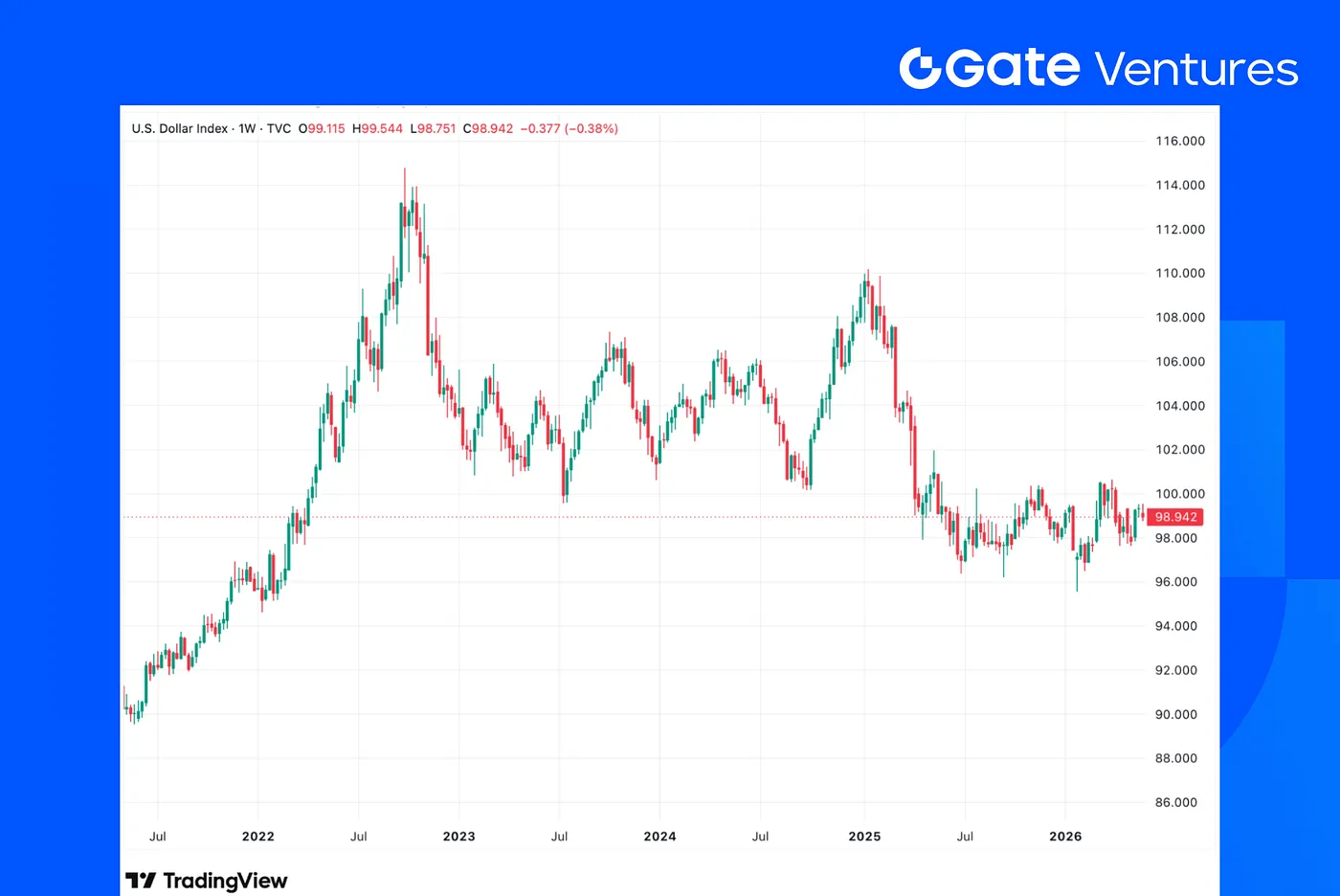
The U.S. Dollar Index weakened last week, declining from 99.115 to 98.942. This downward movement reflects a softer global demand for the greenback as market participants reassess monetary policy expectations. The drop was largely fueled by rising anticipations of eventual Federal Reserve policy shifts, along with improving economic data from other major global economies, which reduced defensive dollar hoarding. (2)
US 10-Year and 30-Year Bond Yields
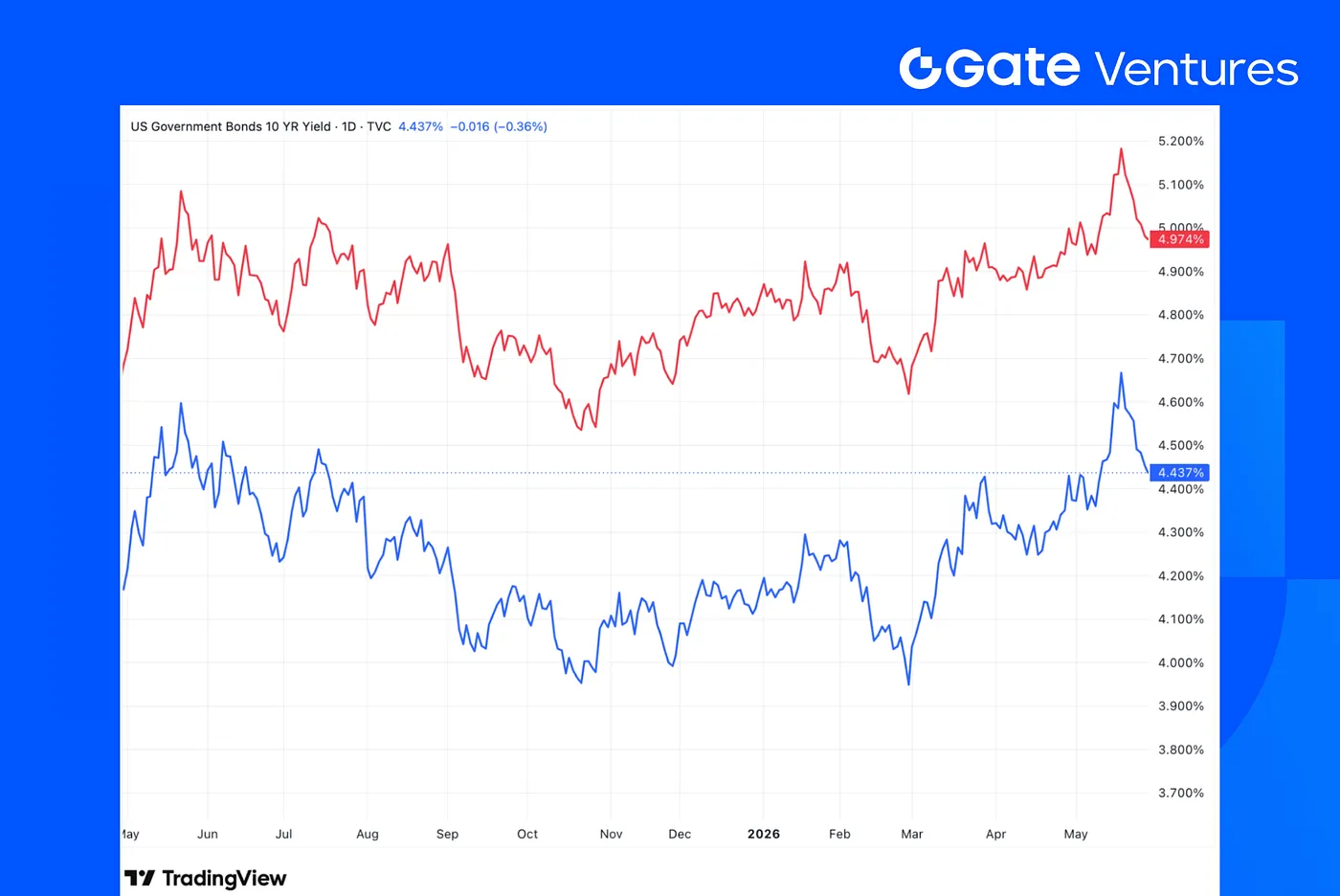
U.S. Treasury yields retreated last week as the ten-year yield dropped to 4.437% and the thirty-year yield fell to 4.974%. This steady bond market rally suggests that fixed-income investors are experiencing some relief from longer-term price pressures. The downward adjustment indicates growing market expectations that current restrictive interest rates will successfully cool down economic activity. (3)
Gold
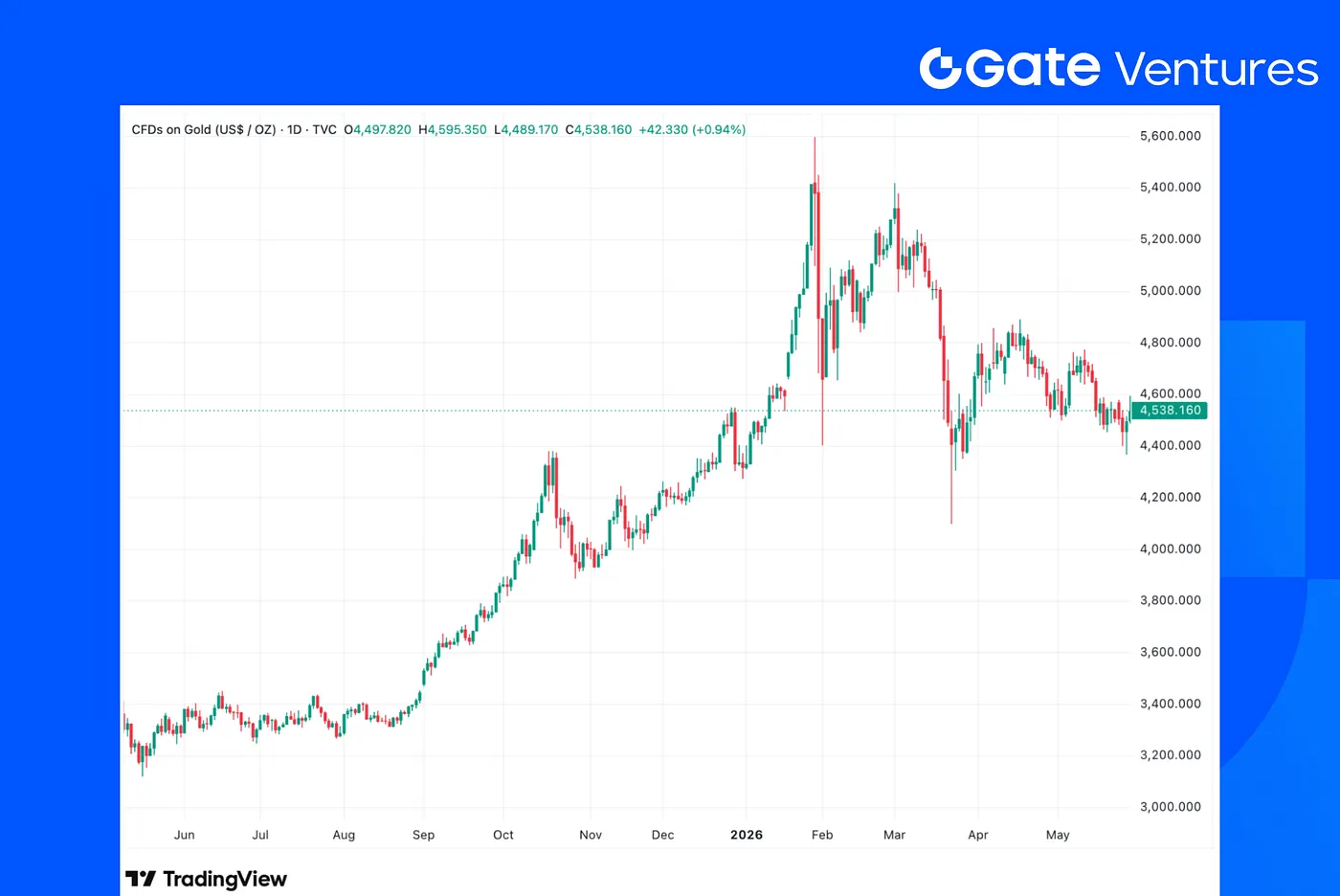
Gold prices staged a robust rally last week, closing higher at $4,538.160. The precious metal benefited immensely from a weaker U.S. dollar, which made dollar-denominated commodities cheaper for international buyers. Furthermore, persistent safe-haven demand driven by the highly unpredictable diplomatic friction between the United States and Iran provided a strong structural floor for bullion prices. (4)
Crypto Markets Overview
Main Assets
ETH/BTC Ratio
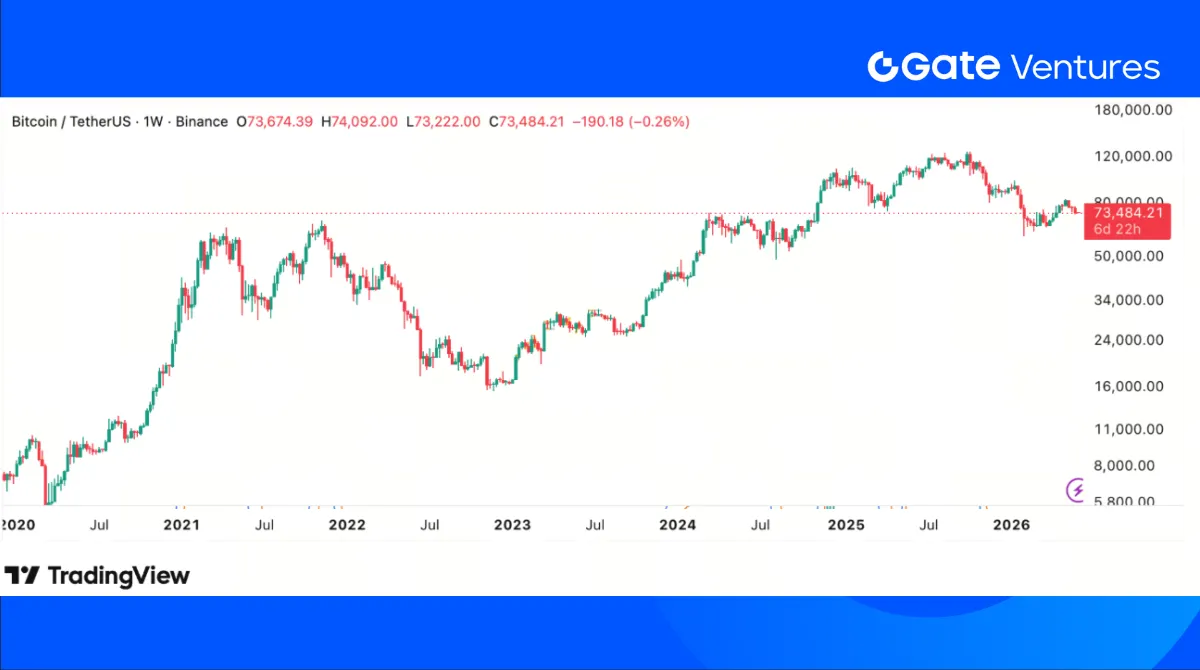
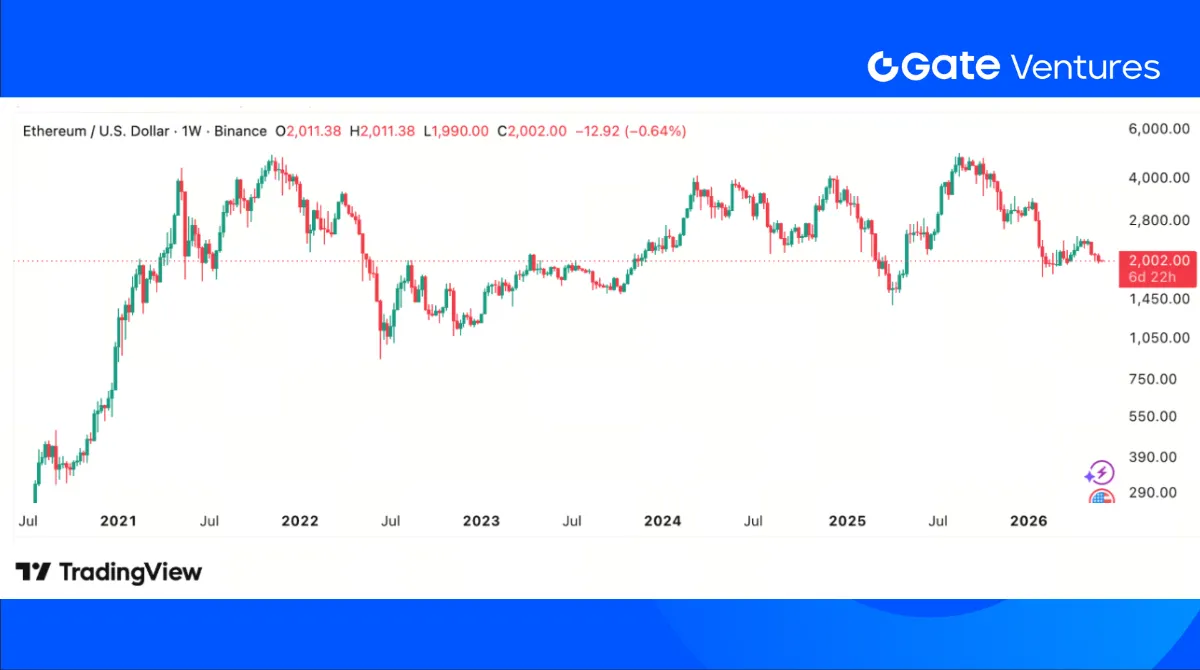
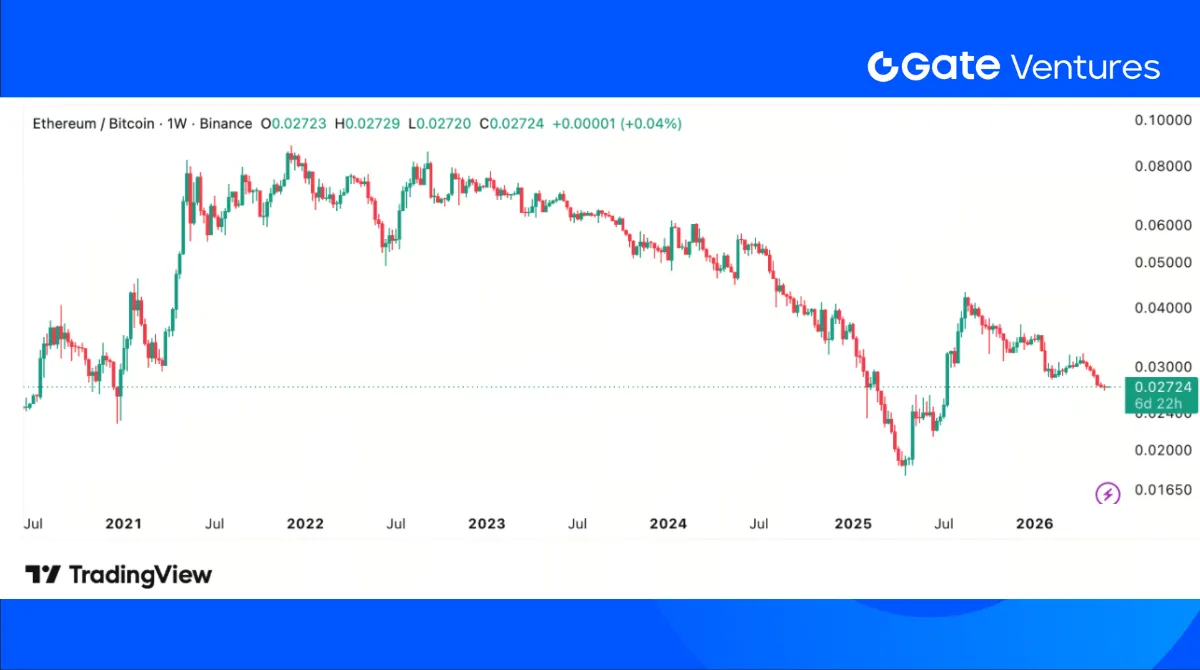
Market softened last week, with BTC down 4.4% and ETH down 4.5%, leaving the ETH/BTC ratio broadly flat.
Spot BTC ETFs recorded US$1.42B of net outflows, the second-largest weekly outflow on record. A key driver appears to be a large IBIT block sale on May 26, 29.2M shares changed hands off-exchange at US$43.16/share (worth $1.26B), around a 2.3% discount to the prevailing market price. (5)
ETH ETFs also saw US$241.5M of net outflows. Market sentiment deteriorated further, with the Fear & Greed Index falling to 29 from 39 last week, entering deeper "fear" territory. (6)
Total Market Cap
Crypto Total Marketcap
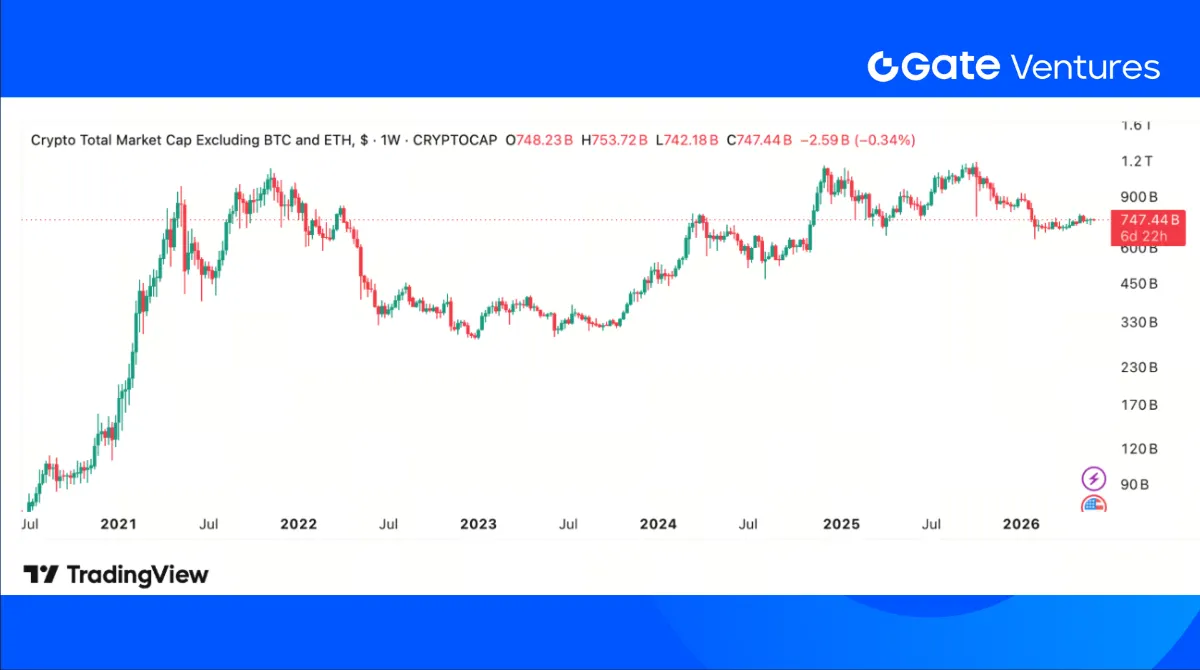
Crypto Total Marketcap Excluding BTC and ETH
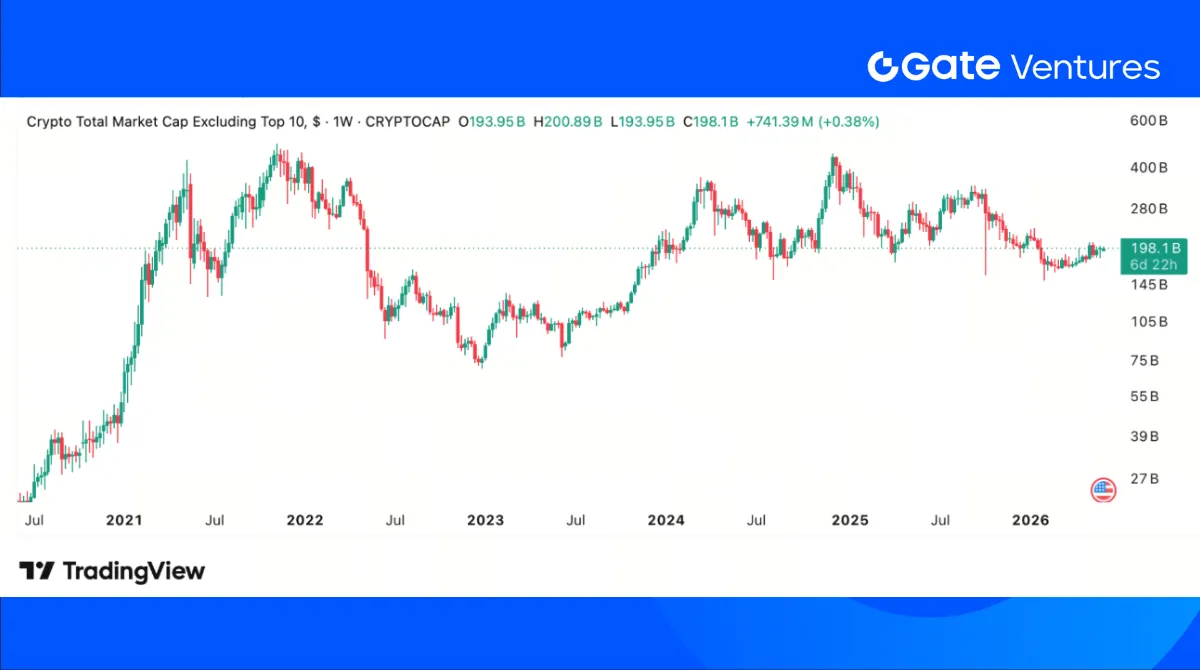
Crypto Total Marketcap Excluding Top 10 Dominance
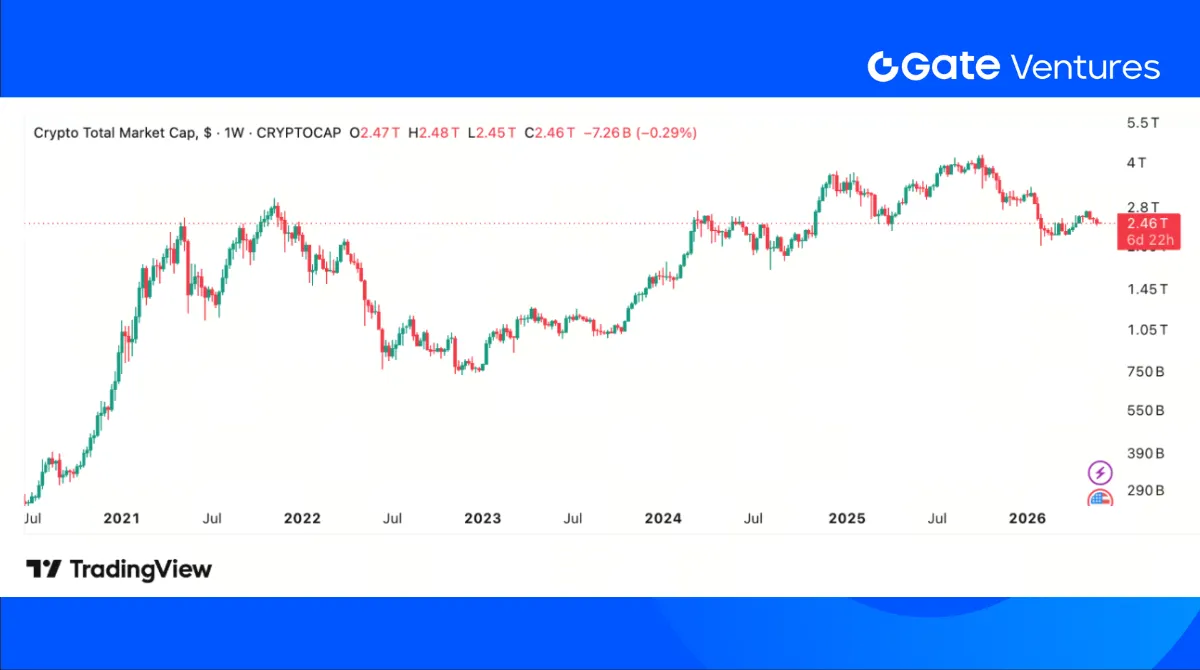
Total crypto market capitalization fell 2.9% last week. However, excluding BTC and ETH, the market rose 0.6%, while the broader altcoin market excluding the top 10 assets gained 1.1%, outperforming the majors.
STRC Performance
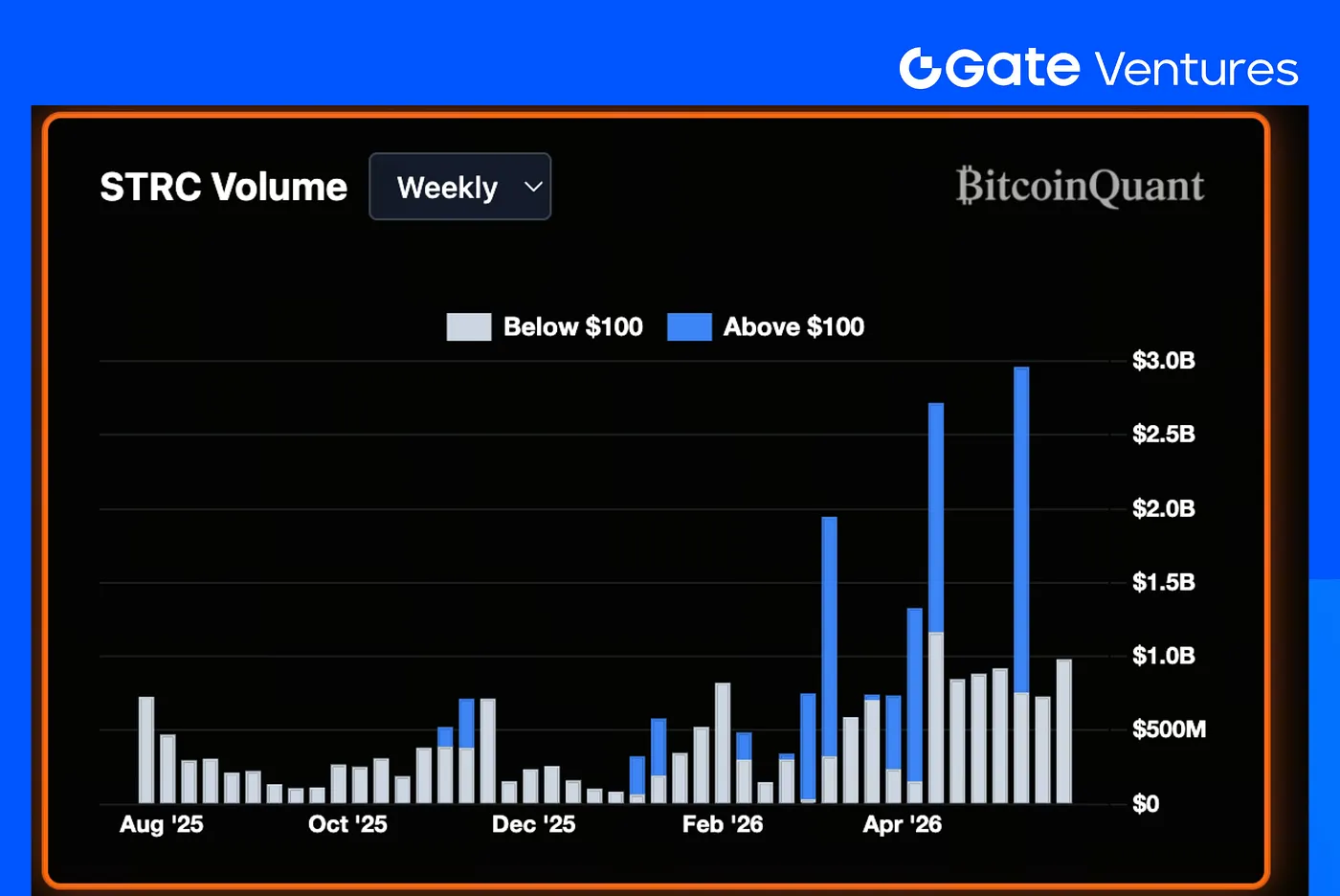
STRC recorded US$981M in trading volume last week, with all volume traded below par.
STRC remained weak last week as Bitcoin’s recent pullback reduced demand for leveraged Bitcoin-exposure vehicles. Post-dividend selling pressure also continued after STRC’s ex-dividend date.
On the balance sheet side, Strategy recently spent around US$1.5B repurchasing convertible debt. As a result, cash reserves reportedly declined from roughly US$2.25B to US$871M. (7)
Given annual preferred dividend obligations of approximately US$1.7B, current cash reserves would only cover around six months of dividend payments.
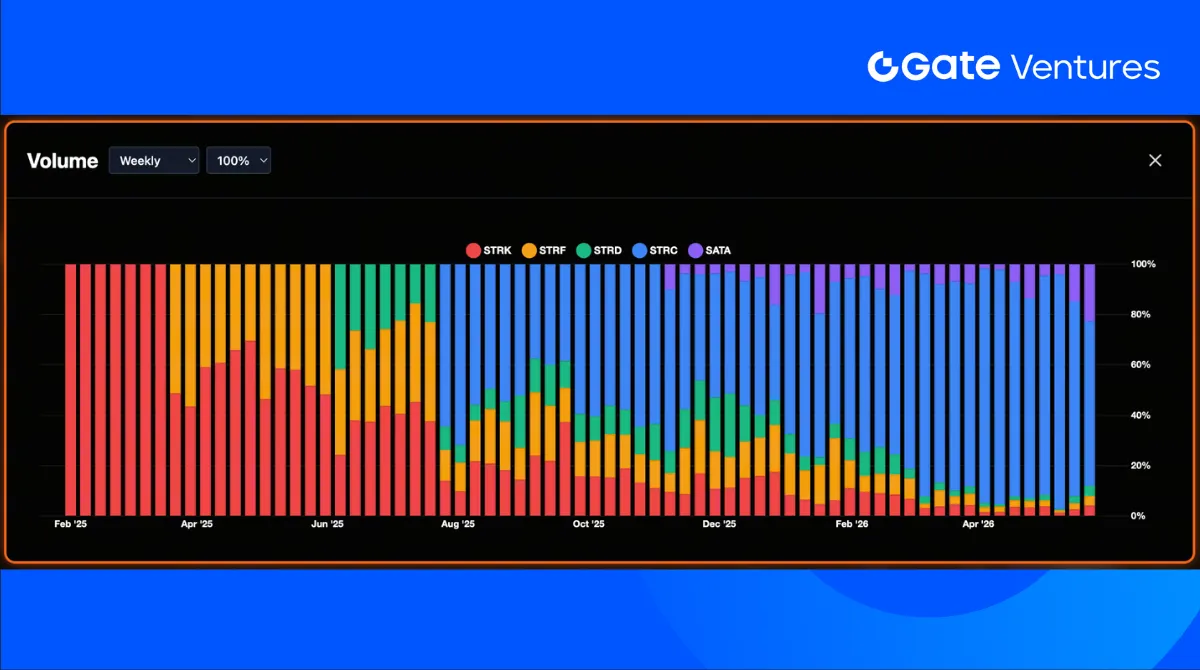
Among Bitcoin treasury preferred securities, STRC accounted for 65.4% of total trading volume last week, down from 77% in the previous week. The second largest was Strive’s SATA, which rose to 22.6%, suggesting growing investor interest in alternative Bitcoin treasury yield products.
Investors appear to be increasingly comparing Strategy’s STRC with Strive’s SATA preferred shares. SATA continues to trade close to par, offers a yield of roughly 13%, and plans to introduce daily dividend payments
These features have made SATA increasingly attractive to yield-focused investors, potentially drawing attention and capital away from STRC. (8)
Strategy also announced that STRC’s dividend rate will remain at 11.50% for June.
The dividend rate has now stayed unchanged at 11.50% for four consecutive months, despite calls from parts of the community for an increase to 12%.
Top 30 Crypto Assets Performance
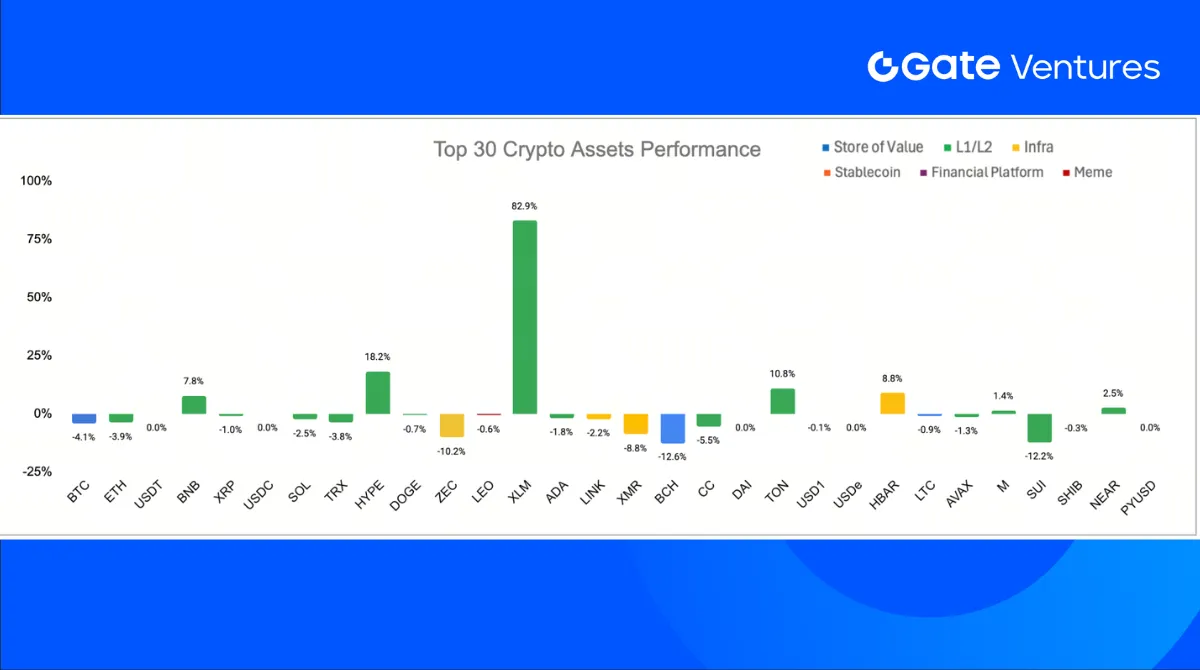
Source: Coinmarketcap and Gate Ventures, as of 1st June 2026
Among the top 30 assets, prices surged 2% on average, XLM and HYPE posted significant gains.
Stellar led the market gains last week, with XLM surging 83%. The rally was mainly driven by the Stellar Development Foundation’s partnership with DTCC, which could enable asset tokenization under DTCC’s supervision on the Stellar network by the first half of 2027. (9)
The announcement strengthened market expectations around Stellar’s institutional tokenization use case, making the ecosystem more attractive to investors.
HYPE surged 18% last week, supported by growing institutional interest in Hyperliquid. Existing HYPE-related exchange-traded products from Bitwise and 21Shares have recorded over US$120M in cumulative inflows since launch.
Sentiment was further boosted by Grayscale’s latest filing activity, as Grayscale Investments submitted its fifth amended filing to the SEC for the Hyperliquid Staking ETF. The filing shows that the ETF still plans to seed the fund with around 2M HYPE tokens, reinforcing market expectations for further institutional access to HYPE.
Hence, CFTC approved the first regulated US perpetual futures contract. This effectively validates the perpetual futures model that Hyperliquid is built around, reducing perceived regulatory risk and strengthening expectations for broader institutional access to decentralized derivatives. (10)
The Key Crypto Highlights
BIS Project Agorá shows tokenized payments can settle in seconds
BIS (Bank for International Settlements) released the final report for Project Agorá, a two-year initiative with seven central banks and over 40 regulated financial institutions, showing that cross-border wholesale payments can settle in seconds once liquidity is locked. The prototype uses tokenized central bank reserves and commercial bank deposits to enable atomic settlement, real-time payment visibility, and parallel AML, sanctions and fraud checks, while preserving the two-tier banking system. The project will next move into real-value testing, though timelines remain unclear, with liquidity management, cybersecurity, governance and settlement finality still requiring further development. (11)
CFTC issues guidance for regulated crypto perpetual futures trading
The U.S. Commodity Futures Trading Commission (CFTC) issued new guidance outlining regulatory expectations for 24/7 trading, clearing and settlement of crypto perpetual futures, as it moves to bring one of crypto’s largest derivatives markets into the U.S. regulatory framework. The guidance accompanied the approval of the first regulated Bitcoin perpetual futures contract on Kalshi and a separate pathway allowing Coinbase to offer access to regulated perpetual products, signaling growing regulatory acceptance of crypto-native market structures. The CFTC noted that crypto derivatives are particularly suited for continuous trading due to their digital infrastructure and global liquidity, while emphasizing requirements around risk management, clearing, leverage controls and market oversight. (12)
Paxos becomes first crypto-native firm to receive SEC clearing agency registration
Paxos Securities Settlement Company (PSSC) received clearing agency registration from the U.S. Securities and Exchange Commission (SEC), becoming the first and only blockchain-native firm authorized to provide clearing and settlement services as a central securities depository in the United States. The approval allows Paxos to settle eligible securities on blockchain infrastructure within a regulated framework, supporting same-day or near-instant settlement while reducing capital and operational inefficiencies associated with traditional post-trade systems. (13)
Key Ventures Deals
Samsung invests $408M in Upbit operator Dunamu
Three Samsung affiliates — Samsung Securities, Samsung Card and Samsung SDS agreed to acquire a combined 4% stake in Dunamu, the operator of South Korea’s largest crypto exchange Upbit, for approximately US$408 million. The deal values Dunamu at roughly US$11 billion and comes amid growing institutional interest in South Korea’s digital asset sector, following recent investments from Hana Bank and other major financial groups. The transaction reflects increasing convergence between traditional financial institutions and crypto infrastructure, as Korean conglomerates position themselves for potential growth in digital assets, stablecoins, tokenized securities and blockchain-based financial services. (14)
OKX Ventures and KIS invest $106M in South Korea’s Coinone exchange
OKX Ventures invested KRW 80 billion (US$53 million) for a 19.6% stake in South Korean crypto exchange Coinone, while Korea Investment & Securities (KIS) made an identical investment, bringing the total deal size to KRW 160 billion (US$106 million). The transaction, which remains subject to regulatory approval, will make OKX Ventures and KIS joint third-largest shareholders as Coinone expands into stablecoins, tokenized securities and broader digital asset infrastructure. The investment highlights growing convergence between global crypto firms and traditional financial institutions in South Korea, as competition intensifies around regulated crypto markets and tokenized financial services. (15)
Otomato raises $2M to build an on-chain portfolio monitoring infrastructure
On-chain portfolio monitoring platform Otomato raised a US$2 million funding round led by Improbable, as it expands infrastructure for real-time risk monitoring, yield tracking and portfolio intelligence across DeFi protocols. The platform aggregates positions across lending, perpetuals, LPs, prediction markets and other on-chain assets, while providing alerts for liquidation risk, funding rate changes, stablecoin depegs, governance proposals and protocol security events. Otomato said it is building a portfolio assistant layer for on-chain users, aiming to simplify portfolio management across fragmented blockchain ecosystems as DeFi activity becomes increasingly multi-chain and institutionalized. (16)
Ventures Market Metrics
The number of deals closed in the previous week was 7, with Infra having 3 deals, DeFi having 2 deals,Social and Data having 1 deal respectively.
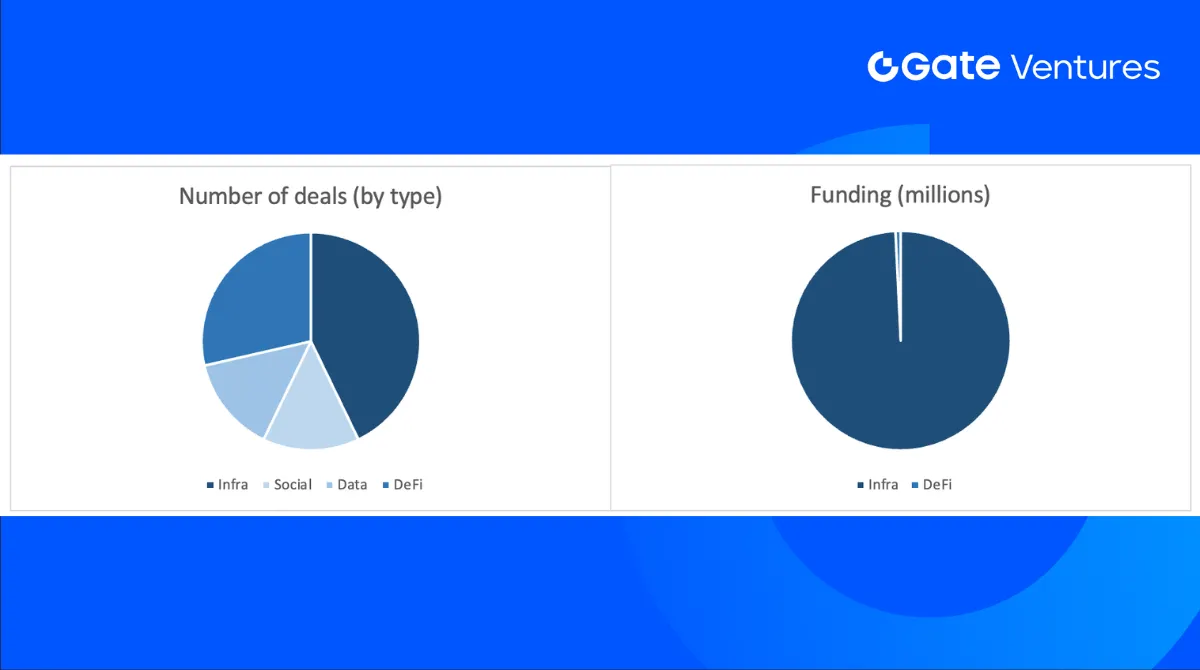
Weekly Venture Deal Summary, Source: Cryptorank and Gate Ventures, as of 1st June 2026
The total amount of disclosed funding raised in the previous week was $521M. The top funding came from the Infra sector with $517M. Most funded deals: Dunamu ($408M).
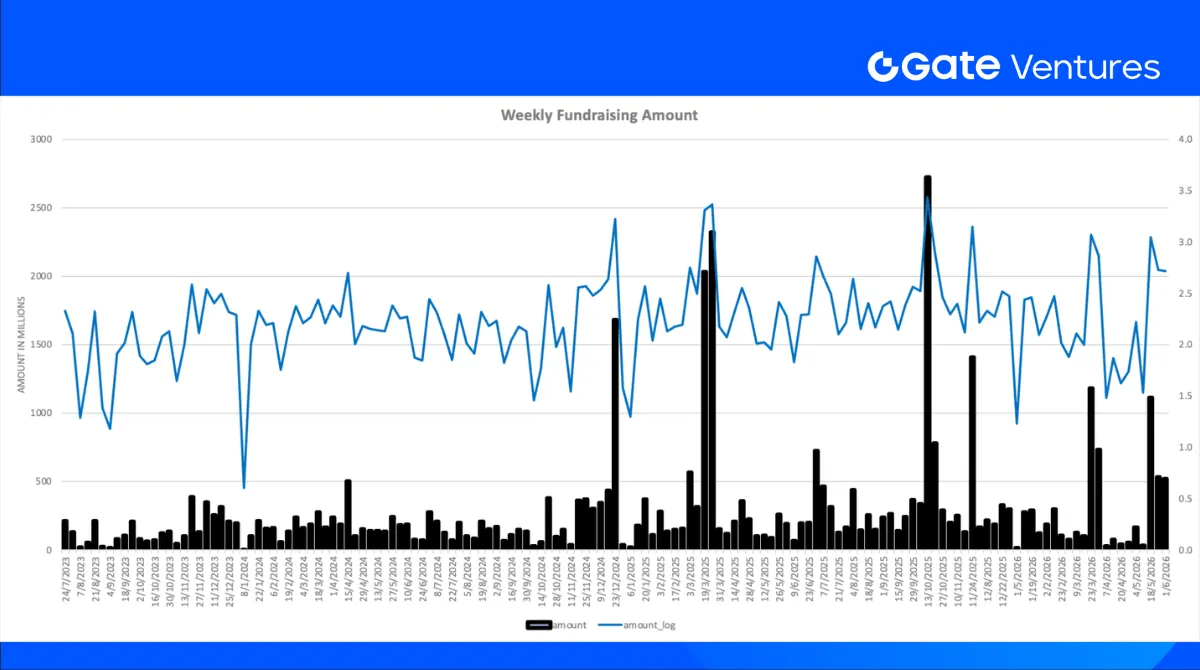
Weekly Venture Deal Summary, Source: Cryptorank and Gate Ventures, as of 1st June 2026
Total weekly fundraising declined to $521M for the first week of June-2026, a decrease of 2% compared to the week prior.
Reference:
S&P Global Week Ahead Economic Preview: https://www.spglobal.com/market-intelligence/en/news-insights/research/2026/05/week-ahead-economic-preview-week-of-1-june-2026
DXY Index, TradingView: https://www.tradingview.com/chart/z1UD772v/?symbol=TVC%3ADXY
US 10 Year Bond Yield, TradingView: https://www.tradingview.com/chart/B9cgEklh/?symbol=TVC%3AUS10Y
Gold Price, TradingView: https://www.tradingview.com/chart/z1UD772v/?symbol=TVC%3AGOLD
BTC & ETH ETF Inflow: https://sosovalue.com/tc/assets/etf/us-btc-spot
BTC Greed and Fear Index: https://alternative.me/crypto/fear-and-greed-index/
Strategy spent around US$1.5B repurchasing convertible debt: https://www.coindesk.com/markets/2026/05/29/strategy-s-strc-slips-below-usd99-as-strive-captures-investor-attention
STRC Dashboard: https://bitcoinquant.co/preferred-equity
Stellar Partnership with DTCC: https://coinmarketcap.com/community/articles/6a1bb5c54462987812582d23/
Hyperliquid Catalysts: https://coinmarketcap.com/community/articles/6a1c1ce9d9f21e1307f3ebc4/
BIS Project Agorá shows tokenized payments can settle in seconds: https://cointelegraph.com/news/bis-40-banks-test-tokenized-system-cross-border-payment
CFTC issues guidance for regulated crypto perpetual futures trading: https://cointelegraph.com/news/cftc-crypto-perpetual-contracts-trading-advisory
Paxos becomes first crypto-native firm to receive SEC clearing agency registration: https://cointelegraph.com/news/paxos-becomes-first-crypto-firm-to-win-sec-clearing-agency-registration
Samsung invests $408M in Upbit operator Dunamu: https://www.coindesk.com/business/2026/05/28/samsung-is-buying-a-usd446-million-stake-in-south-korea-s-biggest-crypto-exchange
OKX Ventures and KIS invest $106M in South Korea’s Coinone exchange: https://fortune.com/2026/05/20/variational-raises-50-million-series-a/
Otomato raises $2M to build on-chain portfolio monitoring infrastructure: https://www.theblock.co/post/401601/aeon-raises-8-million-yzi-labs


