


1. What Are Double Moving Averages?
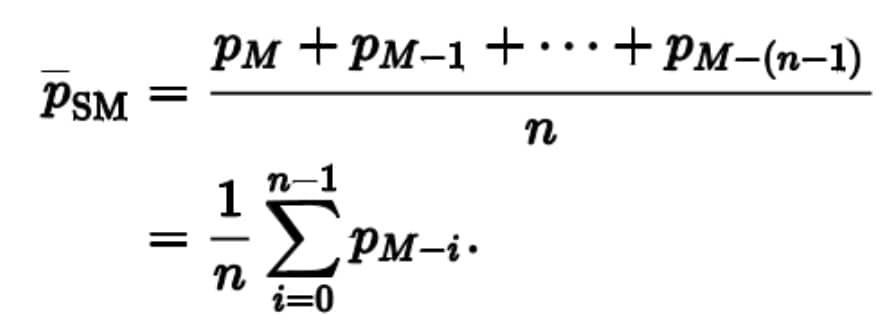
Moving averages are widely used in technical analysis and are typically applied to time series data. Their main purpose is to smooth out short-term fluctuations and noise, allowing traders to focus on long-term trends and cycles. Over the years, many types of moving averages have been developed, including the Simple Moving Average (SMA), Exponential Moving Average (EMA), Weighted Moving Average (WMA), and Cumulative Moving Average (CMA). Double Moving Averages primarily use the Simple Moving Average (SMA).
First, the moving average for each trading day is calculated based on the closing prices of the past N days. These points are then connected to form a line, known as the N-day moving average. Double moving averages use two moving averages with different periods, such as 5 days and 60 days.
2. Double Moving Average Strategy
The double moving average bot uses two moving averages with different periods to determine when to buy and sell. When the short-term moving average crosses above the long-term moving average—a crossover known as a "golden cross"—the bot will go long. Conversely, when the short-term moving average crosses below the long-term moving average—a "death cross." The bot will go short.
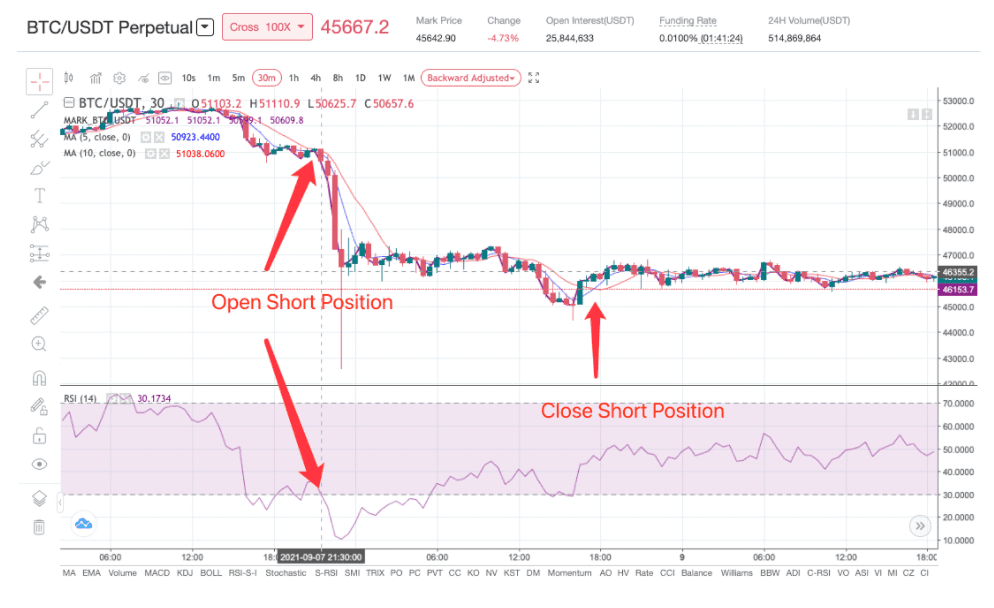
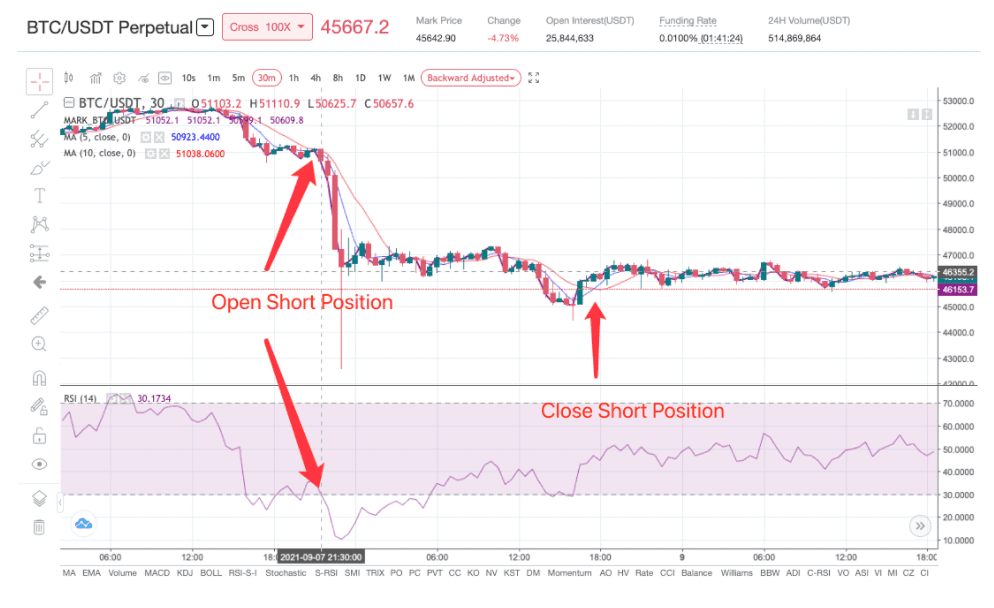
When the short-term moving average crosses below the long-term moving average and the Relative Strength Index (RSI) value is 50-(threshold) or lower, the bot will go short. When the short-term moving average breaks above the long-term moving average and the RSI value is 50+ threshold or higher, the bot will close the long position. For example, in the chart below, the threshold is set to 15, and entry and exit points are indicated by arrows:
3. Double Moving Average Parameter Explanation
](https://gimg.staticimgs.com/image/article/17259569524.jpeg)
