Khi lĩnh vực AI chuyển từ cạnh tranh đơn mô hình sang đổi mới dựa trên hệ sinh thái, các dự án AI Crypto đang tập trung giải quyết vấn đề tập trung hóa tài nguyên và hướng tới xây dựng hệ kinh tế AI mở với kiến trúc Web3. Phương pháp này trao quyền cho nhà phát triển, doanh nghiệp và người dùng cùng tham gia kiến tạo mạng lưới AI.
Artificial Superintelligence Alliance (ASI) vận hành dựa trên ba thành phần chính: Tác nhân AI, mạng lưới dịch vụ AI và sức mạnh băm phi tập trung. Fetch.ai dẫn đầu về hạ tầng Tác nhân AI, SingularityNET đảm nhiệm Thị trường AI và lớp dịch vụ, còn CUDOS cung cấp sức mạnh băm GPU nền tảng cùng tài nguyên điện toán phân tán. Ba yếu tố này tạo thành mạng lưới hợp tác AI thống nhất trong ASI, giúp Tác nhân AI tự động phát hiện tài nguyên, gọi mô hình và điều phối trên chuỗi.
Tác nhân AI vận hành ra sao trong ASI?
Tác nhân AI là nền tảng cốt lõi của hệ sinh thái ASI, đóng vai trò phần mềm thông minh có thể tự động hoàn thành nhiệm vụ. Các Tác nhân này hoạt động mà không cần con người can thiệp liên tục, tự quyết định, tìm kiếm tài nguyên và tương tác theo mục tiêu đã xác định. Ví dụ, trong logistics tự động, một Tác nhân AI có thể tự nhận diện tuyến vận chuyển tối ưu, đồng thời phối hợp kho bãi, thanh toán và giao nhận với các Tác nhân khác. Trên mạng lưới Fetch.ai, Tác nhân xử lý truy vấn dữ liệu, ghép nối dịch vụ, giao dịch tự động, lập lịch tài nguyên và gọi suy luận AI. Khác biệt với các chương trình tự động hóa truyền thống, Tác nhân AI được thiết kế để tự chủ hợp tác.
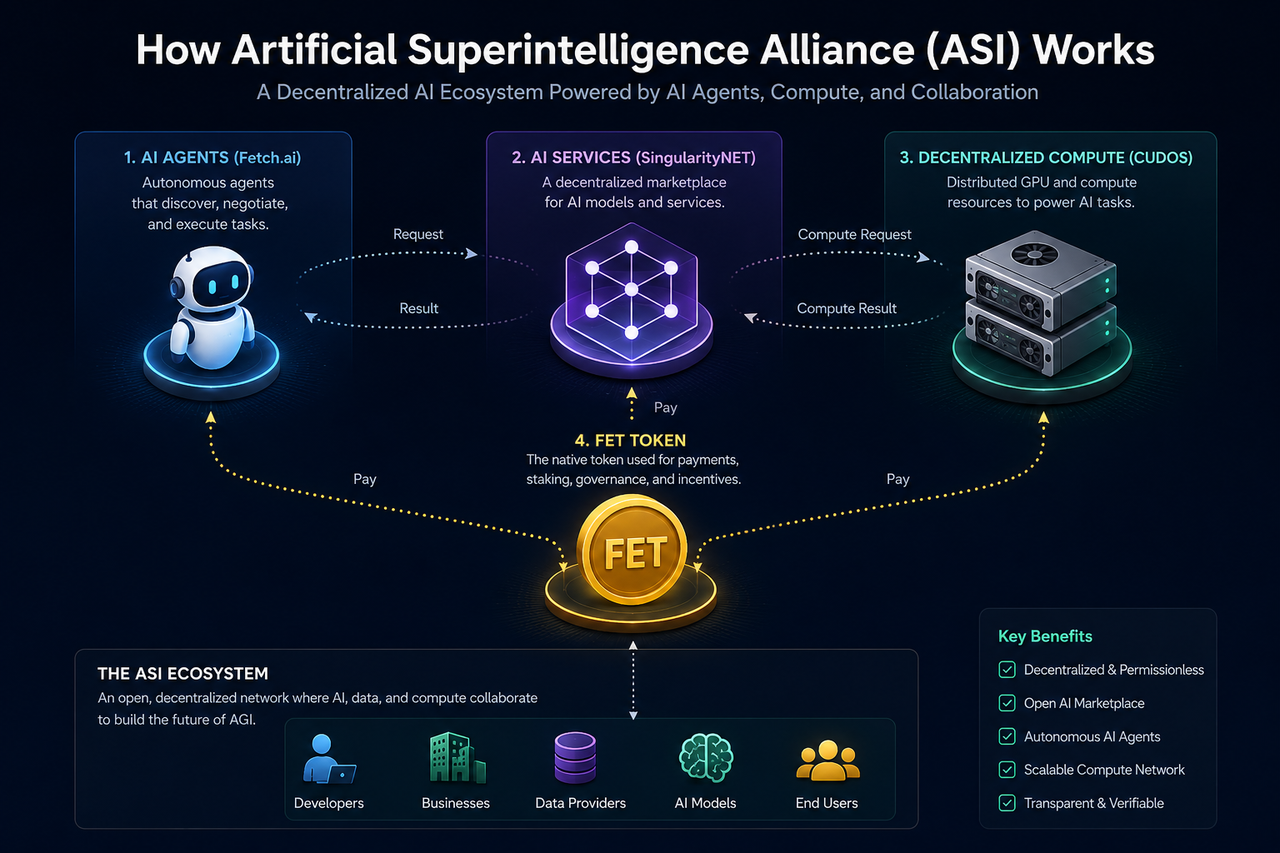
Nền tảng Agentverse của Fetch.ai còn giúp đơn giản hóa quá trình phát triển Tác nhân AI. Nhà phát triển có thể tạo và triển khai Tác nhân nhanh chóng lên các mạng phi tập trung. Khi đã triển khai, Tác nhân sẽ tự động phát hiện dịch vụ, giao tiếp với Tác nhân khác, thực hiện giao dịch trên chuỗi và gọi mô hình AI.
SingularityNET và CUDOS hỗ trợ hệ sinh thái ASI như thế nào?
Trong ASI, SingularityNET đóng vai trò là thị trường dịch vụ AI mở. Nhà phát triển có thể tải lên mô hình AI và cấp quyền truy cập cho người dùng khác để thực hiện các tác vụ như nhận diện hình ảnh, xử lý ngôn ngữ tự nhiên, phân tích dữ liệu và dịch vụ API AI. Điều này giúp năng lực AI lưu thông tự do trên mạng mở thay vì phụ thuộc vào một nền tảng tập trung. So với nền tảng AI đám mây truyền thống, SingularityNET đề cao chia sẻ và hợp tác mở, được cộng đồng AGI và AI phi tập trung đánh giá cao.
CUDOS cung cấp tài nguyên điện toán thiết yếu. Mô hình AI yêu cầu sức mạnh băm GPU lớn, vốn vẫn tập trung chủ yếu tại các tập đoàn công nghệ lớn. CUDOS sử dụng mạng GPU phân tán để cung cấp quyền truy cập mở cho nhà phát triển tới tài nguyên suy luận và huấn luyện AI. Trong mạng ASI, CUDOS chịu trách nhiệm lập lịch GPU, điện toán đám mây phân tán và suy luận AI hiệu năng cao, đảm bảo hệ sinh thái vừa có dịch vụ AI mạnh vừa có năng lực điện toán toàn diện.
Vai trò của FET trong hệ sinh thái ASI
FET là token trung tâm và phương tiện thanh toán trong ASI. Người dùng sử dụng FET để truy cập dịch vụ AI, triển khai Tác nhân hoặc sử dụng sức mạnh băm GPU. FET còn hỗ trợ giao dịch giữa các Tác nhân, quản trị mạng, staking và ưu đãi hệ sinh thái. Ví dụ, khi một Tác nhân AI hoàn thành nhiệm vụ, hệ thống sẽ tự động xử lý thanh toán và phân bổ tài nguyên bằng FET.
Vì phần lớn hoạt động trong hệ sinh thái ASI đều dựa vào FET để trao đổi giá trị, FET không chỉ là một token mà còn là công cụ nền tảng của toàn bộ AI Economy.
Quy trình vận hành của ASI như thế nào?
Một quy trình ASI điển hình bắt đầu bằng yêu cầu từ người dùng — ví dụ như doanh nghiệp cần phân tích thị trường bằng AI và chiến lược giao dịch tự động. Khi nhận được yêu cầu, Tác nhân AI sẽ tự động tìm kiếm các tài nguyên khả dụng, bao gồm mô hình AI, dịch vụ dữ liệu và sức mạnh băm GPU. Sau đó, Tác nhân gọi dịch vụ AI từ SingularityNET và lấy tài nguyên điện toán từ CUDOS để thực hiện nhiệm vụ.
Khi nhiệm vụ hoàn thành, kết quả sẽ được chuyển đến người dùng tự động, và FET quản lý thanh toán xuyên suốt quá trình. Quy trình này vận hành không cần điều phối từ nền tảng tập trung mà dựa vào mạng blockchain và tự động hóa của Tác nhân AI. Mô hình này là hướng đi trọng tâm cho hạ tầng Web3 AI, giảm phụ thuộc vào một nền tảng duy nhất và tăng tính mở cho mạng lưới.
ASI khác gì nền tảng AI truyền thống?
Nền tảng AI truyền thống thường do các tập đoàn công nghệ lớn kiểm soát, với mô hình, dữ liệu và sức mạnh băm tập trung tại máy chủ riêng. ASI đề cao tính mở, hợp tác cộng đồng và chia sẻ tài nguyên. Nhà phát triển có thể truy cập mô hình AI, sức mạnh băm GPU và dữ liệu mà không phụ thuộc vào các tập đoàn lớn.
Cách tiếp cận phi tập trung giúp dịch vụ AI lưu thông tự do trên mạng mở, người dùng tham gia quản trị hệ sinh thái và phân bổ tài nguyên. ASI được xem là hướng đi quan trọng trong hạ tầng Web3 AI, hướng tới xây dựng không chỉ mạng lưới AI mà còn AI Economy mở.
ASI đối mặt với những thách thức nào?
Dù có nền tảng kỹ thuật vững chắc, AI phi tập trung vẫn ở giai đoạn đầu. Ngành AI đòi hỏi sức mạnh băm GPU rất lớn, trong khi mạng lưới phân tán cần phát triển thêm. Hợp tác quy mô lớn giữa các Tác nhân AI còn gặp khó khăn về hiệu suất và ổn định. Ngoài ra, quy định AI, quyền riêng tư dữ liệu và bảo mật mô hình có thể ảnh hưởng đến tăng trưởng dài hạn của AI phi tập trung.
ASI cũng cạnh tranh với OpenAI, Google DeepMind và các dự án AI Crypto khác. Việc cân bằng giữa hệ sinh thái mở và khả năng thương mại sẽ quyết định tương lai của ASI.
Tóm tắt
ASI thúc đẩy hạ tầng AGI mở bằng cách tích hợp Tác nhân AI, sức mạnh băm phi tập trung và Thị trường AI. Fetch.ai vận hành mạng lưới Tác nhân AI, SingularityNET quản lý thị trường dịch vụ AI, còn CUDOS cung cấp sức mạnh băm GPU. Ba thành phần này tạo nên hệ sinh thái Web3 AI toàn diện, cho phép mô hình AI, dữ liệu và tài nguyên điện toán phối hợp vận hành trong mạng lưới phi tập trung.
Khi các khái niệm Tác nhân AI, AGI và Web3 AI phát triển, ASI sẽ trở thành nền tảng cốt lõi cho AI Economy trong tương lai.
Câu hỏi thường gặp
Các chức năng cốt lõi của ASI là gì?
Chức năng cốt lõi của ASI là xây dựng mạng lưới AI phi tập trung, cho phép Tác nhân AI, tài nguyên sức mạnh băm và dịch vụ AI hợp tác tự do.
Vai trò của Tác nhân AI trong ASI là gì?
Tác nhân AI tự động thực hiện nhiệm vụ, tìm kiếm tài nguyên, gọi dịch vụ AI và hoàn thành tương tác trên chuỗi.
Vì sao Fetch.ai quan trọng?
Fetch.ai cung cấp hạ tầng Tác nhân AI và là lớp kỹ thuật trọng yếu của hệ sinh thái ASI.
Token FET được sử dụng như thế nào?
FET dùng để thanh toán dịch vụ AI, giao dịch giữa các Tác nhân, quản trị mạng và ưu đãi hệ sinh thái.
CUDOS đảm nhận vai trò gì trong ASI?
CUDOS cung cấp sức mạnh băm GPU và tài nguyên điện toán phân tán hỗ trợ vận hành mô hình AI.
Sự khác biệt chính giữa ASI và nền tảng AI truyền thống là gì?
ASI ưu tiên mạng lưới AI mở và chia sẻ tài nguyên phi tập trung, trong khi nền tảng AI truyền thống thường do các công ty tập trung kiểm soát.