Bless is designed to do more than provide computing resources—it enables developers to flexibly leverage distributed hashrate worldwide to meet diverse business needs. Unlike traditional centralized deployment, this architecture brings computing tasks closer to end users and is better equipped to handle the growing computational demands of AI and real-time applications.
2026-06-30 03:16:22
Bless and AWS both provide computing power to developers, but they operate on fundamentally different infrastructure models. Bless aggregates globally distributed CPU, GPU, and other resources via a decentralized edge computing network, whereas AWS relies on Amazon-built and -operated data centers to deliver cloud computing services.
2026-06-30 03:14:41
BLESS is the native token of the Bless network, serving as a unified value medium for resource settlement, node incentives, and ecosystem governance by connecting computing resource demanders with providers. Unlike digital assets used solely for Operar, BLESS is designed to sustain the continuous operation of the decentralized computing network.
2026-06-30 03:12:38
Bless (BLESS) is a decentralized edge computing network designed for AI and Web3 applications. By aggregating globally distributed CPU, GPU, and other computing resources, it creates an on-demand Shared Computer, delivering open computing infrastructure for AI inference, machine learning, high-performance computing, and similar use cases.
2026-06-30 03:11:13
Treasure Network (MAGIC) is a decentralized AI entertainment ecosystem powered by its native token, MAGIC, and governed by the Treasure DAO community. It is committed to building an "Agent Civilization" centered around AI-native digital and physical collectibles and interactive IP. The ecosystem's core components include the Neurochimp AI Agent framework, the Mastermind large-scale orchestration backend, the Agent Creator one-click agent-building tool, and proprietary applications such as Smolworld and Bridgeworld Canopy. MAGIC functions as the unified value medium for Agent Hashrate, on-chain services, and governance voting.
2026-06-30 02:43:49
MAGIC tokenomics constitute the economic mechanism system built by Treasure Network around its native token MAGIC, encompassing total supply design, distribution release, halving emissions, farming output, Agent consumption, and governance Poner en staking. Issued via a fair launch in 2021, MAGIC is an ERC-20 token on Arbitrum One, serving a dual function of ecosystem utility and DAO governance.
2026-06-30 02:42:13
The core difference between MAGIC and gMAGIC lies in their respective functions: MAGIC is the freely tradable native ERC-20 token in the Treasure Network ecosystem, fulfilling utility roles including payment for Agent hashrate, in-app economy, and on-chain transfers; gMAGIC (Governance MAGIC) is a unit of governance voting power, created only when users stake MAGIC or deposit it into designated liquidity pools, and is used to vote on TIP proposals during the Snapshot phase. Holding liquid MAGIC does not automatically confer DAO voting rights.
2026-06-30 02:38:46
Samsung SDI, a core battery and energy storage subsidiary of South Korea's Samsung Group, operates across power batteries, energy storage systems (ESS), and advanced electronic materials. It occupies a critical industry position amid rising demand for energy storage from global electric vehicles and AI data centers. With Gate's introduction of Korean stock trading, investors can now use USDT to directly trade KOSPI-listed new energy assets, enabling unified cross-market allocation and strategic investment in the global energy chain.
2026-06-26 10:40:17
Both Nesa and the OpenAI API offer AI inference capabilities for developers, but they operate under fundamentally different service models. The OpenAI API is built around centralized cloud services, whereas Nesa builds an AI execution layer via a decentralized network, private inference, and verifiable computation.
2026-06-26 05:13:55
NES is the native token of the Nesa decentralized AI network, primarily used to pay for AI inference fees, node staking, network governance, and ecosystem incentives. As a critical component of network operations, NES not only facilitates value transfer but also connects developers, node operators, and the broader AI infrastructure ecosystem.
2026-06-26 05:12:48
Nesa (NES) is an AI infrastructure network built for privacy-preserving, verifiable computation, and decentralized execution. Leveraging Equivariant Encryption (EE), HSS-EE, and a distributed inference architecture, it allows AI models to perform inference tasks without revealing data or the model itself.
2026-06-26 05:11:11
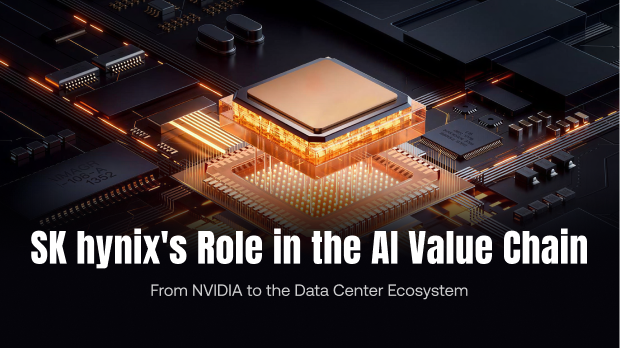
SK hynix, a global leader in memory chip manufacturing, plays a key role as a high-performance memory supplier in the AI supply chain. Its core products—DRAM, HBM (High Bandwidth Memory), and enterprise-grade SSDs—are widely deployed in AI chips, GPU servers, cloud computing platforms, and large data centers.
2026-06-25 02:31:44
SK hynix and Micron Technology are two of the three core memory chip manufacturers worldwide, having long dominated the DRAM, NAND Flash, and enterprise storage markets. As demand for artificial intelligence, large model training, and data centers grows, both companies are actively expanding their presence in the HBM (High Bandwidth Memory) market to serve the high-speed memory needs of AI GPUs.
2026-06-25 02:30:50
South Korea is a critical hub in the global semiconductor industry, with a longstanding leadership in memory chips. Samsung Electronics and SK Hynix together command the global market for DRAM, NAND Flash, and HBM (High Bandwidth Memory), positioning South Korea as a key supply center for AI storage infrastructure. In contrast to China's Taiwan region, which excels in wafer foundry, South Korea's semiconductor sector emphasizes memory chip research, development, and manufacturing. The industry encompasses not only memory chip manufacturers but also equipment suppliers, material producers, packaging and testing firms, and a wafer foundry ecosystem.
2026-06-25 02:29:37
The core distinction between OKZOO and traditional DePIN projects lies in the type of resources the network produces and utilizes. Traditional DePIN projects center on infrastructure resources like hashrate, communication networks, bandwidth, or geolocation. In contrast, OKZOO focuses on environmental data collection and AI data infrastructure. Through P-mini devices, OKZOO gathers real-world environmental data and combines AI Pet and AIOT incentive mechanisms to build an AIoT network.
2026-06-22 02:00:20