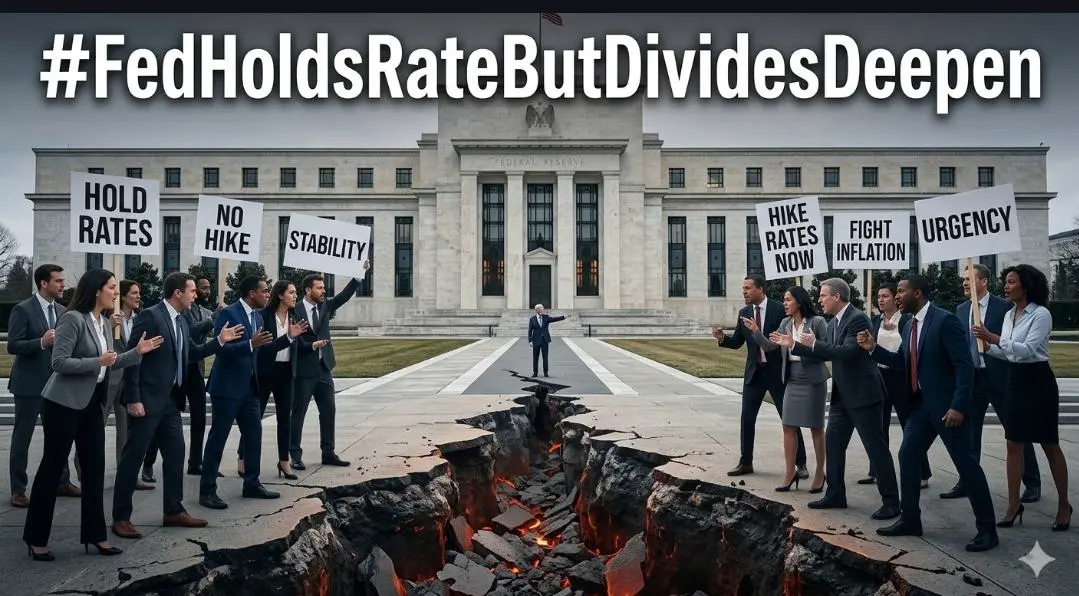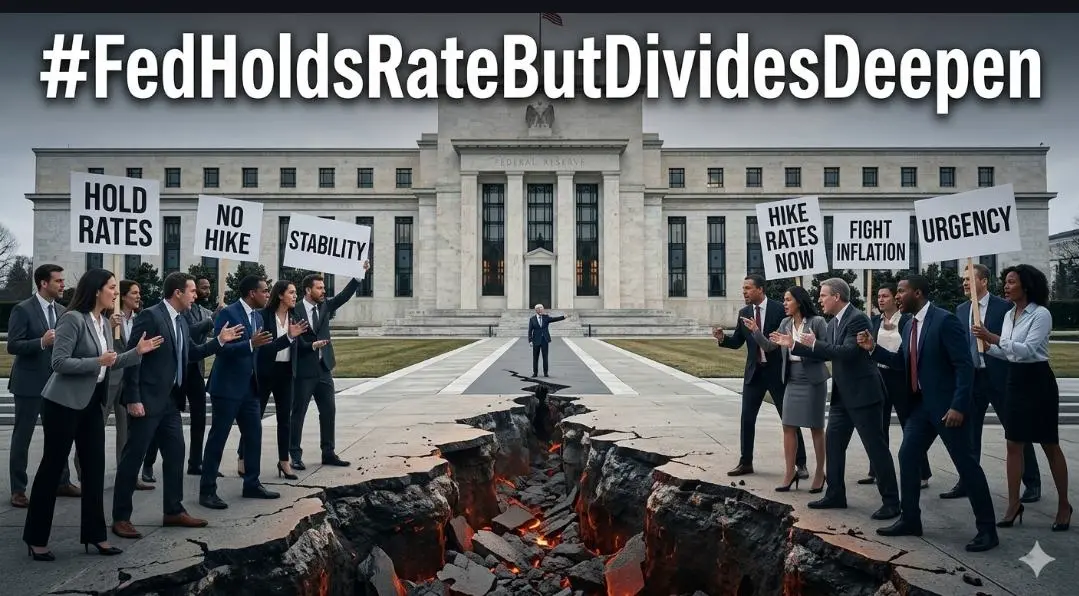
# FedHoldsRateButDividesDeepen

58.19K
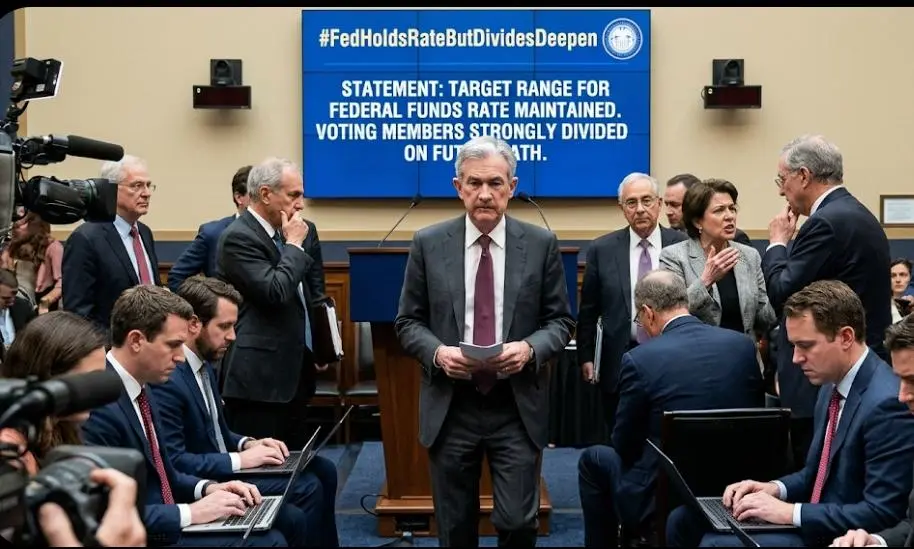
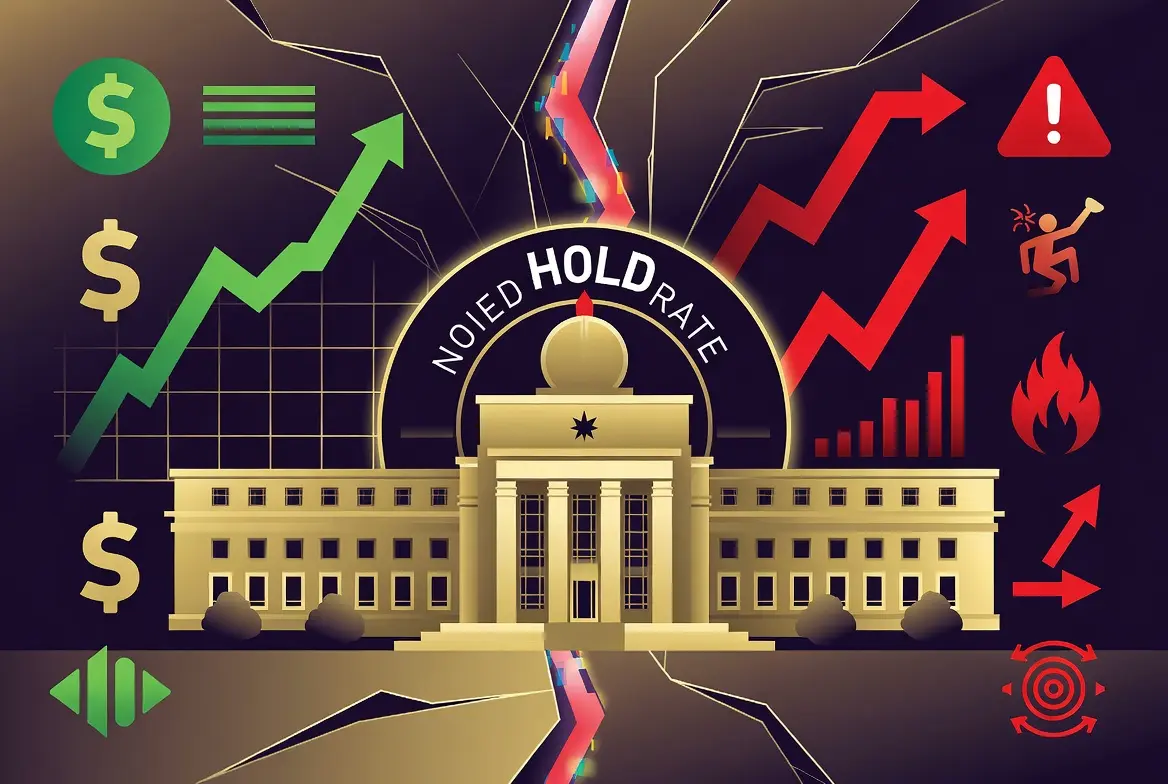
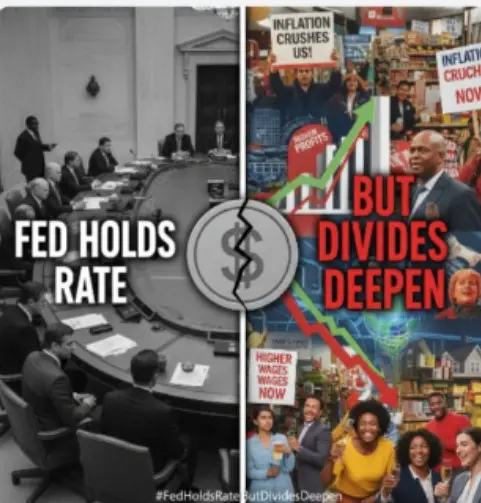
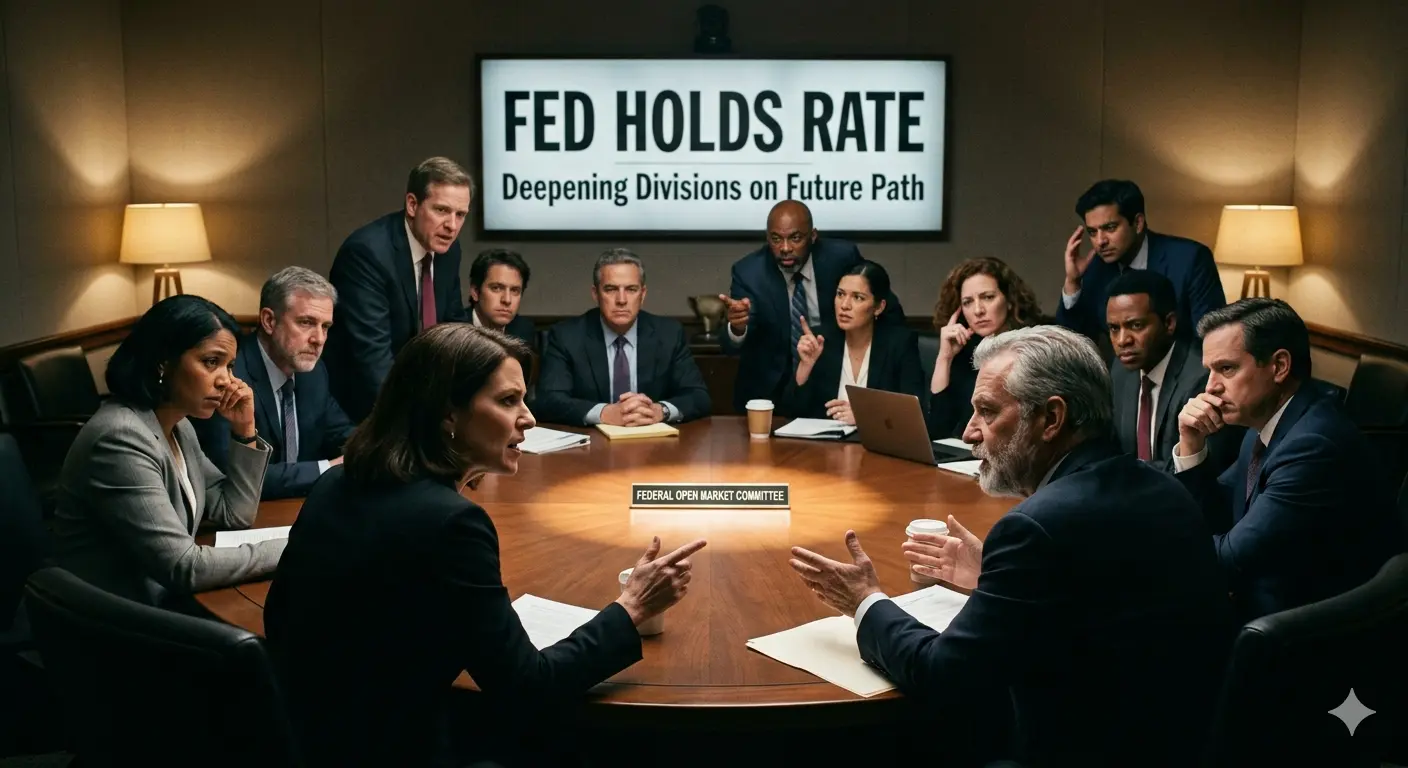
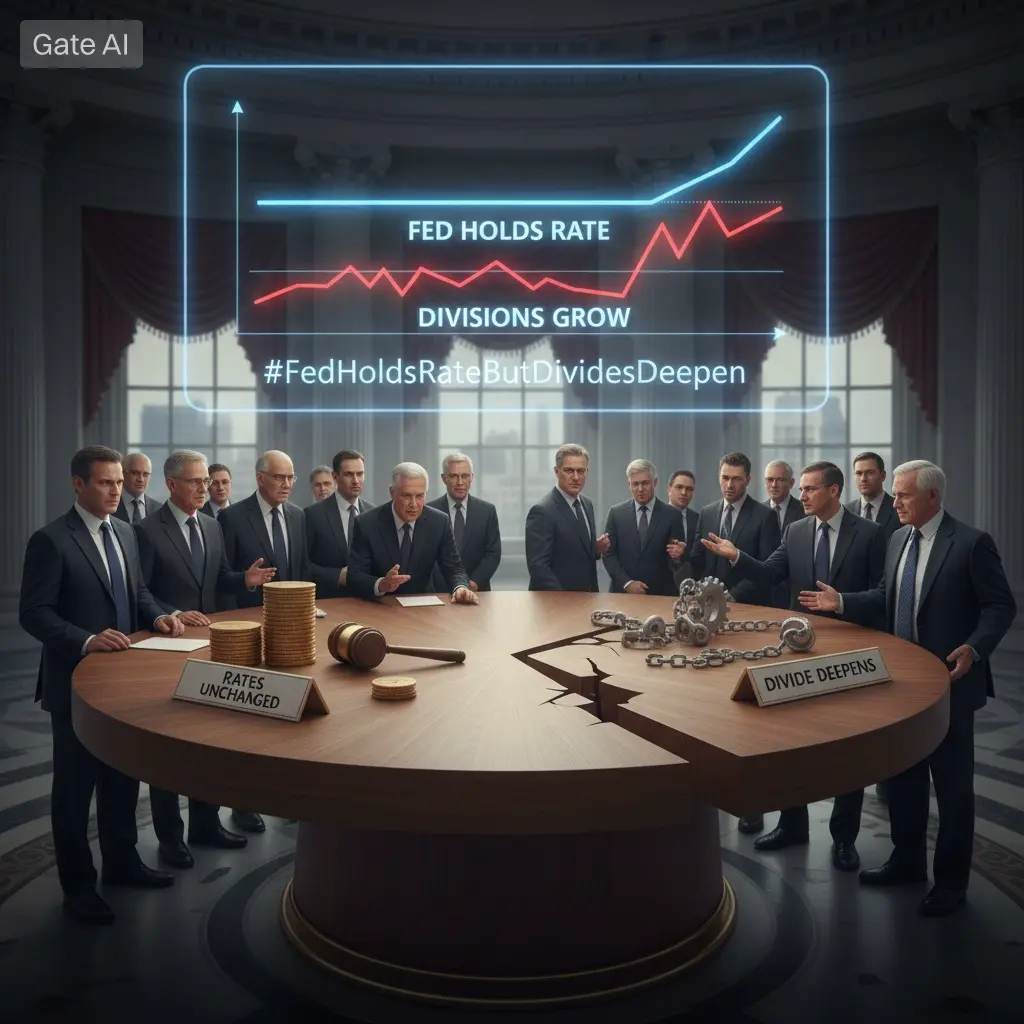
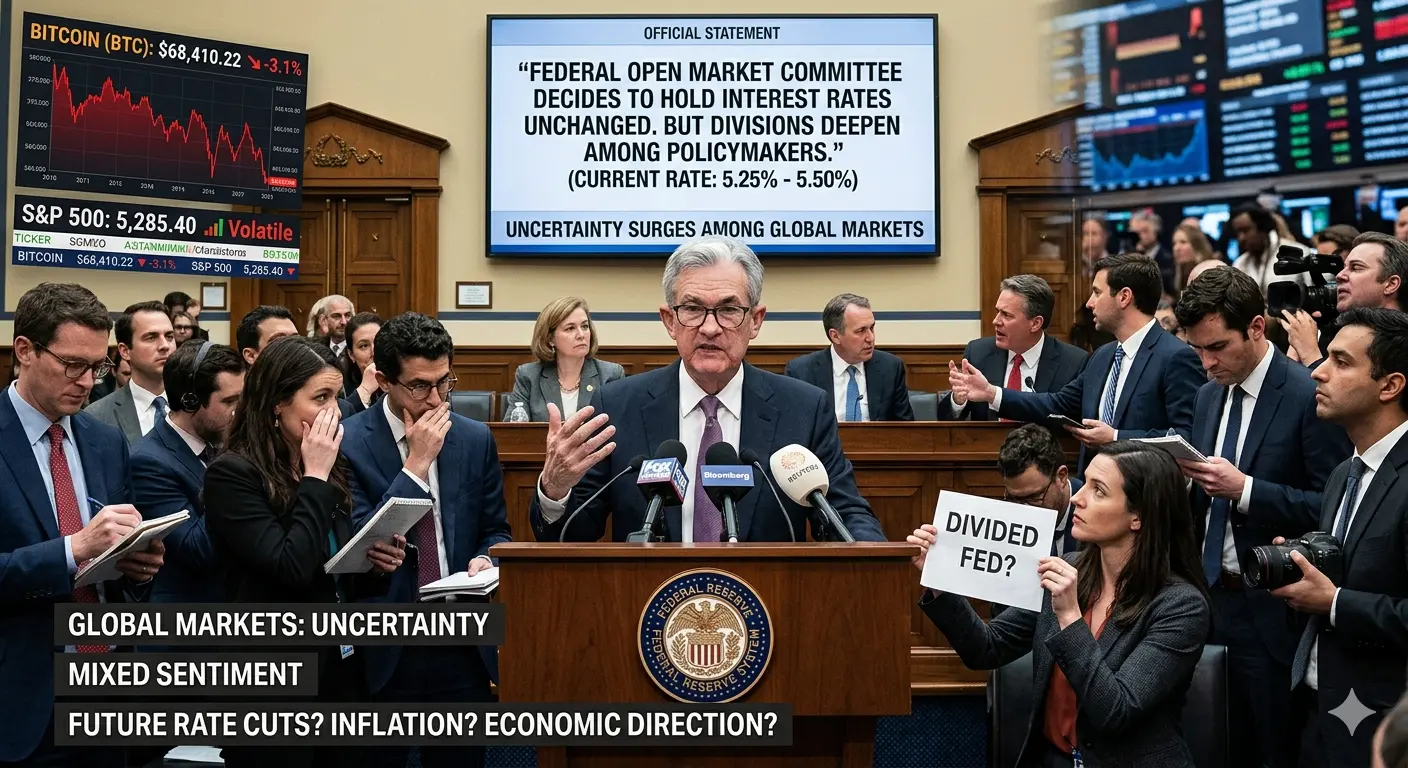
🏦 The Fed has decided to hold interest rates steady, but growing divisions among policymakers are creating uncertainty across global markets 📊⚡
Investors are now watching closely for clues about future rate cuts, inflation trends, and the overall direction of the economy 💹🌍
Crypto and traditional markets may remain volatile as mixed opinions inside the Fed continue to shape market sentiment 🚀
Smart traders stay prepared for every scenario.
#FedHoldsRateButDividesDeepen #FederalReserve #CryptoMarket #InterestRates #Bitcoin #MarketUpdate
BTC-2.51%
post-image
  • Reward
  • Comment
  • Repost
  • Share
##FedHoldsRateButDividesDeepen
Fed Holds Rates, But Internal Division Signals a Policy Turning Point
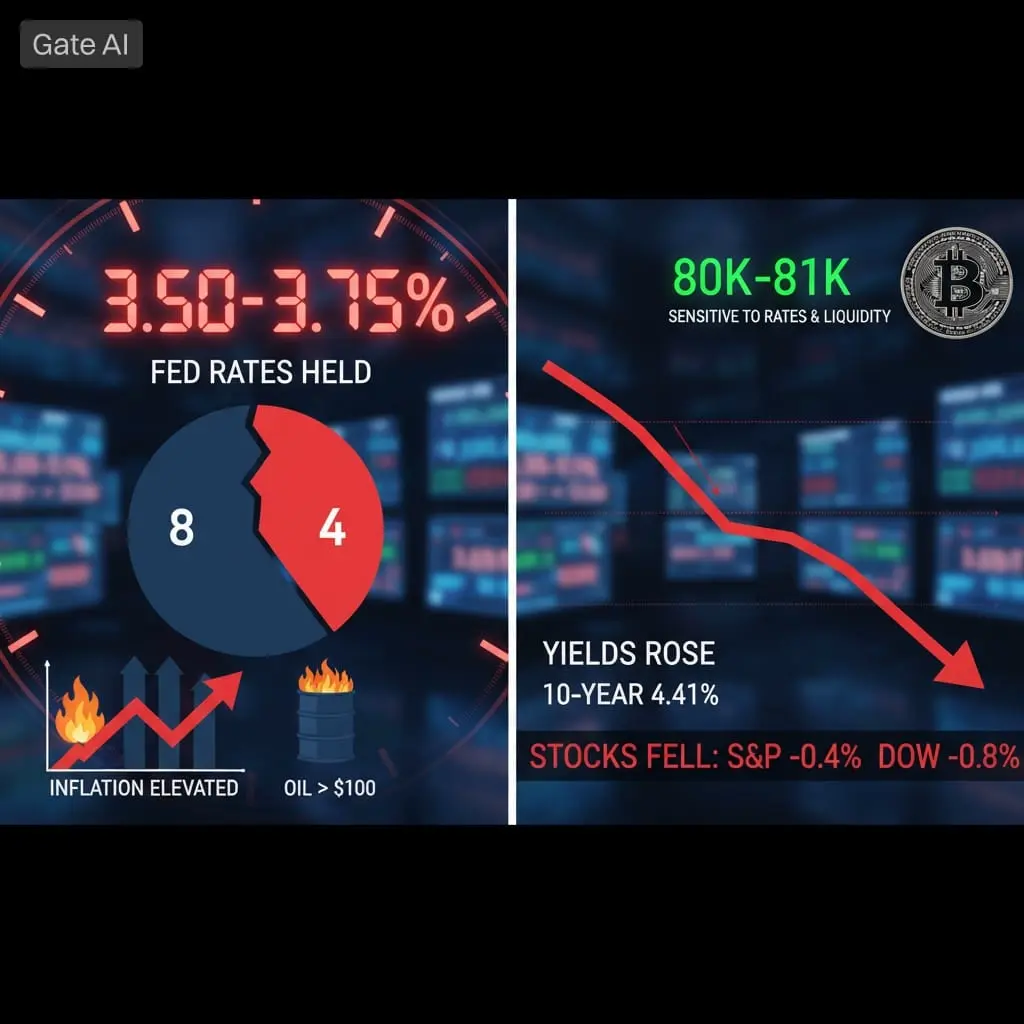
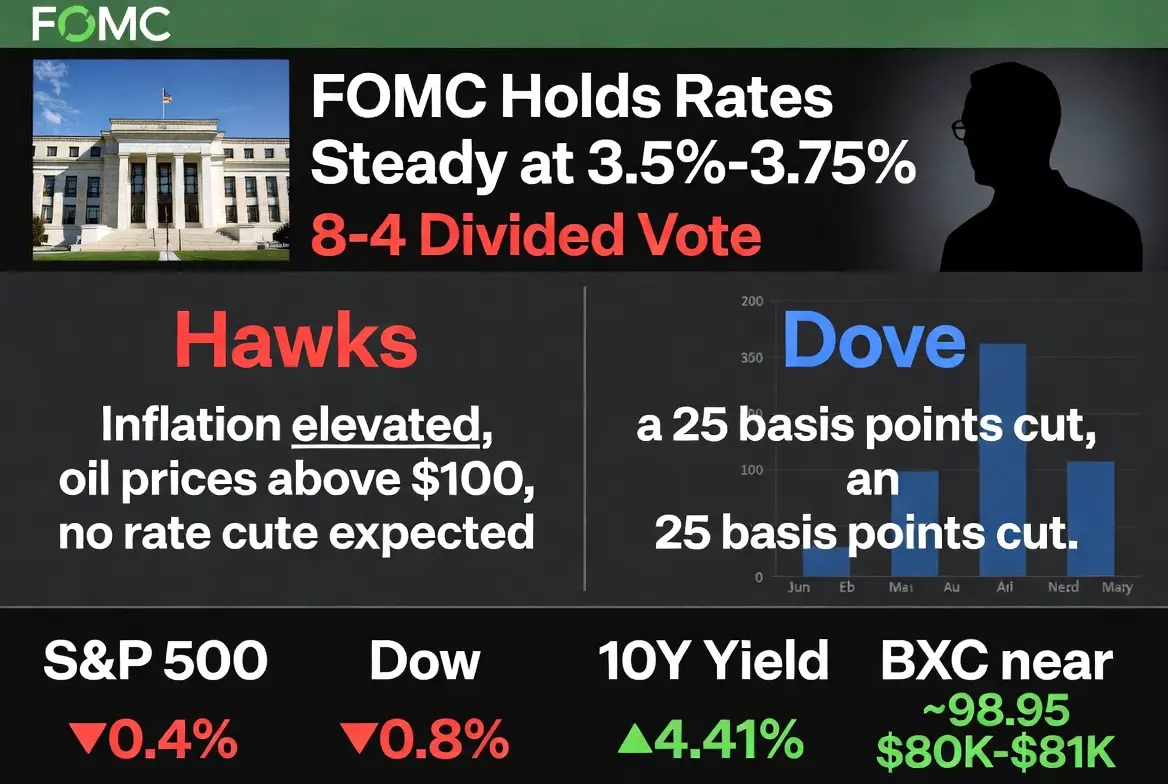
On April 30, the Federal Reserve kept the benchmark interest rate unchanged at 3.50%–3.75%, marking the third consecutive meeting without a policy shift. On the surface, this appears to be a continuation of the “wait and assess” stance. However, beneath the headline decision lies a far more important development: a rare and widening internal policy fracture.
The vote split of 8–4 represents the most significant divergence within the Federal Open Market Committee (FOMC) since 1992, signaling th
DragonFlyOfficial
##FedHoldsRateButDividesDeepen
Fed Holds Rates, But Internal Division Signals a Policy Turning Point
On April 30, the Federal Reserve kept the benchmark interest rate unchanged at 3.50%–3.75%, marking the third consecutive meeting without a policy shift. On the surface, this appears to be a continuation of the “wait and assess” stance. However, beneath the headline decision lies a far more important development: a rare and widening internal policy fracture.
The vote split of 8–4 represents the most significant divergence within the Federal Open Market Committee (FOMC) since 1992, signaling that consensus on the U.S. monetary path is weakening at a structural level rather than a tactical one.
What changed beneath the surface
The breakdown of dissent is more important than the rate decision itself:
Three regional Fed presidents opposed maintaining any easing bias in the statement
One Fed governor pushed for an immediate rate cut
Majority still preferred holding rates steady
This is not routine disagreement. It reflects a growing split between:
Inflation-focused policymakers
Growth- and labor-sensitive members
And those concerned about financial stability risks
Inflation is no longer “disinflation narrative friendly”
The Fed explicitly acknowledged that inflation remains persistent, with a clear emphasis on energy-driven price pressures.
The key structural driver now is:
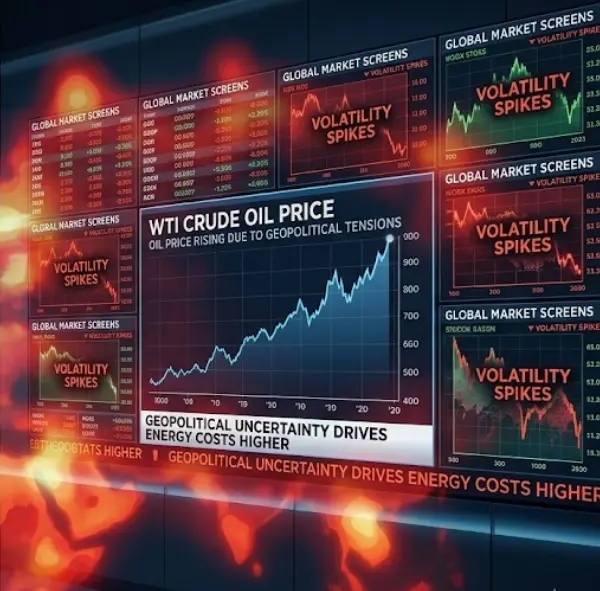
Elevated oil prices due to Middle East geopolitical tensions
Secondary inflation effects across transport and production costs
This matters because energy inflation is historically:
Volatile
Hard to suppress with monetary policy alone
And capable of reversing disinflation trends quickly
The real shift: “Higher for longer” is being re-priced again
Markets are no longer debating just “rate cuts timing.”
They are now reassessing three scenarios:
1. Extended plateau (base case shifting)
Rates stay higher for longer than previously expected
Cuts delayed further into the cycle
2. Policy reversal risk
Inflation persistence forces Fed to maintain restrictive stance longer
Financial conditions tighten indirectly via yields
3. Limited tightening tail risk (now re-emerging)
If oil-driven inflation persists
Fed may be forced to consider additional hikes
This last scenario was largely dismissed earlier in the cycle — it is now re-entering pricing models.
Why this vote split matters for markets
The Fed is no longer acting as a unified signal generator.
Instead, it is becoming:
A divided institution reacting to fragmented economic signals
This creates three major market consequences:
1. Higher volatility in risk assets
Equities and crypto become more sensitive to:
Fed speeches
Dot-plot changes
Individual governor commentary
2. Unstable rate expectations
Bond markets will struggle to anchor:
Cut timelines
Terminal rate assumptions
3. Liquidity uncertainty
When policy direction is unclear, institutional capital tends to:
Reduce leverage
Rotate into short-duration assets
Delay aggressive positioning
The hidden macro tension
The core conflict inside the Fed is now:
Inflation persistence vs economic slowdown risk
Energy shock vs financial stability
Data dependence vs policy credibility
This is exactly the type of environment where policy mistakes historically occur — either by:
Holding too tight for too long
Or easing prematurely into inflation re-acceleration
Market implication summary
What markets are actually pricing now:
Reduced probability of near-term rate cuts
Increased volatility in yield expectations
Higher risk premium on equities
Stronger USD bias in uncertain phases
Pressure on high-duration assets (tech, growth, crypto)
Bottom line
This Fed meeting was not about rates — it was about loss of consensus inside the most powerful monetary institution in the world.
When policy unity breaks, markets don’t move on decisions anymore — they move on interpretation gaps between members.
That is where volatility expands.
repost-content-media
  • Reward
  • 4
  • Repost
  • Share
Crypto_Buzz_with_Alex:
🧠 “This is next-level strategy, really digging the thought process here.”
View More
#美联储利率不变但内部分歧加剧
The Federal Reserve didn’t surprise the market by holding rates steady — that part was priced in. What actually matters now is something far more powerful and far less discussed: the growing disagreement inside the Fed itself. And this internal split is not just noise — it’s a signal that the next phase of global markets could become significantly more complex.
Markets don’t move based on current policy alone. They move based on expectations of future policy. When central banks speak with one voice, traders can build models with confidence. But when policymakers begin to diver
BTC-2.51%
CryptoChampion
#美联储利率不变但内部分歧加剧
The Federal Reserve didn’t surprise the market by holding rates steady — that part was priced in. What actually matters now is something far more powerful and far less discussed: the growing disagreement inside the Fed itself. And this internal split is not just noise — it’s a signal that the next phase of global markets could become significantly more complex.
Markets don’t move based on current policy alone. They move based on expectations of future policy. When central banks speak with one voice, traders can build models with confidence. But when policymakers begin to diverge in their views, that confidence starts to erode. And once confidence weakens, volatility steps in.
Right now, the Federal Reserve is no longer fully aligned on the path forward. One side remains concerned that inflation is still a threat, especially with energy prices showing strength again. The other side is increasingly aware of potential economic slowdown risks and sees room for easing later if conditions weaken.
This is not a minor disagreement — it is a fundamental divide.
And historically, when central banks begin to split internally, it often comes before major policy shifts.
The inflation dynamic is at the center of this conflict.
Energy markets are once again becoming a key driver. Rising oil prices don’t just affect fuel — they impact transportation, manufacturing, and ultimately consumer prices across the board. This creates a ripple effect that can keep inflation elevated longer than expected.
That’s exactly why some Fed officials are pushing back against early rate cuts. Cutting too soon could re-ignite inflation expectations, forcing more aggressive tightening later — a scenario markets would struggle to absorb.
For Bitcoin and crypto markets, this creates a very different environment than what many traders are used to.
Bitcoin thrives on liquidity.
When markets expect rate cuts, liquidity expands, capital flows into risk assets, and Bitcoin tends to benefit. But when those expectations become uncertain or delayed, liquidity becomes less predictable — and that removes a key tailwind.
This doesn’t automatically mean bearish price action. But it does mean the market becomes more sensitive, more reactive, and more volatile.
The old model — where rate cuts equal bullish and rate hikes equal bearish — is no longer enough.
Today’s market is driven by timing, confidence, and credibility.
And right now, all three are unstable.
Another layer of complexity comes from the political landscape. The possibility of a future leadership shift at the Fed introduces a psychological variable that markets cannot ignore. A more dovish leadership outlook could trigger early optimism in risk assets, including Bitcoin.
However, policy is still constrained by economic reality.
If inflation remains elevated, even a dovish shift may not result in aggressive easing. This is why relying purely on political expectations can be dangerous for traders.
In this environment, strategy matters more than speed.
This is not a phase for impulsive trading. It is a phase for precision.
Smart traders will focus on key macro drivers: inflation data, energy prices, Treasury yields, and Fed communication. These elements will shape expectations before policy actually changes.
Because the biggest moves don’t happen when policy shifts.
They happen when expectations shift.
That distinction is where opportunity lives.
Bitcoin’s long-term narrative remains intact. Institutional adoption continues, and its role in the global financial system is expanding. But in the short term, price action will be heavily influenced by macro uncertainty.
And uncertainty creates sharp moves — in both directions.
The Fed didn’t change rates.
But it changed something more important: market confidence.
And when confidence breaks, volatility begins.
For disciplined traders, that volatility is not a threat.
It’s an opportunity — if approached with patience, structure, and control.
##FedHoldsRateButDividesDeepen
repost-content-media
  • Reward
  • Comment
  • Repost
  • Share
##FedHoldsRateButDividesDeepen
The Federal Reserve held interest rates steady at 3.5%–3.75%, matching expectations, marking the third consecutive pause after earlier cuts in 2025. Despite no rate change, markets reacted strongly due to a deeply divided 8–4 vote, the most split FOMC decision since 1992
Three hawkish members opposed any easing bias, arguing inflation remains “elevated,” supported by persistent pressures such as oil prices above $100 per barrel, energy-driven cost increases, and tariff-related inflation effects. They believe cutting rates while core inflation stays above 3% is p
BTC-2.51%
post-image
post-image
  • Reward
  • 19
  • Repost
  • Share
Crypto_Buzz_with_Alex:
2026 GOGOGO 👊
View More
#美联储利率不变但内部分歧加剧
The Federal Reserve didn’t surprise the market by holding rates steady — that part was priced in. What actually matters now is something far more powerful and far less discussed: the growing disagreement inside the Fed itself. And this internal split is not just noise — it’s a signal that the next phase of global markets could become significantly more complex.
Markets don’t move based on current policy alone. They move based on expectations of future policy. When central banks speak with one voice, traders can build models with confidence. But when policymakers begin to diver
BTC-2.51%
post-image
post-image
  • Reward
  • Comment
  • Repost
  • Share
#FedHoldsRateButDividesDeepen
The Fed kept rates steady but the internal split is deepening.
May 2026 FOMC: The policy rate stays in the 5.25 to 5.50 percent range. The decision was not unanimous. Two members called for a 25 basis point cut and one member argued for a 25 basis point hike. This is the clearest division since 2008.
What do the minutes say
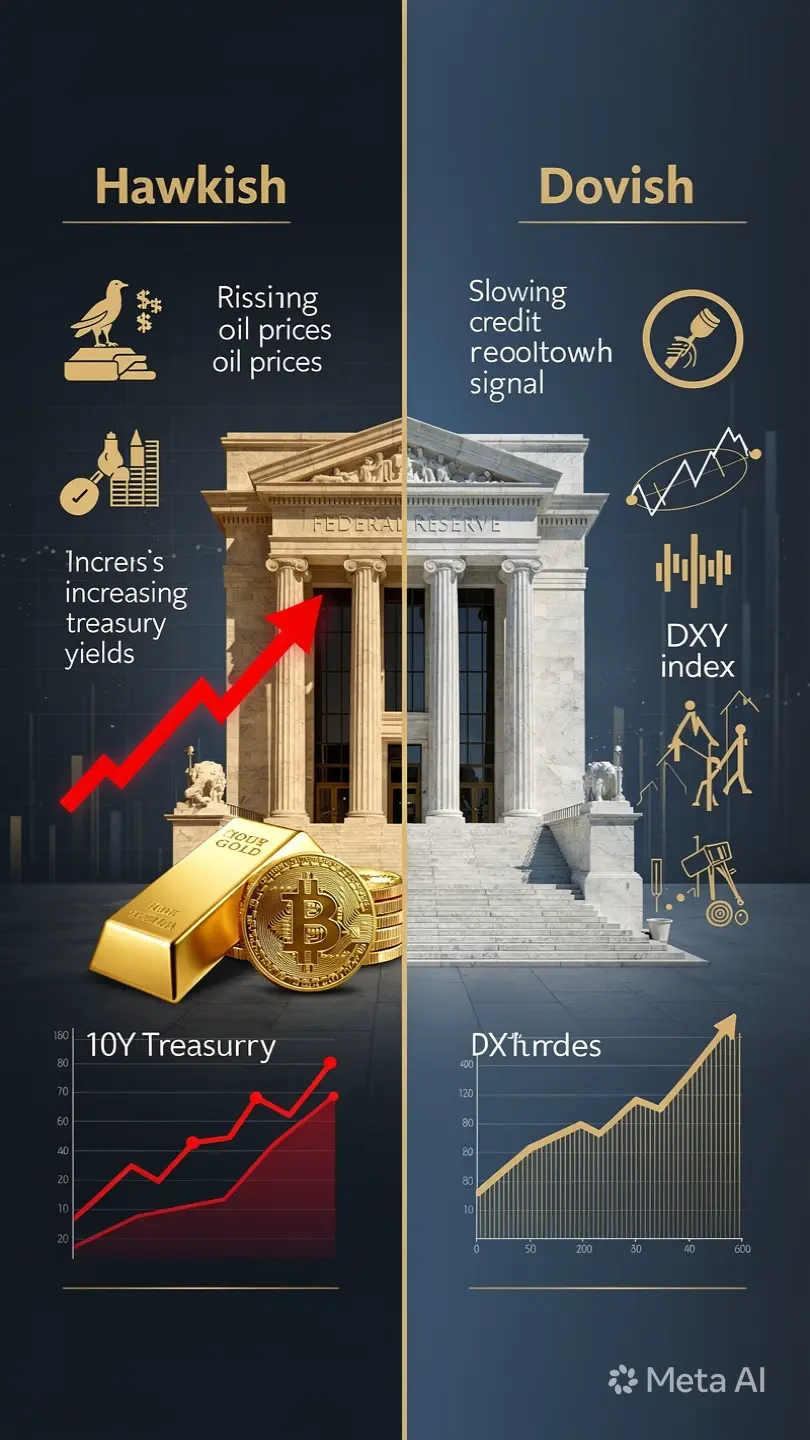
First the hawkish side. Oil is above 110 dollars, Hormuz tensions continue, and AI data center spending is strong. This keeps inflation sticky. The view is that we should not ease before the 5 percent bond yield creates more inflation.
BTC-2.51%
discovery
#FedHoldsRateButDividesDeepen
The Fed kept rates steady but the internal split is deepening.
May 2026 FOMC: The policy rate stays in the 5.25 to 5.50 percent range. The decision was not unanimous. Two members called for a 25 basis point cut and one member argued for a 25 basis point hike. This is the clearest division since 2008.
What do the minutes say
First the hawkish side. Oil is above 110 dollars, Hormuz tensions continue, and AI data center spending is strong. This keeps inflation sticky. The view is that we should not ease before the 5 percent bond yield creates more inflation.
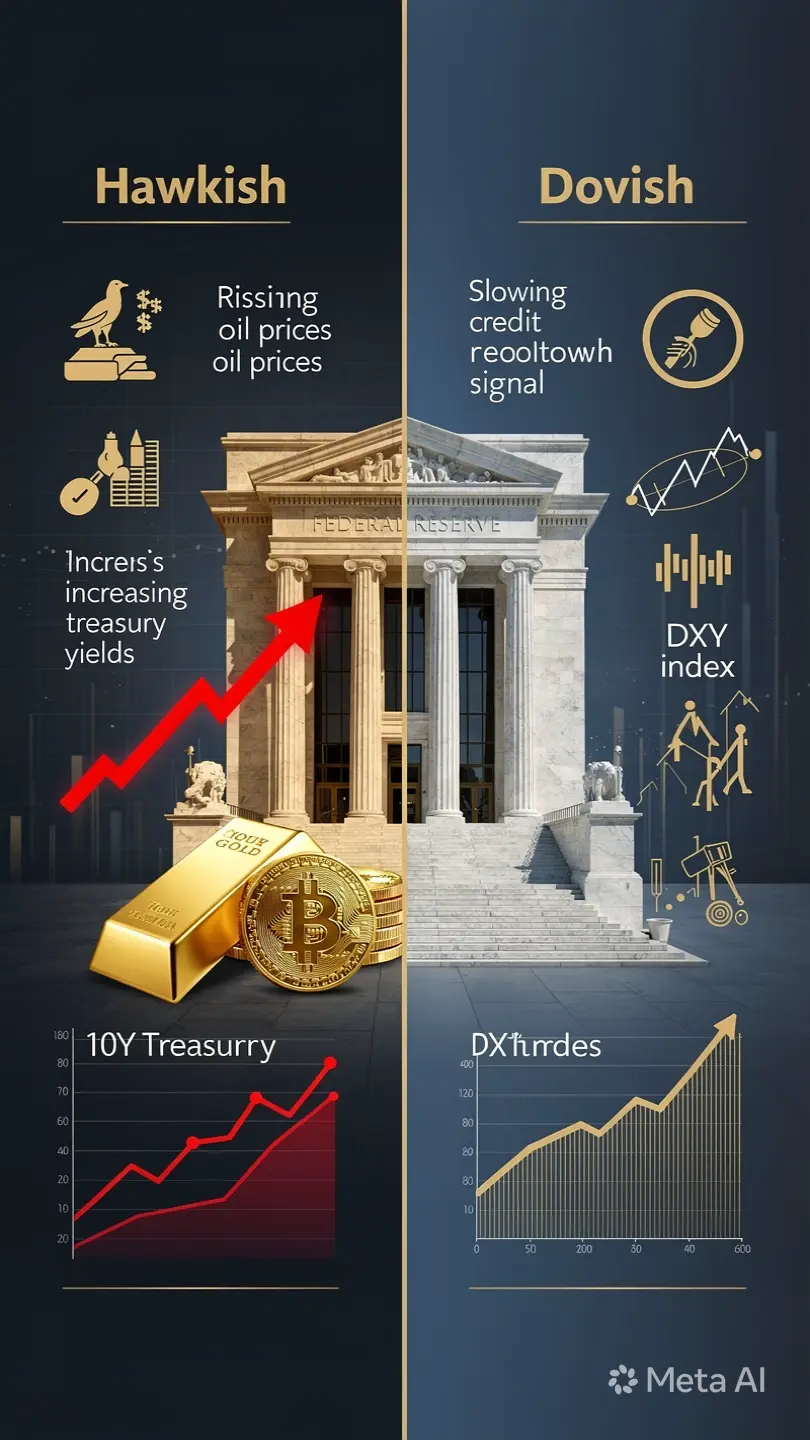
Second the dovish side. Real yields are at 1.96 percent which is a 15 year high. Consumer credit has slowed and liquidity is drying up. The concern is that the brake is too hard and recession risk is rising.
Third the Kevin Warsh effect. The new chair candidate gave dovish signals to the market but the committee is not convinced. The message that the Fed will stay data dependent carried more weight.
Market reaction
The 10 year Treasury yield moved from 4.42 percent to 4.38 percent but the 4.35 percent barrier did not break.
The DXY index rose to 106.8 and gold faced pressure at 4564 dollars.
BTC held at 80700 dollars but there is no clear signal for a move above 82000 dollars. The market still prices that rate cuts are pushed to the second half of 2026.
Risk assets remain indecisive. A steady rate is not bad on its own but the division increases the uncertainty premium.
What should a trader watch
First the June CPI. If core comes in above 3.2 percent the hawkish side gains strength.
Second the 10 year yield. If it moves above 4.6 percent while the Fed is divided, bond selling becomes a red alert for all risk assets.
Third the pace of QT. Balance sheet reduction continues at 60 billion dollars per month. Liquidity keeps being withdrawn.
Summary
The Fed is on hold but there is no consensus. The worst scenario for the market is stubborn inflation plus slowing growth plus a divided Fed. Capital prefers to stay in the 5 percent risk free return. For crypto the new catalyst is a clear Fed pivot. Until that comes the market stays sideways and compressed.
Note
This post is not investment advice. Always do your own research.
#GateSquareMayTradingShare
#Gate广场五月交易分享
repost-content-media
  • Reward
  • 29
  • Repost
  • Share
xxx40xxx:
To The Moon 🌕
View More
#Gate广场五月交易分享
The headline says "hold." The real story is a 3-way fracture the deepest in 34 years.
On April 29, the FOMC voted 8-4 to keep rates at 3.50-3.75%. Sounds routine. It isn't. The four dissenters aren't allies they represent three fundamentally different visions for what comes next, and each reshapes crypto's landscape differently.
━━ Battle 1: The Easing Bias War ━━
Three regional presidents Hammack (Cleveland), Kashkari (Minneapolis), Logan (Dallas) didn't want lower rates. They wanted the FOMC to stop implying the next move would be a cut. The contested phrase: "the extent and t
BTC-2.51%
post-image
post-image
  • Reward
  • 10
  • Repost
  • Share
MasterChuTheOldDemonMasterChu:
Chong Chong GT 🚀
View More
#FedHoldsRateButDividesDeepen
The latest decision by the Federal Reserve to hold interest rates steady may look straightforward on the surface, but underneath, the divide among policymakers is becoming increasingly difficult to ignore. What we are seeing is not just a pause in policy tightening—it’s a growing disagreement about what comes next.
On one side, several members remain firmly focused on inflation risks. Despite some cooling in headline data, underlying pressures—especially in services and wages—continue to signal that inflation is not fully under control. This camp believes that ke
BTC-2.51%
post-image
post-image
  • Reward
  • 12
  • Repost
  • Share
ybaser:
2026 GOGOGO 👊
View More
#FedHoldsRateButDividesDeepen
The Fed kept rates steady but the internal split is deepening.
May 2026 FOMC: The policy rate stays in the 5.25 to 5.50 percent range. The decision was not unanimous. Two members called for a 25 basis point cut and one member argued for a 25 basis point hike. This is the clearest division since 2008.
What do the minutes say
First the hawkish side. Oil is above 110 dollars, Hormuz tensions continue, and AI data center spending is strong. This keeps inflation sticky. The view is that we should not ease before the 5 percent bond yield creates more inflation.
BTC-2.51%
post-image
  • Reward
  • 33
  • Repost
  • Share
User_any:
LFG 🔥
View More
##FedHoldsRateButDividesDeepen #Step 1: What happened
The Federal Reserve decided to keep interest rates unchanged in its latest policy meeting.
This means no increase and no decrease — a pause decision after previous aggressive moves.
Step 2: Why Fed controls rates
The Fed uses interest rates to manage:
Inflation (rising prices)
Employment levels
Economic growth stability
Higher rates slow down spending, while lower rates encourage borrowing and growth.
Step 3: Current economic situation
The Fed is dealing with a mixed environment:
Inflation is cooling but not fully under control
The economy
BTC-2.51%
post-image
  • Reward
  • 27
  • Repost
  • Share
MrFlower_XingChen:
To The Moon 🌕
View More
Load More