# TrumpVisitsChina

60.76K

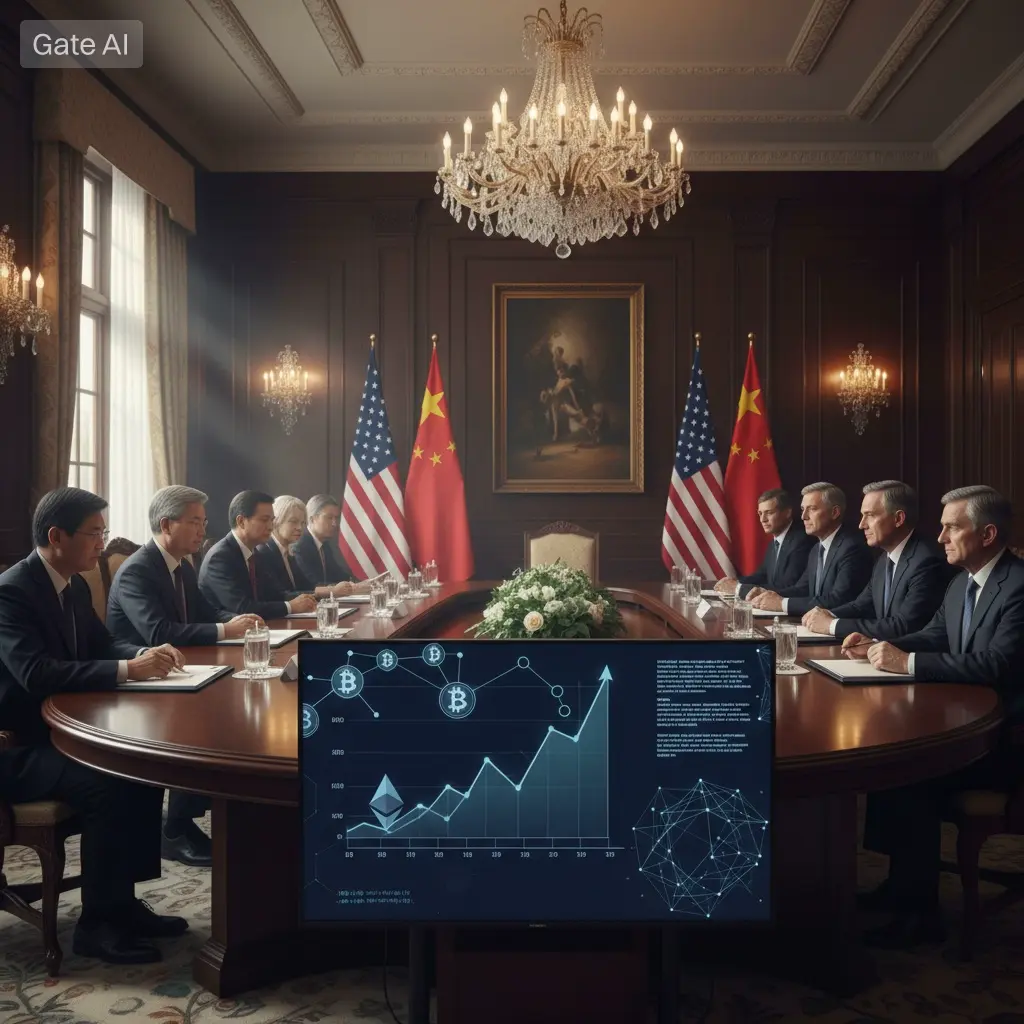
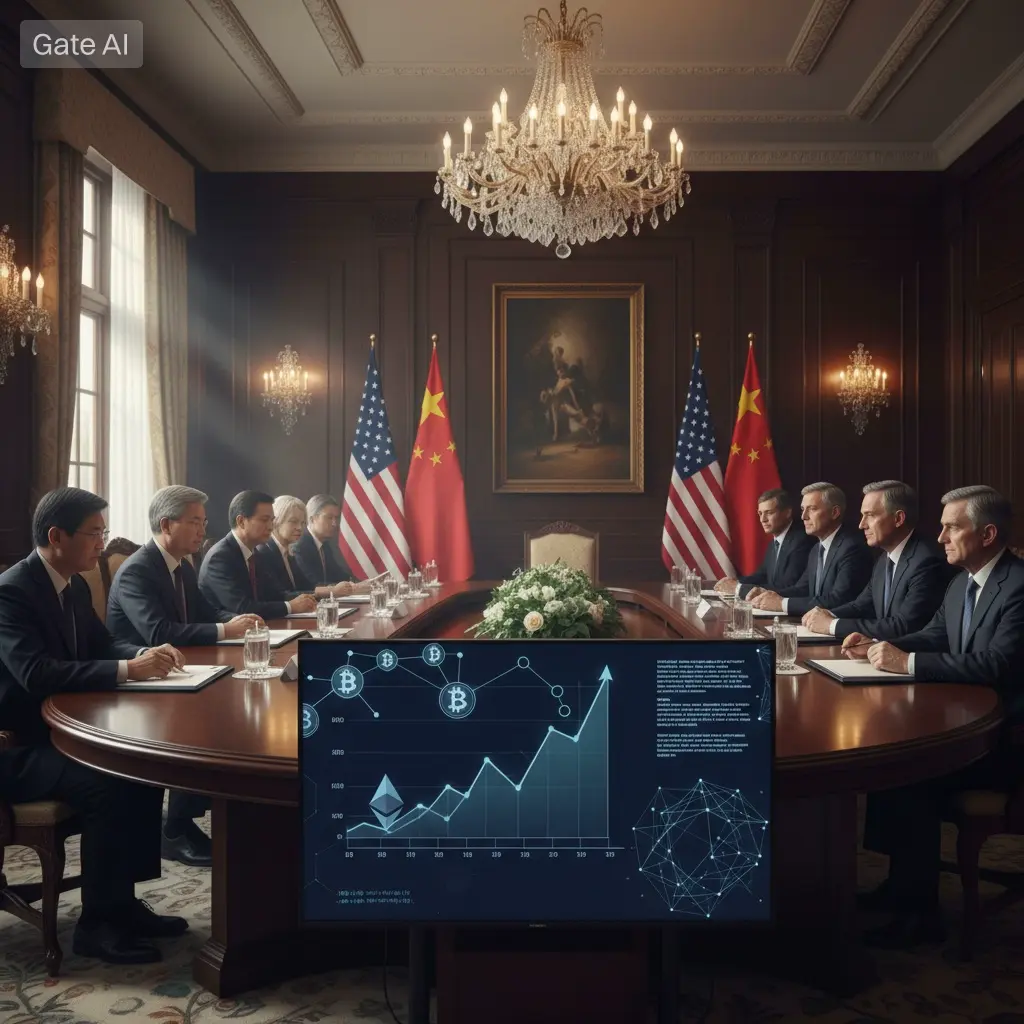
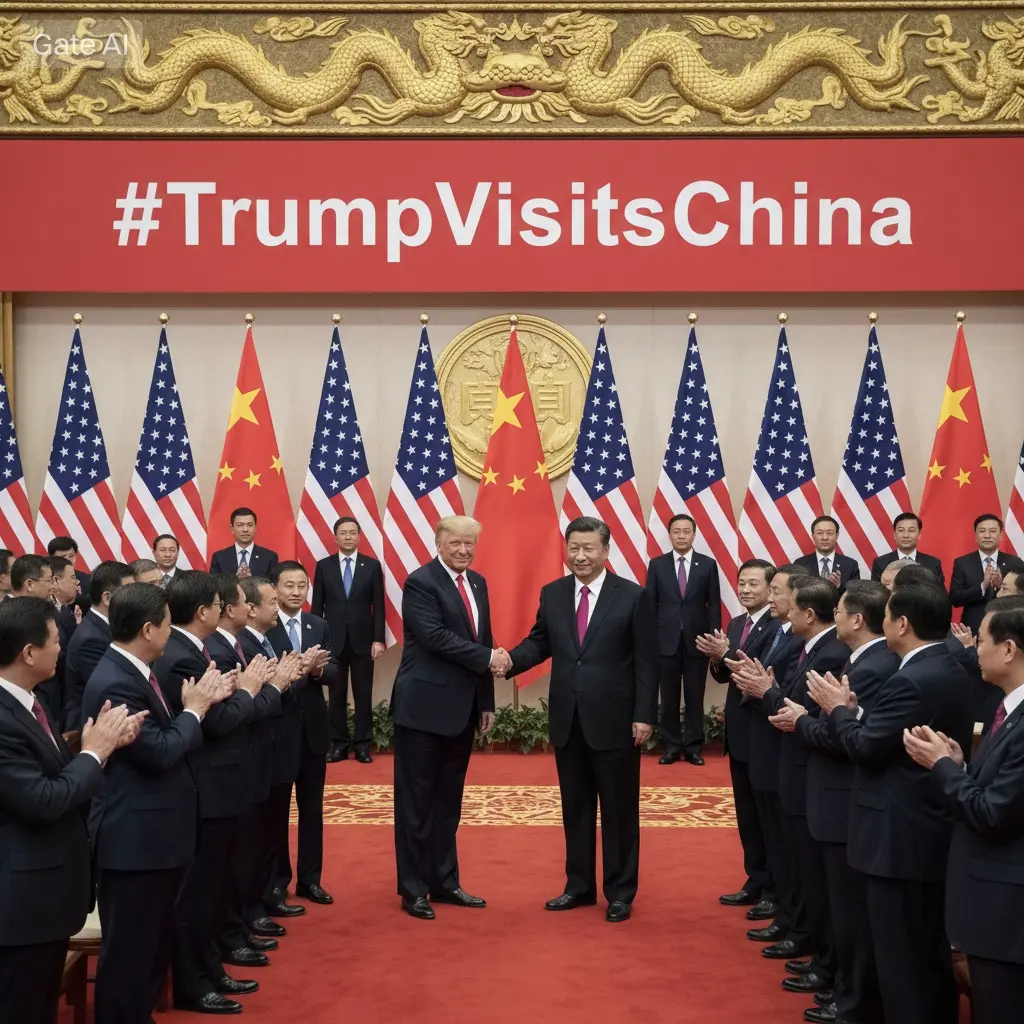
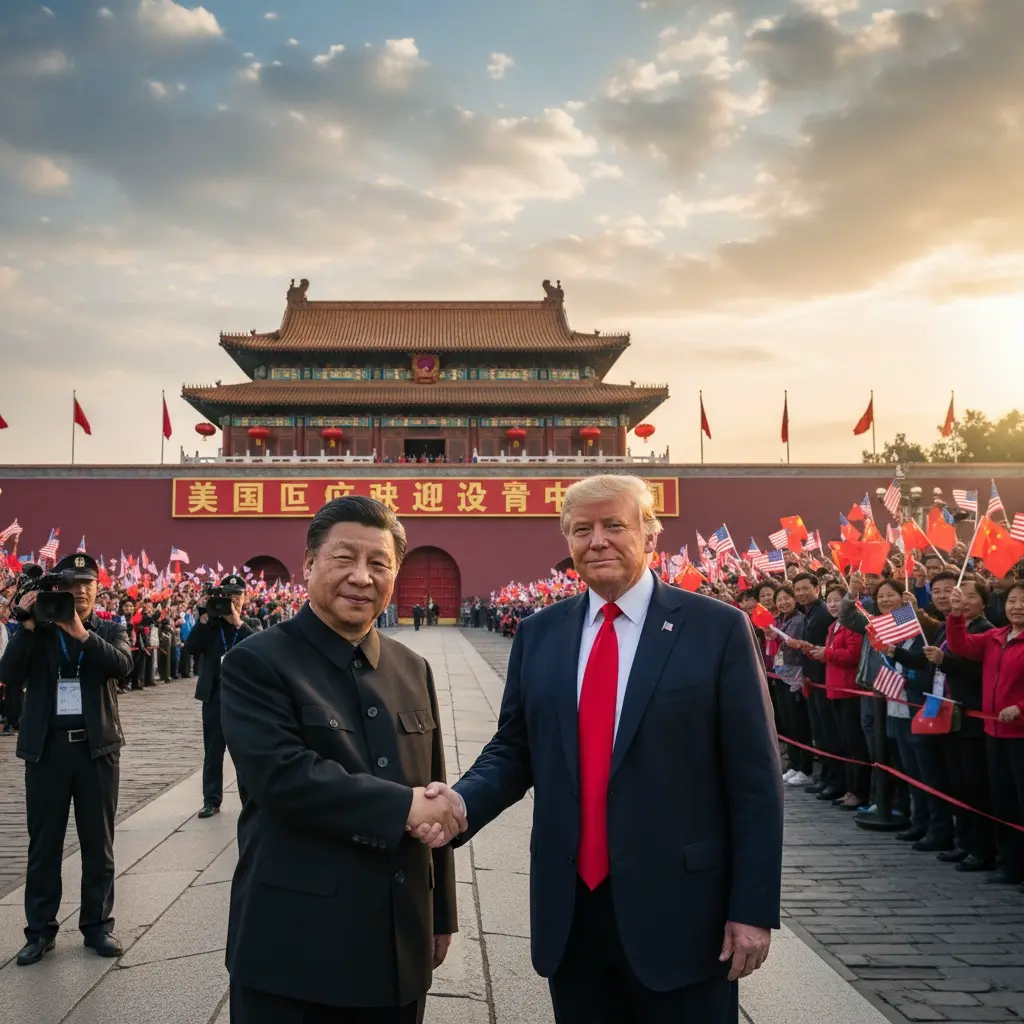
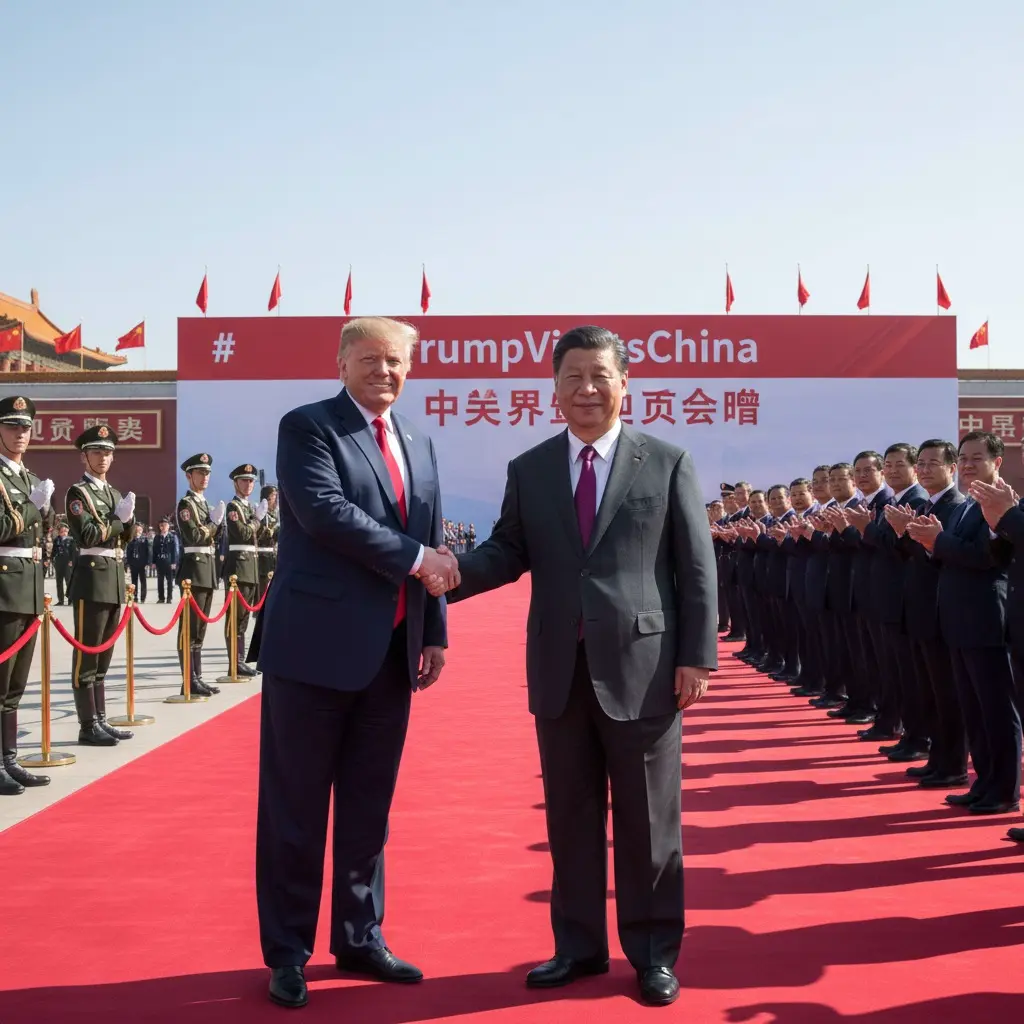
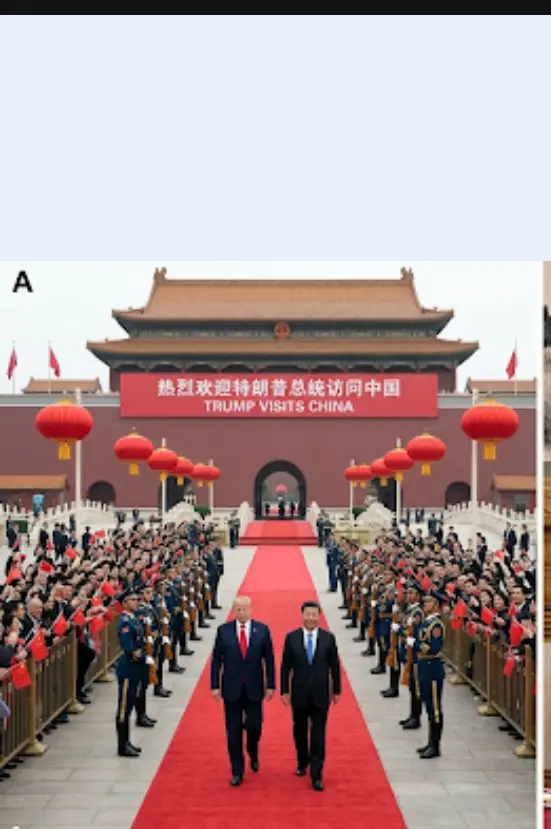
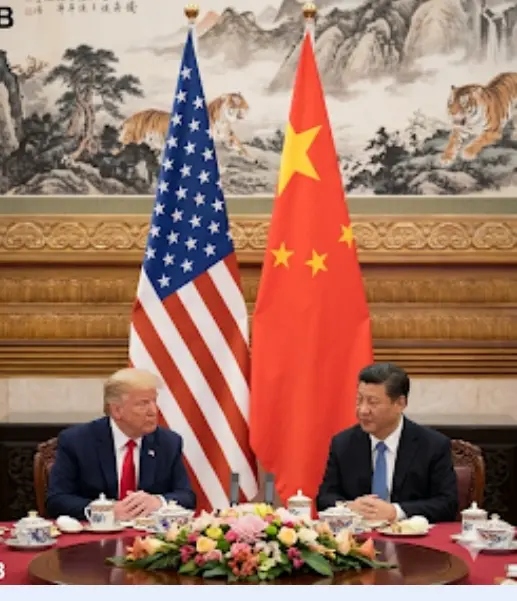
Trump paid a state visit to China from May 13 to 15, the first US presidential visit in nine years. China rolled out high-level honors including a 21-gun salute, guard inspection and state banquet. About 200 US executives including Musk, Cook and Huang accompanied Trump. First-day talks lasted about two hours, covering trade, Iran, Taiwan, AI and critical minerals. Xi stressed that bilateral economic ties are mutually beneficial and win-win. Trump said the US-China relationship will be "better than ever before". However, the US approved arms sales to Taiwan and sanctioned Chinese firms over Iranian oil shipments on the eve of the visit, sending mixed signals. China declined to negotiate on nuclear arms and AI military control. Analysts suggest Beijing's primary goal is to gauge Trump's "minimum price point". Day two moves to Zhongnanhai for tea talks, with potential deals including a Boeing aircraft purchase.

#CMEToLaunchNasdaqCryptoIndexFutures #TrumpVisitsChina Market Overview — Geopolitical Shockwaves Across Global Markets
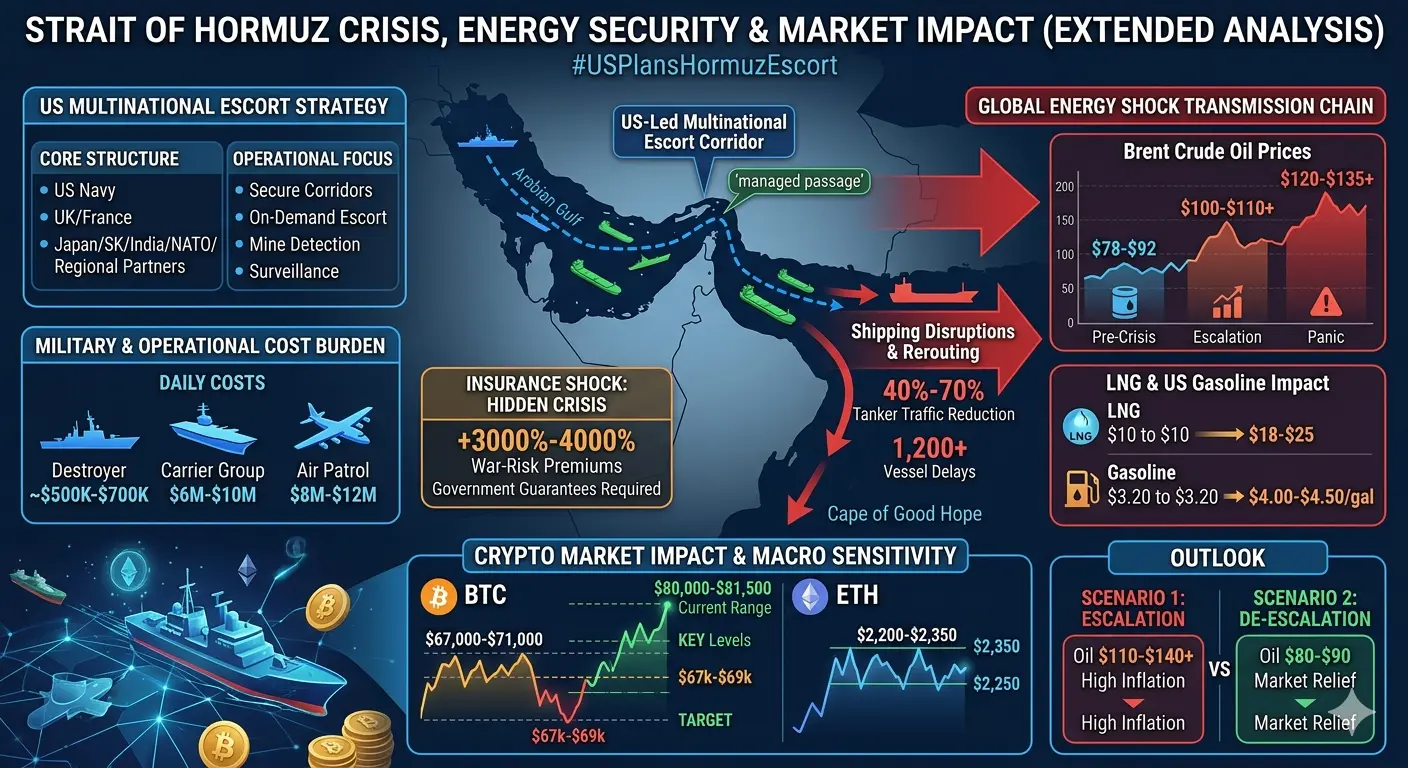
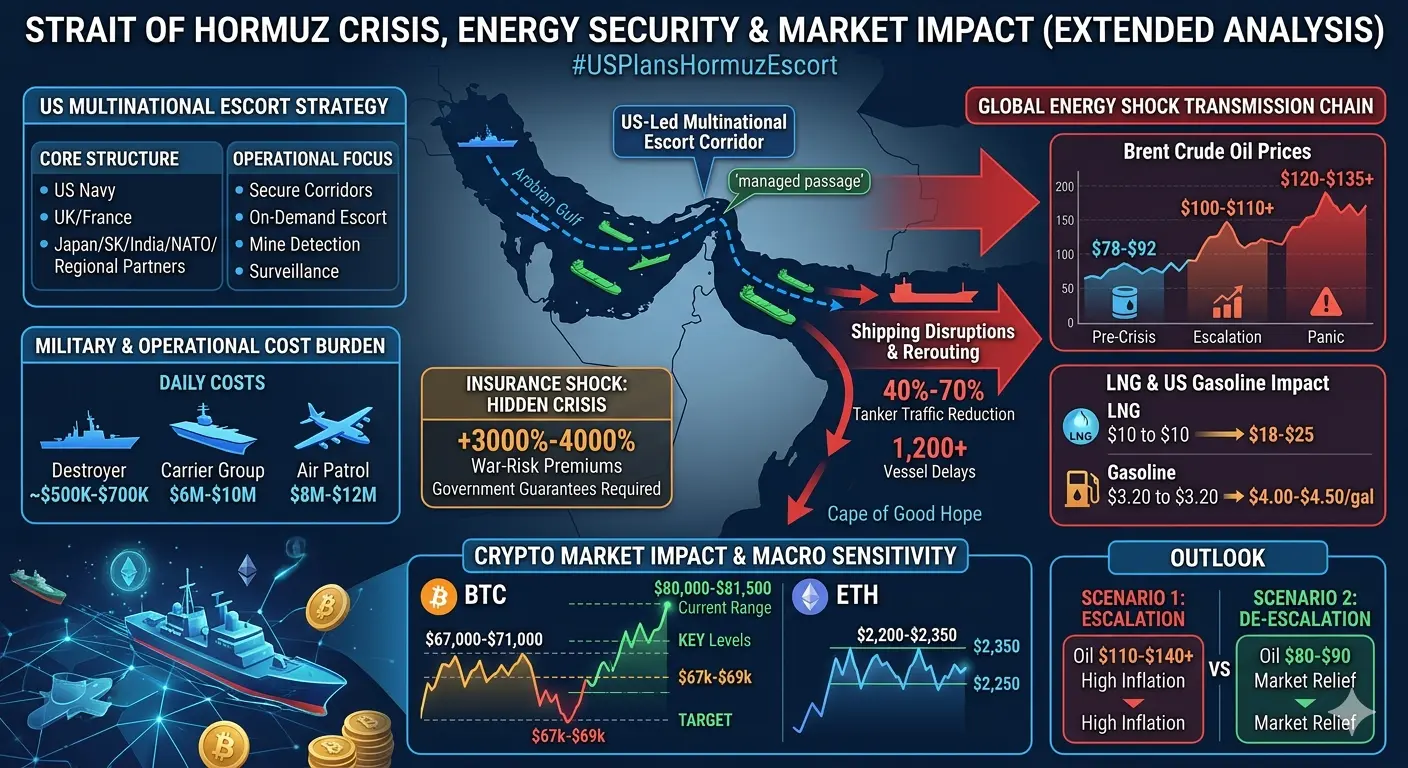
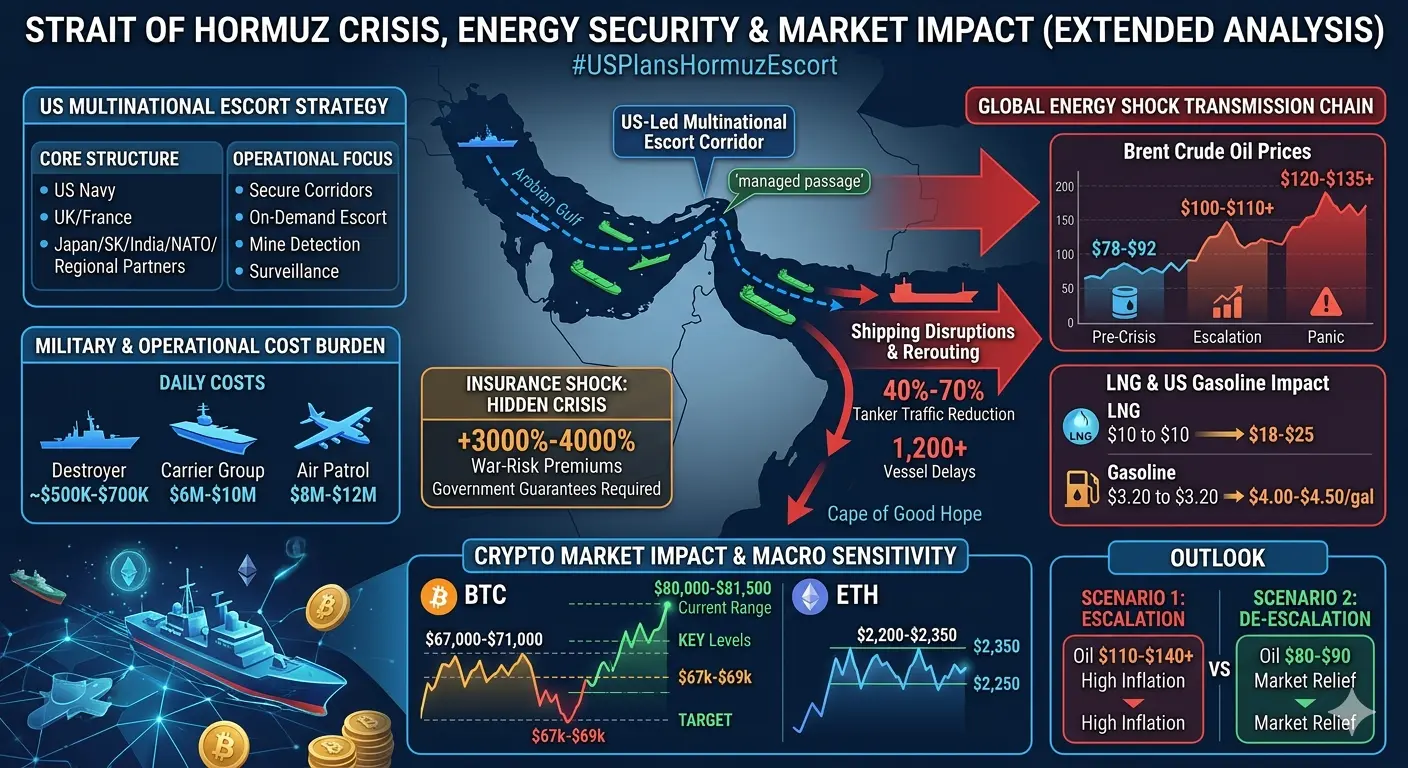
The 2026 financial landscape is being heavily defined by rising tensions between the United States and Iran, creating a volatile environment for equities, commodities, and digital assets. With military activity and risks to the Strait of Hormuz at the forefront, investor sentiment remains fragile, oscillating between panic and rapid recovery.
🛢️ Oil: The Primary Volatility Catalyst
Energy prices are currently the indirect "master switch" for crypto markets.
Price Action: Crud
BTC-3.1%
ETH-3.72%
SOL-4.26%
XRP-6.68%
post-image
post-image
  • Reward
  • 5
  • Repost
  • Share
AYATTAC:
1000x VIbes 🤑
View More
#TrumpVisitsChina Market Overview — Geopolitical Shockwaves Across Global Markets
The 2026 financial landscape is being heavily defined by rising tensions between the United States and Iran, creating a volatile environment for equities, commodities, and digital assets. With military activity and risks to the Strait of Hormuz at the forefront, investor sentiment remains fragile, oscillating between panic and rapid recovery.
🛢️ Oil: The Primary Volatility Catalyst
Energy prices are currently the indirect "master switch" for crypto markets.
Price Action: Crude is frequently testing $95–$105, wit
BTC-3.1%
ETH-3.72%
SOL-4.26%
XRP-6.68%
post-image
post-image
  • Reward
  • Comment
  • Repost
  • Share
#TrumpVisitsChina
🌏 Trump Visits China – Crypto Market Buzz
So, Trump is making moves in China again, and naturally, crypto traders are watching closely. Historically, big political events like this can shake sentiment, especially with regulatory whispers coming out of Asia. Right now, BTC is holding steady, but altcoins are jittery — classic “wait-and-see” vibes across the board.
From my angle, it feels like a good time to step back a bit. Some traders will go full risk chasing headlines, but I’m trimming volatile positions and focusing on the ones that can handle a sudden spike or dip. Wha
BTC-3.1%
Crypto_Buzz_with_Alex
#TrumpVisitsChina
🌏 Trump Visits China – Crypto Market Buzz
So, Trump is making moves in China again, and naturally, crypto traders are watching closely. Historically, big political events like this can shake sentiment, especially with regulatory whispers coming out of Asia. Right now, BTC is holding steady, but altcoins are jittery — classic “wait-and-see” vibes across the board.
From my angle, it feels like a good time to step back a bit. Some traders will go full risk chasing headlines, but I’m trimming volatile positions and focusing on the ones that can handle a sudden spike or dip. What’s interesting is how quickly Polymarket and futures prices are reacting to every tweet and press briefing — the market is basically digesting foreign policy in real time.
I’m also keeping an eye on China-related crypto projects. Any news from the visit could either open doors for adoption or bring more restrictions. Either way, being nimble is key. Personally, I’m thinking small, strategic moves rather than big all-in bets while the political uncertainty looms.
Curious — how is everyone adjusting their positions during this kind of political headline risk? Are you trading the swings or sitting tight?
#TrumpVisitsChina #CryptoTrading #MarketSentiment @Gate_Square
repost-content-media
  • Reward
  • 2
  • Repost
  • Share
Crypto_Buzz_with_Alex:
LFG 🔥
View More
#TrumpVisitsChina
🌏 Trump Visits China – Crypto Market Buzz
So, Trump is making moves in China again, and naturally, crypto traders are watching closely. Historically, big political events like this can shake sentiment, especially with regulatory whispers coming out of Asia. Right now, BTC is holding steady, but altcoins are jittery — classic “wait-and-see” vibes across the board.
From my angle, it feels like a good time to step back a bit. Some traders will go full risk chasing headlines, but I’m trimming volatile positions and focusing on the ones that can handle a sudden spike or dip. Wha
BTC-3.1%
post-image
  • Reward
  • 13
  • Repost
  • Share
EagleEye:
This is the kind of trading content beginners really need
View More
#TrumpVisitsChina Market Overview — Geopolitical Shockwaves Across Global Markets
The 2026 financial landscape is being heavily defined by rising tensions between the United States and Iran, creating a volatile environment for equities, commodities, and digital assets. With military activity and risks to the Strait of Hormuz at the forefront, investor sentiment remains fragile, oscillating between panic and rapid recovery.
🛢️ Oil: The Primary Volatility Catalyst
Energy prices are currently the indirect "master switch" for crypto markets.
Price Action: Crude is frequently testing $95–$105, wit
BTC-3.1%
ETH-3.72%
SOL-4.26%
post-image
post-image
  • Reward
  • 15
  • Repost
  • Share
Crypto_Buzz_with_Alex:
LFG 🔥
View More
#TrumpVisitsChina
Macro Overview — A Defining Geopolitical Event Reshaping Global Market Liquidity Conditions
President Donald Trump’s official state visit to China from May 13 to May 15, 2026, represents one of the most significant geopolitical and economic coordination events of the decade, not because of symbolic diplomacy alone but because global financial markets are currently operating under extremely sensitive liquidity conditions where even small changes in trade expectations, energy stability, or geopolitical tone can rapidly reprice multi-trillion-dollar asset classes within hours,
HighAmbition
#TrumpVisitsChina
Macro Overview — A Defining Geopolitical Event Reshaping Global Market Liquidity Conditions
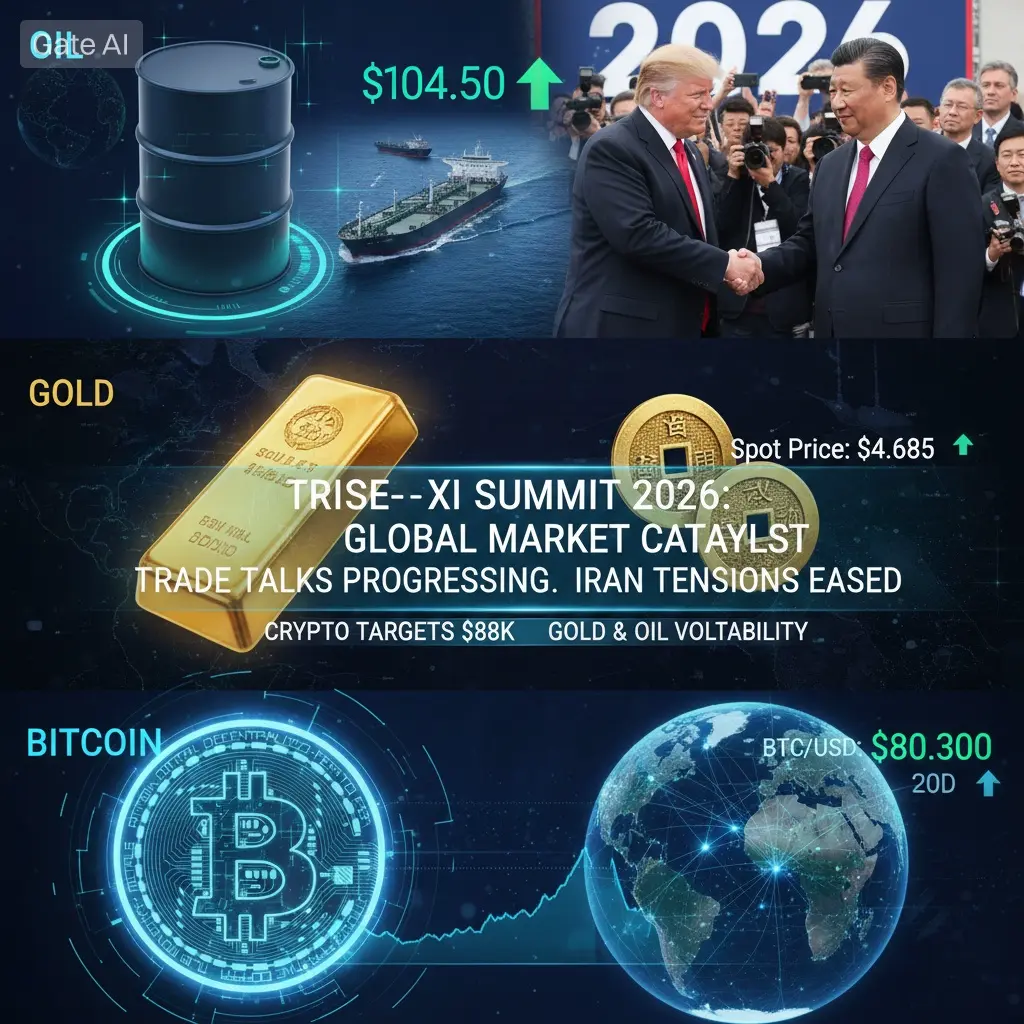
President Donald Trump’s official state visit to China from May 13 to May 15, 2026, represents one of the most significant geopolitical and economic coordination events of the decade, not because of symbolic diplomacy alone but because global financial markets are currently operating under extremely sensitive liquidity conditions where even small changes in trade expectations, energy stability, or geopolitical tone can rapidly reprice multi-trillion-dollar asset classes within hours, and at this moment Bitcoin is trading around the $78,000 to $82,500 zone while Ethereum fluctuates between $2,200 and $2,450 and global crypto market capitalization remains broadly in the $2.4 trillion to $2.8 trillion range, which indicates that risk appetite is still present but heavily dependent on macro stability signals emerging from high-level political discussions between the United States and China.
At the same time, crude oil remains structurally elevated with Brent crude trading near $104 to $108 per barrel and West Texas Intermediate fluctuating near $100 to $103 per barrel, reflecting ongoing geopolitical risk premiums tied to Middle East tensions and energy route security concerns, while gold continues to hold near historic elevated levels around $4,650 to $4,720 per ounce as investors maintain hedging positions against uncertainty, and this combination of elevated commodities alongside volatile but resilient crypto pricing creates a unique macro environment where every diplomatic signal from the Trump–Xi summit directly influences liquidity allocation across global financial systems.
Geopolitical Structure — Trade, Energy Security, and Strategic Balance Between Superpowers
The Trump–Xi meeting is centered around a multi-layered strategic framework that includes trade normalization discussions, energy market stabilization, geopolitical risk de-escalation, and long-term economic cooperation mechanisms that could reshape global supply chains, and the trade component alone carries potential implications for hundreds of billions of dollars in global flows, including possible agreements that could expand U.S.–China bilateral trade toward the $650 billion to $750 billion range annually if tariff easing on non-sensitive goods progresses, while also opening pathways for large-scale Chinese purchases of U.S. agricultural products valued between $25 billion and $40 billion and energy imports including LNG contracts that could exceed $15 billion to $25 billion depending on negotiation outcomes.
At the same time, aviation and industrial sectors are closely monitoring potential Boeing aircraft agreements that could range from $18 billion to $35 billion, and this alone is capable of influencing equity markets, aerospace indices, and currency flows, while simultaneously supporting broader U.S. export momentum, and in parallel energy security discussions around the Strait of Hormuz remain critically important because nearly 20% to 25% of global oil transit flows through this region, and any disruption or reassurance signal emerging from U.S.–China coordination could immediately shift oil pricing dynamics by $5 to $10 per barrel within short trading sessions.
Oil Market Dynamics — High Volatility Energy Pricing Driven by Geopolitical Risk Premium
The oil market currently remains in a structurally elevated volatility regime where Brent crude is oscillating between $104 and $108 while WTI crude is stabilizing around $100 to $103, and this pricing behavior reflects not only supply and demand fundamentals but also persistent geopolitical uncertainty linked to Iran-related tensions and global shipping route stability, and in such an environment even minor diplomatic signals from the Trump–Xi summit have the potential to generate large directional moves because if negotiations indicate improved energy cooperation or de-escalation of regional tensions then Brent crude could gradually retreat toward a $92 to $98 stabilization range while WTI could compress toward $88 to $94 levels as risk premiums decline, however if discussions fail to reduce geopolitical uncertainty or if tensions escalate further then oil could rapidly extend toward $110 to $120 for Brent and $105 to $115 for WTI, creating inflationary pressure across global economies and directly influencing central bank policy expectations.
This oil volatility is particularly important because energy pricing acts as a primary inflation driver, and any sustained move above the $100 threshold historically increases inflation expectations across both developed and emerging markets, which then feeds directly into interest rate speculation, bond yield movements, and ultimately risk asset behavior including equities and cryptocurrencies.
Gold Market Structure — Safe-Haven Capital Flow and Macro Hedge Positioning
Gold continues to function as the primary global safe-haven asset in the current macro environment, trading within a high-value consolidation zone between $4,650 and $4,720 per ounce while silver remains elevated near $82 to $86 per ounce and platinum trades between $2,050 and $2,150, reflecting broad precious metals strength driven by geopolitical uncertainty and inflation protection demand, and institutional investors continue to allocate capital into gold as a portfolio hedge against both currency volatility and geopolitical instability, particularly during high-level diplomatic events such as the Trump–Xi summit where uncertainty around outcomes tends to temporarily increase hedging demand.
If diplomatic outcomes from the summit show clear de-escalation in trade tensions and energy-related conflicts, gold may experience short-term profit-taking pressure toward the $4,500 to $4,600 zone as risk appetite improves, however if negotiations fail to reduce geopolitical uncertainty or if new tensions emerge, gold could extend its upward trajectory toward $4,800 to $5,000 and potentially even higher in extreme risk scenarios, reinforcing its role as a global liquidity safety asset.
Crypto Market Structure — Bitcoin at Macro Inflection Point with Institutional Flow Sensitivity
The cryptocurrency market remains in a structurally important consolidation phase where Bitcoin is trading near $78,000 to $82,500 while Ethereum fluctuates between $2,200 and $2,450 and major altcoins including XRP and Solana continue moving in correlation-driven cycles, and the broader crypto market cap remains above $2.4 trillion, showing sustained institutional participation through ETF inflows and derivatives positioning, and at this stage Bitcoin is particularly sensitive to macro developments emerging from geopolitical negotiations because it has evolved into a hybrid asset that reacts both to liquidity expansion and risk sentiment simultaneously.
From a technical macro perspective Bitcoin maintains strong support near $75,000 to $78,000 while resistance remains clustered around $82,500 to $85,000 and a confirmed breakout above this range could open upside expansion toward $88,000 to $92,000 and potentially even $95,000 to $105,000 if macro liquidity conditions improve, while downside scenarios linked to geopolitical escalation could result in retracement toward $74,000 or even $70,000 zones depending on severity of global risk repricing.
Institutional flows continue to play a major role in stabilizing Bitcoin’s structure as ETF inflows remain steady in the range of hundreds of millions per week and whale accumulation cycles continue absorbing supply during dips, which reduces downside volatility compared to earlier market cycles and supports a more structured long-term bullish trajectory.
Cross-Asset Correlation — How Oil, Gold, and Crypto Move Together in 2026 Macro Cycle
In the current macro environment, cross-asset correlation has strengthened significantly because oil price movements directly influence inflation expectations, gold reflects global uncertainty and liquidity hedging behavior, and Bitcoin represents a hybrid risk-on and liquidity-sensitive digital asset, and as a result these three markets are now interconnected in a way that means geopolitical headlines from events such as the Trump–Xi summit can simultaneously trigger movements across all three asset classes within a very short timeframe.
When oil rises above $100, inflation fears increase, which typically supports gold but pressures risk assets including Bitcoin in the short term, while when diplomatic outcomes reduce energy risk premiums, oil stabilizes, inflation expectations decline, and liquidity flows tend to rotate back into equities and crypto, creating a more favorable environment for Bitcoin expansion cycles.
Trading Strategy Outlook — Multi-Scenario Macro Positioning Framework
In a bullish diplomatic outcome scenario where trade agreements progress and energy tensions ease, Bitcoin is expected to hold above $78,000 and gradually move toward $85,000 followed by $90,000 and potentially $100,000 levels, Ethereum could move toward $2,600 to $3,000, oil could decline toward $92 to $98, and gold could retrace toward $4,500 to $4,600 as risk appetite increases and liquidity rotates into growth-oriented assets.
In a bearish escalation scenario where geopolitical tensions intensify or negotiations fail, Bitcoin could retest $74,000 to $70,000 levels, Ethereum could fall toward $2,000 or lower, oil could surge toward $110 to $120, and gold could accelerate toward $4,800 to $5,000 as safe-haven demand increases significantly across global markets.
In a neutral consolidation scenario where outcomes remain unclear, markets are expected to remain range-bound with Bitcoin between $76,000 and $83,000, oil between $100 and $106, and gold between $4,600 and $4,750 while traders focus on short-term volatility opportunities rather than directional positioning.
Final Market Interpretation — Global Liquidity Decision Point Driven by Geopolitics
The Trump–Xi summit represents a critical inflection point for global financial markets because it directly influences trade expectations, energy pricing stability, inflation trajectory, and risk sentiment across all major asset classes, and in a world where Bitcoin trades near $80,000, oil remains above $100, and gold is near record levels, even small diplomatic signals can create large-scale capital rotation between safe-haven assets and risk assets within extremely short timeframes, making this event one of the most important macro volatility triggers of 2026 where traders must carefully monitor liquidity shifts, correlation changes, and institutional flow behavior in order to navigate the next phase of global market direction.
repost-content-media
  • Reward
  • 10
  • Repost
  • Share
MasterChuTheOldDemonMasterChu:
The bull quickly returns 🐂
View More
#TrumpVisitsChina
🌍 TRUMP–CHINA TALKS ARE RESHAPING THE ENTIRE GLOBAL MARKET STRUCTURE OF 2026
The global financial system is entering a completely new era where geopolitics is no longer operating separately from markets. Every major negotiation between the United States and China is now directly influencing liquidity flows, institutional positioning, inflation expectations, technology expansion, and digital asset volatility across the world.
The ongoing Trump–China negotiations are increasingly being treated by institutional investors as one of the most important macroeconomic catalysts of
post-image
  • Reward
  • 3
  • Repost
  • Share
Falcon_Official:
LFG 🔥
View More
#TrumpVisitsChina
2026 is proving that financial markets no longer move independently.
Stocks are no longer trading only on earnings.
Crypto is no longer moving only on hype.
Oil is no longer reacting only to supply.
Technology is no longer growing without political influence.
Everything is now connected inside one massive global macro system where geopolitics, liquidity, artificial intelligence, semiconductors, energy markets, and digital assets are all moving together.
At the center of this transformation sits the ongoing Trump–China negotiations.
What originally appeared to be a diplomatic
BTC-3.1%
post-image
post-image
  • Reward
  • 2
  • Repost
  • Share
HighAmbition:
good information 👍👍
View More
#TrumpVisitsChina
The visit of Donald Trump to China has once again pushed global markets into speculation mode. Every major meeting between U.S. and Chinese leadership carries weight far beyond politics because the relationship between the world’s two largest economies directly impacts trade flows, manufacturing, technology, commodities, and investor sentiment across every financial market.
Traders are closely watching whether this visit leads to softer rhetoric on tariffs, semiconductor restrictions, and supply chain tensions. Any sign of improving diplomatic relations could boost risk appe
BTC-3.1%
post-image
post-image
  • Reward
  • 10
  • Repost
  • Share
MasterChuTheOldDemonMasterChu:
Go all in 🤑
View More
#TrumpVisitsChina
Macro Overview — A Defining Geopolitical Event Reshaping Global Market Liquidity Conditions
President Donald Trump’s official state visit to China from May 13 to May 15, 2026, represents one of the most significant geopolitical and economic coordination events of the decade, not because of symbolic diplomacy alone but because global financial markets are currently operating under extremely sensitive liquidity conditions where even small changes in trade expectations, energy stability, or geopolitical tone can rapidly reprice multi-trillion-dollar asset classes within hours,
TRUMP-7.79%
MAY-0.52%
NOT-7.1%
IN-5.25%
HighAmbition
#TrumpVisitsChina
Macro Overview — A Defining Geopolitical Event Reshaping Global Market Liquidity Conditions
President Donald Trump’s official state visit to China from May 13 to May 15, 2026, represents one of the most significant geopolitical and economic coordination events of the decade, not because of symbolic diplomacy alone but because global financial markets are currently operating under extremely sensitive liquidity conditions where even small changes in trade expectations, energy stability, or geopolitical tone can rapidly reprice multi-trillion-dollar asset classes within hours, and at this moment Bitcoin is trading around the $78,000 to $82,500 zone while Ethereum fluctuates between $2,200 and $2,450 and global crypto market capitalization remains broadly in the $2.4 trillion to $2.8 trillion range, which indicates that risk appetite is still present but heavily dependent on macro stability signals emerging from high-level political discussions between the United States and China.
At the same time, crude oil remains structurally elevated with Brent crude trading near $104 to $108 per barrel and West Texas Intermediate fluctuating near $100 to $103 per barrel, reflecting ongoing geopolitical risk premiums tied to Middle East tensions and energy route security concerns, while gold continues to hold near historic elevated levels around $4,650 to $4,720 per ounce as investors maintain hedging positions against uncertainty, and this combination of elevated commodities alongside volatile but resilient crypto pricing creates a unique macro environment where every diplomatic signal from the Trump–Xi summit directly influences liquidity allocation across global financial systems.
Geopolitical Structure — Trade, Energy Security, and Strategic Balance Between Superpowers
The Trump–Xi meeting is centered around a multi-layered strategic framework that includes trade normalization discussions, energy market stabilization, geopolitical risk de-escalation, and long-term economic cooperation mechanisms that could reshape global supply chains, and the trade component alone carries potential implications for hundreds of billions of dollars in global flows, including possible agreements that could expand U.S.–China bilateral trade toward the $650 billion to $750 billion range annually if tariff easing on non-sensitive goods progresses, while also opening pathways for large-scale Chinese purchases of U.S. agricultural products valued between $25 billion and $40 billion and energy imports including LNG contracts that could exceed $15 billion to $25 billion depending on negotiation outcomes.
At the same time, aviation and industrial sectors are closely monitoring potential Boeing aircraft agreements that could range from $18 billion to $35 billion, and this alone is capable of influencing equity markets, aerospace indices, and currency flows, while simultaneously supporting broader U.S. export momentum, and in parallel energy security discussions around the Strait of Hormuz remain critically important because nearly 20% to 25% of global oil transit flows through this region, and any disruption or reassurance signal emerging from U.S.–China coordination could immediately shift oil pricing dynamics by $5 to $10 per barrel within short trading sessions.
Oil Market Dynamics — High Volatility Energy Pricing Driven by Geopolitical Risk Premium
The oil market currently remains in a structurally elevated volatility regime where Brent crude is oscillating between $104 and $108 while WTI crude is stabilizing around $100 to $103, and this pricing behavior reflects not only supply and demand fundamentals but also persistent geopolitical uncertainty linked to Iran-related tensions and global shipping route stability, and in such an environment even minor diplomatic signals from the Trump–Xi summit have the potential to generate large directional moves because if negotiations indicate improved energy cooperation or de-escalation of regional tensions then Brent crude could gradually retreat toward a $92 to $98 stabilization range while WTI could compress toward $88 to $94 levels as risk premiums decline, however if discussions fail to reduce geopolitical uncertainty or if tensions escalate further then oil could rapidly extend toward $110 to $120 for Brent and $105 to $115 for WTI, creating inflationary pressure across global economies and directly influencing central bank policy expectations.
This oil volatility is particularly important because energy pricing acts as a primary inflation driver, and any sustained move above the $100 threshold historically increases inflation expectations across both developed and emerging markets, which then feeds directly into interest rate speculation, bond yield movements, and ultimately risk asset behavior including equities and cryptocurrencies.
Gold Market Structure — Safe-Haven Capital Flow and Macro Hedge Positioning
Gold continues to function as the primary global safe-haven asset in the current macro environment, trading within a high-value consolidation zone between $4,650 and $4,720 per ounce while silver remains elevated near $82 to $86 per ounce and platinum trades between $2,050 and $2,150, reflecting broad precious metals strength driven by geopolitical uncertainty and inflation protection demand, and institutional investors continue to allocate capital into gold as a portfolio hedge against both currency volatility and geopolitical instability, particularly during high-level diplomatic events such as the Trump–Xi summit where uncertainty around outcomes tends to temporarily increase hedging demand.
If diplomatic outcomes from the summit show clear de-escalation in trade tensions and energy-related conflicts, gold may experience short-term profit-taking pressure toward the $4,500 to $4,600 zone as risk appetite improves, however if negotiations fail to reduce geopolitical uncertainty or if new tensions emerge, gold could extend its upward trajectory toward $4,800 to $5,000 and potentially even higher in extreme risk scenarios, reinforcing its role as a global liquidity safety asset.
Crypto Market Structure — Bitcoin at Macro Inflection Point with Institutional Flow Sensitivity
The cryptocurrency market remains in a structurally important consolidation phase where Bitcoin is trading near $78,000 to $82,500 while Ethereum fluctuates between $2,200 and $2,450 and major altcoins including XRP and Solana continue moving in correlation-driven cycles, and the broader crypto market cap remains above $2.4 trillion, showing sustained institutional participation through ETF inflows and derivatives positioning, and at this stage Bitcoin is particularly sensitive to macro developments emerging from geopolitical negotiations because it has evolved into a hybrid asset that reacts both to liquidity expansion and risk sentiment simultaneously.
From a technical macro perspective Bitcoin maintains strong support near $75,000 to $78,000 while resistance remains clustered around $82,500 to $85,000 and a confirmed breakout above this range could open upside expansion toward $88,000 to $92,000 and potentially even $95,000 to $105,000 if macro liquidity conditions improve, while downside scenarios linked to geopolitical escalation could result in retracement toward $74,000 or even $70,000 zones depending on severity of global risk repricing.
Institutional flows continue to play a major role in stabilizing Bitcoin’s structure as ETF inflows remain steady in the range of hundreds of millions per week and whale accumulation cycles continue absorbing supply during dips, which reduces downside volatility compared to earlier market cycles and supports a more structured long-term bullish trajectory.
Cross-Asset Correlation — How Oil, Gold, and Crypto Move Together in 2026 Macro Cycle
In the current macro environment, cross-asset correlation has strengthened significantly because oil price movements directly influence inflation expectations, gold reflects global uncertainty and liquidity hedging behavior, and Bitcoin represents a hybrid risk-on and liquidity-sensitive digital asset, and as a result these three markets are now interconnected in a way that means geopolitical headlines from events such as the Trump–Xi summit can simultaneously trigger movements across all three asset classes within a very short timeframe.
When oil rises above $100, inflation fears increase, which typically supports gold but pressures risk assets including Bitcoin in the short term, while when diplomatic outcomes reduce energy risk premiums, oil stabilizes, inflation expectations decline, and liquidity flows tend to rotate back into equities and crypto, creating a more favorable environment for Bitcoin expansion cycles.
Trading Strategy Outlook — Multi-Scenario Macro Positioning Framework
In a bullish diplomatic outcome scenario where trade agreements progress and energy tensions ease, Bitcoin is expected to hold above $78,000 and gradually move toward $85,000 followed by $90,000 and potentially $100,000 levels, Ethereum could move toward $2,600 to $3,000, oil could decline toward $92 to $98, and gold could retrace toward $4,500 to $4,600 as risk appetite increases and liquidity rotates into growth-oriented assets.
In a bearish escalation scenario where geopolitical tensions intensify or negotiations fail, Bitcoin could retest $74,000 to $70,000 levels, Ethereum could fall toward $2,000 or lower, oil could surge toward $110 to $120, and gold could accelerate toward $4,800 to $5,000 as safe-haven demand increases significantly across global markets.
In a neutral consolidation scenario where outcomes remain unclear, markets are expected to remain range-bound with Bitcoin between $76,000 and $83,000, oil between $100 and $106, and gold between $4,600 and $4,750 while traders focus on short-term volatility opportunities rather than directional positioning.
Final Market Interpretation — Global Liquidity Decision Point Driven by Geopolitics
The Trump–Xi summit represents a critical inflection point for global financial markets because it directly influences trade expectations, energy pricing stability, inflation trajectory, and risk sentiment across all major asset classes, and in a world where Bitcoin trades near $80,000, oil remains above $100, and gold is near record levels, even small diplomatic signals can create large-scale capital rotation between safe-haven assets and risk assets within extremely short timeframes, making this event one of the most important macro volatility triggers of 2026 where traders must carefully monitor liquidity shifts, correlation changes, and institutional flow behavior in order to navigate the next phase of global market direction.
repost-content-media
  • Reward
  • Comment
  • Repost
  • Share
Load More