ihate120

vip
Age 0.6 Year
Peak Tier 0
No content yet
#GateSquarePizzaDay
#BTC
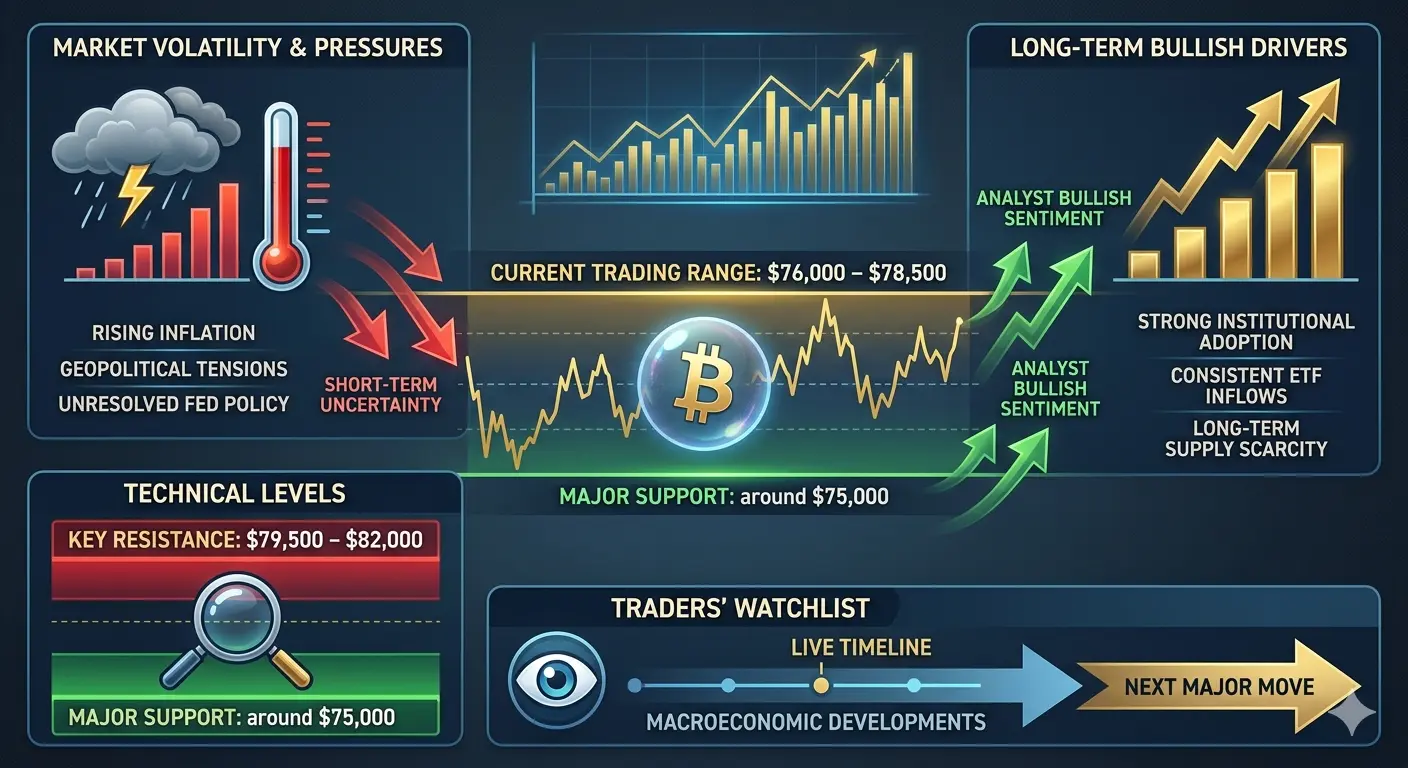
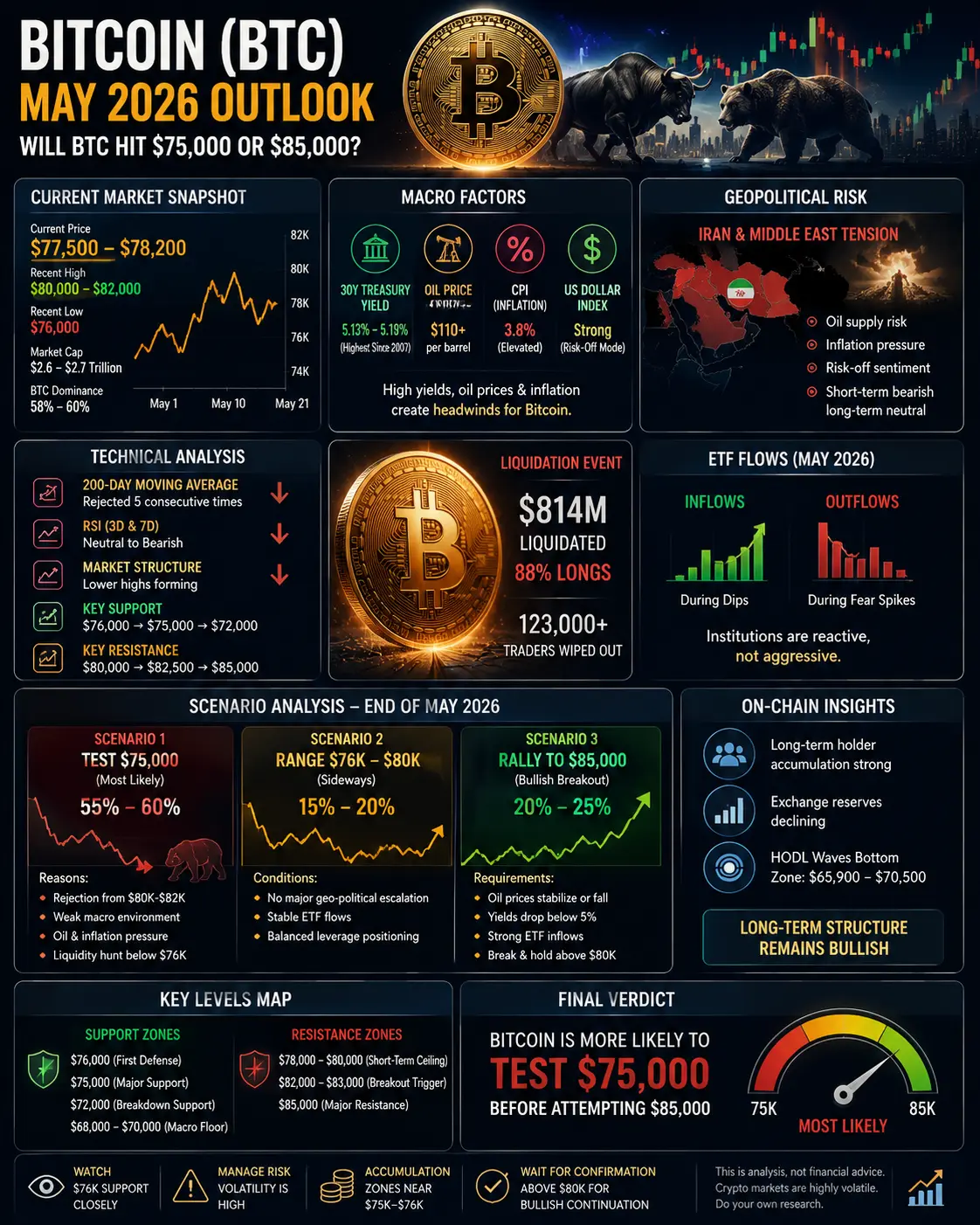
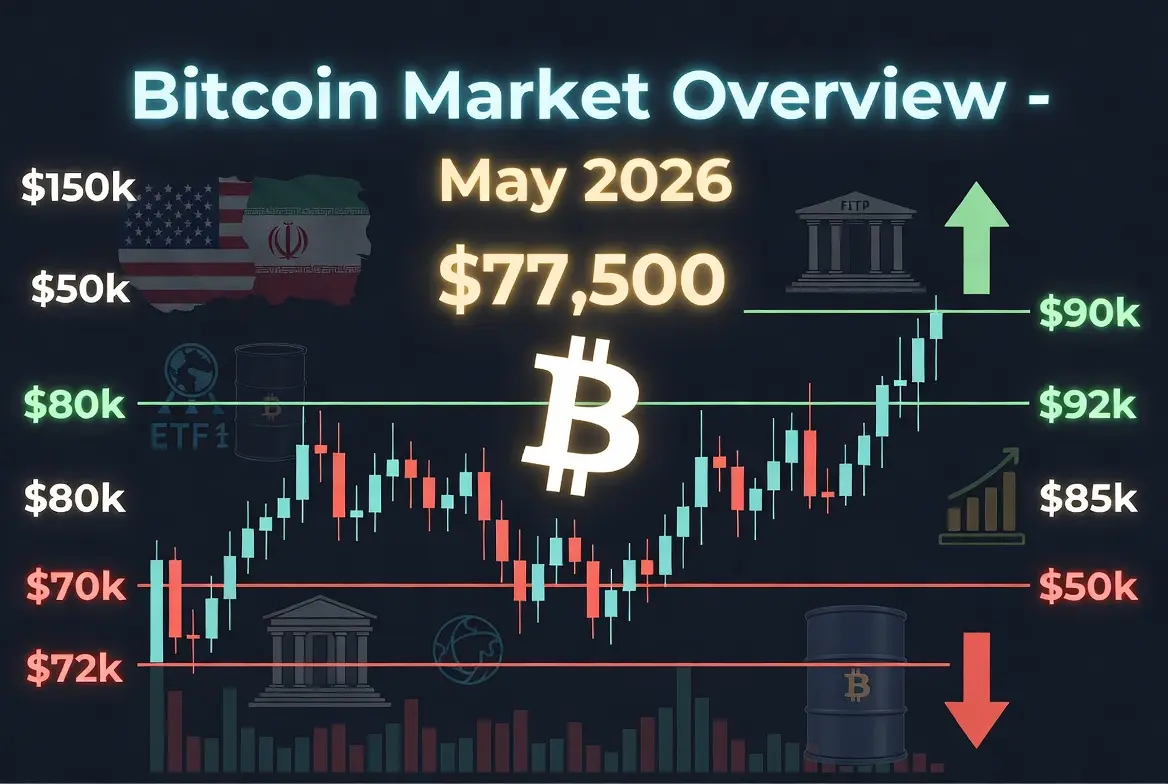
Bitcoin is currently trading around $77,000–$78,000, holding a relatively stable structure after months of high volatility and macro-driven swings. The asset has formed a clear consolidation range between $76,000 and $80,000, reflecting equilibrium between buyers accumulating at lower levels and sellers defending higher resistance zones.
The $80,000 level remains a critical psychological and technical barrier. A decisive breakout above this zone could signal renewed bullish expansion, while failure to reclaim it may extend the ongoing consolidation phase. On the downs
BTC-2.51%
HighAmbition
#GateSquarePizzaDay
#BTC
Bitcoin is currently trading around $77,000–$78,000, holding a relatively stable structure after months of high volatility and macro-driven swings. The asset has formed a clear consolidation range between $76,000 and $80,000, reflecting equilibrium between buyers accumulating at lower levels and sellers defending higher resistance zones.
The $80,000 level remains a critical psychological and technical barrier. A decisive breakout above this zone could signal renewed bullish expansion, while failure to reclaim it may extend the ongoing consolidation phase. On the downside, Bitcoin continues to maintain structural strength above the $72,000–$74,000 support zone, which has repeatedly acted as a demand area during recent corrections.
Despite this stabilization, BTC still trades significantly below its all-time high near $126,000 (October 2025), highlighting that the broader cycle has transitioned from expansion into distribution and consolidation.
Price Forecast and Technical Analysis
Key Support and Resistance Structure
Bitcoin’s technical landscape is currently well-defined:
Immediate Support: $72,000–$74,000
Major Structural Support: $70,000–$72,000 (aligned with 200-week EMA)
Critical Breakdown Zone: Below $70,000 opens risk toward $60,000–$62,000
Primary Resistance: $80,000
Extended Resistance: $85,000–$88,000
Macro Resistance Zone: $92,000–$95,000
The 200-week exponential moving average continues to act as a historically significant cycle indicator, often marking long-term accumulation zones during deep corrections.
Bullish Scenario
A sustained breakout above $80,000 would likely trigger momentum-driven continuation toward $85,000 initially, followed by extended targets in the $92,000–$95,000 region. If macro liquidity conditions improve and institutional inflows strengthen, Bitcoin could revisit broader upside projections toward $100,000+ levels, with some long-cycle models extending toward $150,000–$250,000 based on adoption-driven valuation expansion.
ETF-related demand and long-term accumulation behavior remain key drivers behind this bullish structure.
Bearish Scenario
If Bitcoin fails to hold $72,000 support, downside pressure could accelerate toward $70,000, followed by deeper retracement zones at $60,000–$62,000. In a more severe macro contraction scenario, analysts highlight a potential long-term cycle floor in the $45,000–$50,000 range, based on historical correction patterns of 40–50% following major cycle peaks.
Such a move would typically coincide with risk-off liquidity conditions and sustained monetary tightening.
Geopolitical Impact on Bitcoin (US–Iran Tensions)
Global geopolitical uncertainty, particularly US–Iran tensions, has added volatility to risk assets. During the initial escalation phase, Bitcoin briefly declined toward $63,000, reflecting panic-driven liquidation and risk-off positioning across global markets.
However, the recovery back above $75,000 demonstrates strong underlying demand and resilience, suggesting that institutional and long-term holders are absorbing sell pressure rather than exiting positions aggressively.
Historically, Bitcoin has shown mixed but often temporary reactions to geopolitical shocks, with price action stabilizing once initial uncertainty fades.
Oil Prices and Inflation Link
Oil prices above $100 per barrel have intensified inflation concerns globally. A key macro relationship suggests that every $10 increase in crude oil can add approximately 0.20% to CPI inflation, directly influencing Federal Reserve policy expectations.
If geopolitical tensions persist and energy prices remain elevated, inflation could remain sticky, forcing central banks to maintain restrictive monetary policy for longer. This scenario typically reduces liquidity availability for risk-on assets like Bitcoin.
CPI Data and Federal Reserve Policy Outlook
Inflation Environment
Recent macro data indicates persistent inflation pressure:
CPI: 3.8% YoY
Core CPI: 2.8%
PPI: Strong monthly surge indicating cost-side inflation persistence
Meanwhile, U.S. Treasury yields have risen sharply, with the 10-year note reaching 4.59%, reflecting tighter financial conditions across markets.
Interest Rate Expectations
Market expectations for near-term rate cuts have significantly declined. A June cut is now nearly off the table, with expectations pushed toward late Q3 or Q4 2026.
Some macro analysts even suggest the possibility of additional rate hikes if inflation remains elevated. This environment is typically unfavorable for Bitcoin in the short term, as higher yields increase the opportunity cost of holding non-yielding assets.
Institutional Positioning and Market Sentiment
Options Market Behavior
The derivatives market reflects a cautious institutional stance. While there is strong call interest around the $80,000 strike, indicating upside speculation, there is also consistent demand for protective puts.
This dual positioning highlights a hedged institutional environment, where participants remain exposed to upside but actively protect against downside risk. The overall structure suggests neutral-to-cautious sentiment rather than aggressive bullish conviction.
ETF Flow Dynamics
Bitcoin ETF flows have shown early stabilization after prior periods of net outflows. However, inflows remain inconsistent, reflecting hesitation among large investors due to macro uncertainty and geopolitical risk.
Despite this, the stabilization itself is an important signal that large-scale distribution pressure may be easing.
Trading Strategy Recommendations
Short-Term Traders
Short-term traders should focus on clearly defined levels:
Buy zone: $72,000–$74,000
Breakout trigger: Above $80,000
Risk management: Tight stops below local swing lows
Due to macro volatility, position sizing should remain conservative, with 1%–2% risk per trade and reduced leverage exposure.
Medium-Term Investors
The $70,000–$80,000 range remains a favorable accumulation zone for investors with a multi-month to multi-year horizon. Dollar-cost averaging is preferred, with potential deeper accumulation opportunities near $60,000–$62,000.
Long-Term Holders
Long-term Bitcoin structure remains intact despite cyclical volatility. Historically, post-peak consolidation phases are normal within broader adoption cycles.
The potential long-term accumulation zone remains between $45,000–$50,000, although realization of this scenario depends heavily on macro liquidity conditions and global risk sentiment.
Market Outlook: Balanced Structure
Bullish Drivers
Continued institutional adoption
ETF market maturation
Long-term scarcity narrative
Resilience after geopolitical shocks
Bearish Drivers
Sticky inflation environment
High interest rates
Weak liquidity conditions
Lack of strong directional conviction in derivatives market
Bitcoin currently sits at a critical equilibrium phase around $77,000, where neither bulls nor bears have full control. The market is tightly compressed between $72,000 support and $80,000 resistance, and a breakout from this range will likely define the next major directional cycle.
Until then, Bitcoin is expected to remain range-bound with elevated volatility, heavily influenced by macroeconomic data, Federal Reserve policy expectations, and geopolitical developments.
Long-term structure remains constructive, but short-term caution is necessary.
@Gate_Square @Gate广场_Official
#TradfiTradingChallenge
.
repost-content-media
  • Reward
  • Comment
  • Repost
  • Share
#SpaceXOfficiallyFilesforIPO
Opening Highlights — Why This Event Changes Everything
SpaceX stepping into public markets is not a routine IPO — it is a structural reset of how global capital views technology, infrastructure, and long-term value creation.
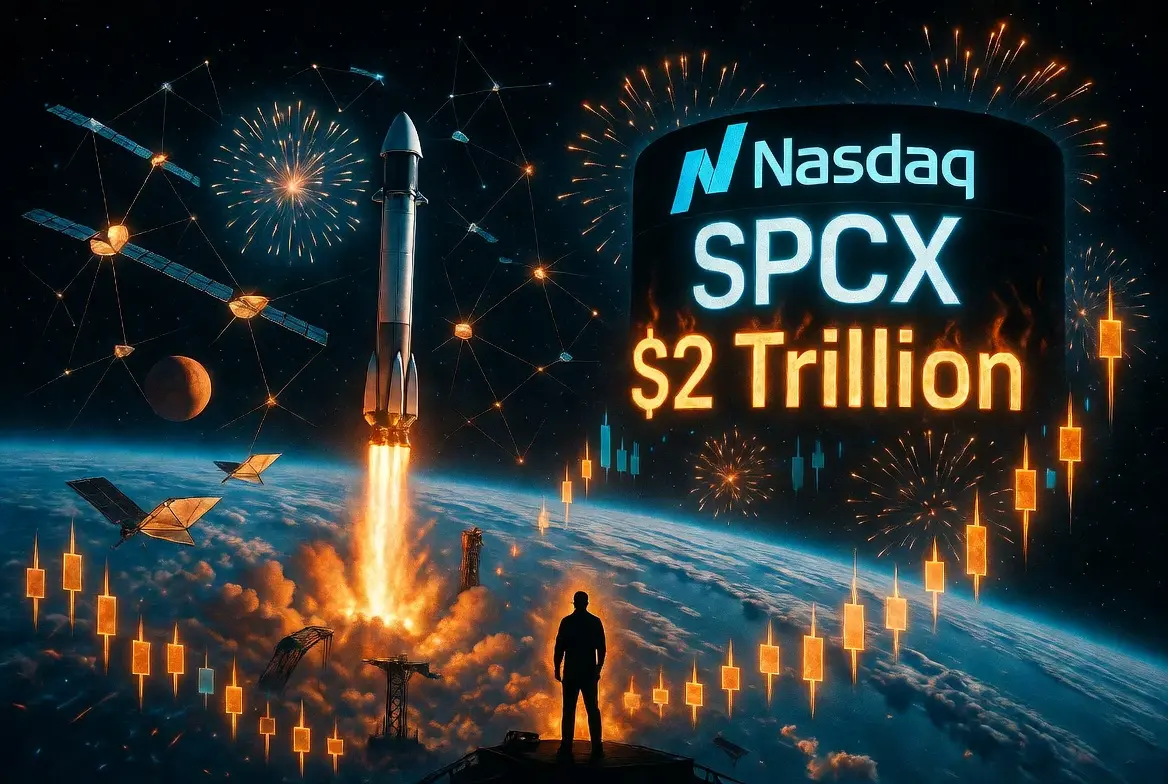
A projected valuation of nearly $2 trillion signals that markets are pricing in a multi-planetary, AI-driven future rather than a conventional aerospace business.
The inclusion of 18,712 BTC worth over $1.3 billion adds a powerful layer of digital asset legitimacy at the highest corporate level.
Investors are not just watching earnings anymor
SPCX-1.44%
BTC-2.51%
HighAmbition
#SpaceXOfficiallyFilesforIPO
Opening Highlights — Why This Event Changes Everything
SpaceX stepping into public markets is not a routine IPO — it is a structural reset of how global capital views technology, infrastructure, and long-term value creation.
A projected valuation of nearly $2 trillion signals that markets are pricing in a multi-planetary, AI-driven future rather than a conventional aerospace business.
The inclusion of 18,712 BTC worth over $1.3 billion adds a powerful layer of digital asset legitimacy at the highest corporate level.
Investors are not just watching earnings anymore — they are evaluating future civilizations of infrastructure, data, and orbital expansion.
This is where space engineering, artificial intelligence, and digital finance begin to merge into a single investment narrative.
Market Entry Shift — From Aerospace Firm to Global Infrastructure Core
The official S-1 filing of SpaceX on May 20, 2026, has triggered global attention across institutional and sovereign capital channels. With its planned Nasdaq ticker SPCX, the company is preparing for one of the largest IPOs in modern financial history.
The valuation range of $1.75 trillion to $2 trillion positions SpaceX far beyond a traditional aerospace entity. It is now being interpreted as a hybrid infrastructure platform combining orbital transport systems, AI computing ecosystems, and global communications networks.
The projected capital raise of $75–80 billion reflects extraordinary institutional demand, where investors are treating the IPO as a long-duration strategic allocation rather than a speculative listing.
Bitcoin Treasury Signal — Institutional Validation of Digital Assets
One of the most impactful disclosures within the filing is SpaceX’s holding of 18,712 Bitcoin, valued at approximately $1.3–1.45 billion.
This is not a passive treasury decision — it represents a strong institutional signal that Bitcoin is evolving into a strategic reserve asset. As one of the most influential private technology companies in the world, SpaceX’s allocation carries symbolic weight far beyond its balance sheet.
It reinforces a growing global narrative: Bitcoin is transitioning from a volatile speculative instrument into a long-term macro hedge against monetary instability, inflation cycles, and fiat currency dilution.
Financial Structure — Expansion-Driven Growth Model
SpaceX operates under a high-intensity reinvestment model where revenue expansion is prioritized over short-term profitability.
With $18.67 billion in annual revenue (2025) and significant operating losses, the company reflects a classic “scale-first, profit-later” strategy.
Adjusted EBITDA remains strong, indicating underlying operational efficiency despite aggressive capital deployment across multiple high-growth divisions.
This structure mirrors historical industrial revolutions where infrastructure dominance was achieved before profitability stabilization.
Starlink Network — The Revenue Engine of the Future
Starlink stands as the most mature and scalable business unit within SpaceX, generating over $11.3 billion in revenue and serving more than 10.3 million users globally.
It has evolved into a planetary-scale connectivity system rather than a satellite internet service. With over 9,600 satellites in orbit, Starlink represents the largest communication network ever deployed in space.
Its structural advantage lies in low-latency global coverage, making it increasingly competitive against traditional telecom giants and cloud-based communication infrastructure providers.
Starship & Space Division — Redefining Orbital Economics
The Starship program is central to SpaceX’s long-term disruption strategy, with over $15 billion invested in development.
Its objective is not incremental improvement but a fundamental reduction in cost per kilogram to orbit — potentially by up to 99%.
If successful, this will unlock entirely new economic sectors:
Orbital manufacturing ecosystems
Lunar logistics and exploration networks
Deep-space communication systems
Large-scale satellite deployment platforms
This marks a shift from space being a high-cost frontier to becoming a scalable industrial layer.
AI Infrastructure Expansion — Building the Compute Backbone
SpaceX’s integration with AI systems and xAI-linked infrastructure represents a rapidly expanding capital frontier.
With annual R&D exceeding $5 billion and total capital commitments surpassing $25 billion, the company is positioning itself as a core AI infrastructure provider, not just an application user.
This includes investments in:
High-performance GPU clusters
Distributed training systems
Autonomous robotics frameworks
Orbital AI communication networks
The long-term vision integrates AI across both terrestrial and space-based systems.
Orbital Data Centers — The Next Computing Revolution
A key future pillar is the development of space-based data centers expected around 2028.
These systems would operate using:
Continuous solar energy exposure
Vacuum-based thermal efficiency
Zero terrestrial infrastructure constraints
This could create a parallel global cloud layer operating above Earth, potentially reshaping how computational infrastructure is built and scaled.
$28.5 Trillion Convergence Thesis — Multi-Industry Integration
SpaceX’s long-term valuation narrative is built on the convergence of multiple trillion-dollar industries into a unified ecosystem.
This includes:
Artificial intelligence infrastructure
Global satellite communications
Defense and strategic networks
Orbital logistics systems
Autonomous manufacturing platforms
Rather than competing in one sector, SpaceX is positioning itself as an infrastructure aggregator across multiple global systems.
Governance Model — Concentrated Strategic Control
Elon Musk retains approximately 85% voting power through a dual-class share structure, ensuring long-term strategic control.
This governance model enables execution of highly ambitious, long-duration projects such as Mars colonization and orbital industrial systems.
However, it also introduces centralized decision-making risk, reducing traditional shareholder influence on corporate direction.
Risk Environment — High Complexity, High Execution Pressure
Despite strong institutional optimism, SpaceX operates within a high-risk execution environment:
Extremely capital-intensive development cycles
Regulatory dependencies across multiple jurisdictions
Starship technical uncertainty
AI infrastructure scaling challenges
Global supply chain volatility
At near $2 trillion valuation levels, even small deviations in growth assumptions may significantly impact market perception.
Final Perspective — The Birth of a New Asset Class
SpaceX’s IPO represents more than a corporate milestone — it signals the emergence of a new category of global assets combining:
Orbital infrastructure systems
Artificial intelligence compute networks
Digital financial integration (Bitcoin treasury)
Planetary-scale logistics ecosystems
If execution aligns with long-term projections, SpaceX may redefine how capital markets classify value — shifting from traditional industries to integrated technological civilizations spanning Earth and space.
repost-content-media
  • Reward
  • Comment
  • Repost
  • Share
#HYPEOutperformsAgain
Hyperliquid’s native token HYPE has recently entered one of the most significant expansion phases in its trading history, attracting widespread attention across both retail and institutional crypto participants due to its sustained outperformance and strong structural narrative. The token has demonstrated an aggressive upward move of approximately 40% within a single weekly cycle, transitioning from levels near $44 in mid-May 2026 into a powerful breakout that ultimately established a new all-time high at $62.18, marking a clear shift from consolidation into full price d
HighAmbition
#HYPEOutperformsAgain
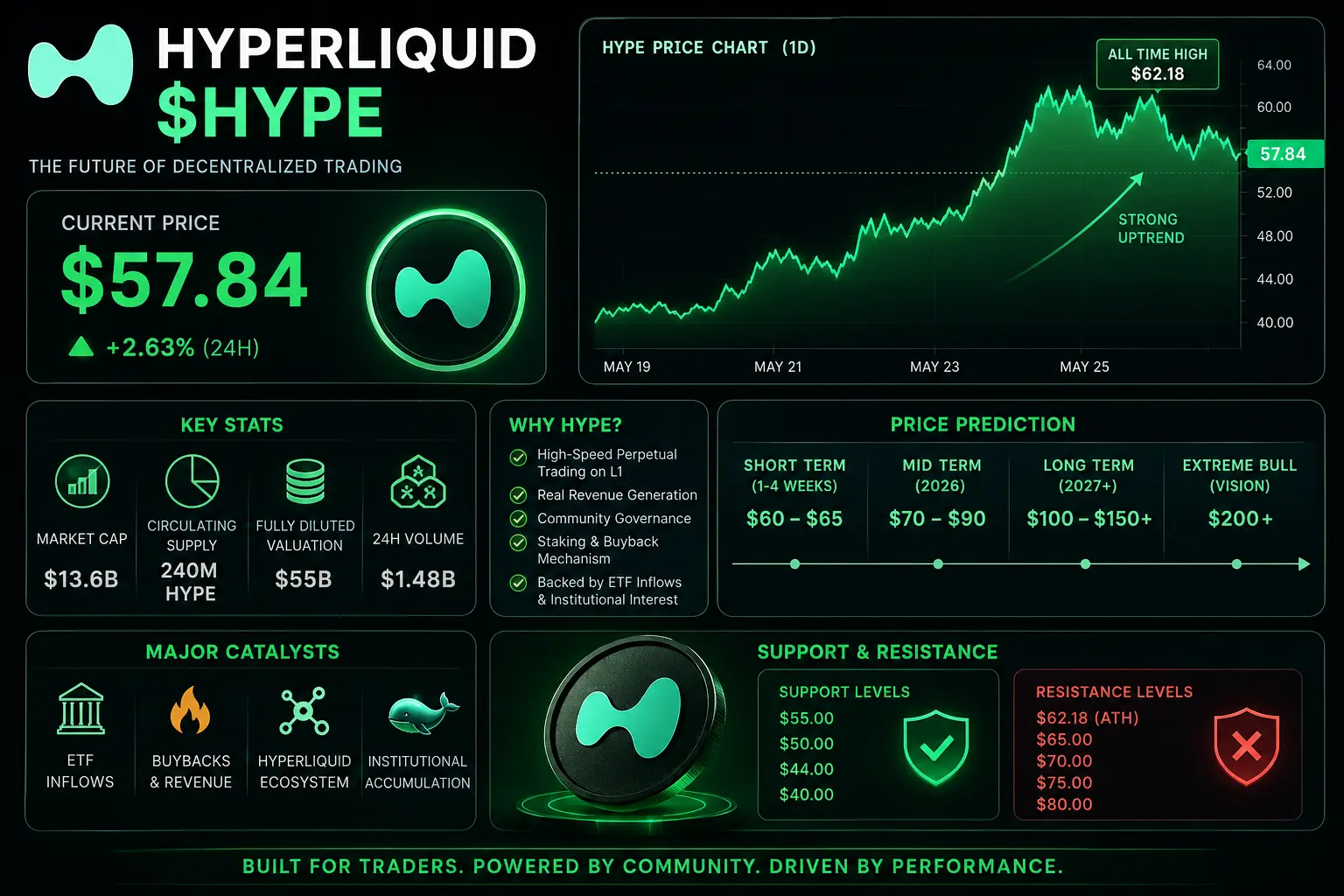
Hyperliquid’s native token HYPE has recently entered one of the most significant expansion phases in its trading history, attracting widespread attention across both retail and institutional crypto participants due to its sustained outperformance and strong structural narrative. The token has demonstrated an aggressive upward move of approximately 40% within a single weekly cycle, transitioning from levels near $44 in mid-May 2026 into a powerful breakout that ultimately established a new all-time high at $62.18, marking a clear shift from consolidation into full price discovery conditions.
This breakout phase is particularly important because it did not face meaningful rejection at the previous resistance zone near $59.37, instead accelerating upward through it, which typically signals strong liquidity absorption and continued demand dominance. During this expansion, HYPE traded across a wide volatility range between approximately $40.80 and $62.18, showing how rapidly market participants repriced valuation expectations within a compressed timeframe.
At the macro level, HYPE has reached a market capitalization in the range of $10.5 billion to $14 billion depending on circulating supply assumptions, placing it among the top-tier crypto assets globally. Trading volumes have also expanded significantly, with daily activity ranging from $700 million to over $1.5 billion in peak periods, confirming strong participation from both speculative traders and larger capital flows. This combination of price expansion and volume acceleration reflects a market that is not only trending but structurally revaluing the asset.
Chapter 2: Market Sentiment, ETF Flows, and Institutional Attention
The current sentiment around HYPE is a complex blend of strong bullish conviction and increasing short-term caution, as participants evaluate whether the rally is driven by sustainable structural demand or temporary momentum acceleration. A key driver of optimism is Hyperliquid’s revenue-linked ecosystem, where the protocol generates substantial fee income estimated in the hundreds of millions annually, with a significant portion of trading revenue consistently allocated toward buybacks, creating continuous structural demand for HYPE.
This model has led many traders to categorize HYPE differently from typical speculative altcoins, as its valuation is increasingly tied to real economic activity generated by decentralized perpetual futures trading rather than purely narrative-driven cycles. However, despite this bullish structure, on-chain and derivatives data is beginning to show divergence signals, particularly in spot cumulative volume delta, which has weakened in certain phases even as price continues to push higher, suggesting that aggressive buyers may be slowing at elevated levels.
A major additional catalyst influencing sentiment has been the emergence of ETF-related exposure through institutional products such as Bitwise and 21Shares offerings, which have introduced new inflows from traditional finance participants. These inflows, sometimes reaching multi-million-dollar daily allocations during early accumulation phases, have added a new layer of structural demand, further reinforcing the bullish narrative. Combined with increasing institutional wallet activity and accumulation patterns, this has positioned HYPE as one of the few decentralized derivatives assets gaining meaningful crossover attention from traditional capital markets.
Chapter 3: Core Fundamentals and Structural Strength of Hyperliquid
Hyperliquid operates as a high-performance Layer 1 blockchain designed specifically for decentralized derivatives trading at scale, integrating an on-chain order book with ultra-low latency execution and centralized exchange-level performance characteristics. This architecture allows the platform to process extremely high volumes efficiently while maintaining full transparency and self-custody principles, which differentiates it from both traditional DeFi protocols and centralized trading venues.
The most critical structural driver of HYPE’s long-term value is its fee-to-buyback mechanism, where a large portion of protocol revenue is continuously used to purchase HYPE tokens from the open market. This creates a direct feedback loop between trading activity and token demand, meaning that increased platform usage translates automatically into sustained buying pressure on the token itself.
With circulating supply estimates ranging between 240 million and 254 million tokens and a fixed maximum supply of 1 billion, the tokenomics structure introduces both scarcity dynamics and long-term supply constraints. Combined with estimated annualized revenue potentially ranging from $800 million to over $1.4 billion in high-growth scenarios, the model creates a strong foundation for sustained demand pressure if platform adoption continues expanding.
Hyperliquid’s dominance in decentralized perpetual futures trading further strengthens this thesis, with market share estimates exceeding 70% and annualized trading volumes surpassing $2.6 trillion. This positions the platform not as a niche DeFi protocol but as a major infrastructure layer competing directly with centralized exchanges in terms of liquidity depth, execution efficiency, and user adoption.
Chapter 4: Price Structure, Volatility Behavior, and Technical Landscape
From a price action perspective, HYPE is currently operating in a high-volatility discovery environment where historical resistance levels are rapidly being invalidated due to aggressive upward momentum. The asset is trading in a broad range between approximately $48 and $62, with the recent all-time high at $62.18 acting as the primary short-term structural pivot for continuation or consolidation.
The broader macro movement from yearly lows near $21 to current levels above $60 represents more than a 100% expansion within a relatively short timeframe, highlighting the intensity of capital inflows and speculative participation. At the same time, derivatives activity remains elevated with open interest near $1.38 billion, suggesting that leverage exposure is significant and capable of amplifying both upward and downward price movements.
Technical indicators reflect a market that is strong but temporarily stretched, with RSI levels above 78 indicating overbought conditions, while trend-based indicators such as MACD remain supportive of continued momentum. Key support zones are now forming at $55, $50, and deeper accumulation levels near $44 and $40, while upside expansion targets extend toward $65, $70, $75, and potentially $80 if price discovery continues without interruption.
Chapter 5: Forecast Scenarios and Price Expansion Potential
In the short-term outlook, HYPE is expected to remain within a volatile consolidation structure between $48 and $65 as the market absorbs recent gains and recalibrates liquidity positioning. Any sustained breakout above the $62 level could trigger accelerated movement toward $70–$75 due to limited historical resistance above current price discovery zones.
In the medium-term 2026 outlook, conservative projections place HYPE within a range of $55 to $70, while more optimistic scenarios based on continued revenue expansion, ETF inflows, and ecosystem growth suggest a broader range between $70 and $90. These scenarios assume continued dominance in decentralized derivatives markets and sustained institutional participation.
In aggressive long-term scenarios extending into 2027 and beyond, valuation models expand significantly into the $100 to $150+ range, contingent on sustained growth in trading volume, successful ecosystem expansion through HyperEVM and protocol upgrades, and continued capital inflows from both retail and institutional participants. In extreme bullish cases, extended adoption curves and macro liquidity expansion could push valuations even higher over multi-year cycles.
Chapter 6: Trading Behavior, Strategy, and Market Positioning
Market participants are currently divided into multiple strategic groups based on risk appetite and time horizon. Momentum traders are focused on breakout continuation above $62, targeting short-term extensions toward $65 to $75 while managing risk tightly due to elevated volatility conditions. Dip buyers are positioning around $44 to $50 zones, viewing these levels as structurally significant accumulation areas based on prior consolidation behavior and liquidity absorption zones.
Range traders are attempting to exploit volatility between $44 and $62, capturing short-term oscillations while waiting for clearer directional confirmation. Long-term investors, however, are focusing less on short-term price fluctuations and more on structural fundamentals such as revenue generation, buyback mechanisms, and market share expansion in decentralized derivatives infrastructure.
Risk management remains a central theme across all strategies, particularly given elevated derivatives exposure, overbought technical conditions, and the potential for sharp volatility swings triggered by liquidity imbalances or macro crypto market shifts.
Chapter 7: Final Outlook and Structural Interpretation
Hyperliquid’s HYPE token currently represents one of the most structurally unique assets in the crypto ecosystem due to its combination of real revenue generation, fixed supply mechanics, and continuous buyback-driven demand pressure. Unlike purely narrative-driven assets, its valuation is increasingly tied to measurable platform activity, creating a hybrid model where usage, revenue, and token demand are directly interconnected.
While short-term volatility is expected due to overheated technical conditions and elevated leverage in derivatives markets, the long-term trajectory remains closely linked to Hyperliquid’s ability to sustain dominance in decentralized derivatives trading and continue scaling its revenue engine. The balance between short-term exhaustion signals and long-term structural growth defines the current market phase.
Ultimately, whether HYPE stabilizes near current levels, consolidates toward lower support zones, or continues its expansion toward higher price discovery ranges will depend on sustained liquidity inflows, continued institutional participation, and ongoing ecosystem growth across trading, infrastructure, and protocol upgrades.
repost-content-media
  • Reward
  • Comment
  • Repost
  • Share
#WarshSwornInAsFedChair
The swearing-in of Kevin Warsh as Chairman of the U.S. Federal Reserve is not just a routine administrative transition; it represents a structural turning point in global monetary governance where expectations around liquidity, inflation control, interest rates, and capital allocation are simultaneously recalibrated across all major asset classes. In global finance, the Federal Reserve is effectively the “pricing engine” of liquidity, and any shift in its leadership changes how trillions of dollars are distributed between risk-on and risk-off environments.
This transit
HighAmbition
#WarshSwornInAsFedChair
The swearing-in of Kevin Warsh as Chairman of the U.S. Federal Reserve is not just a routine administrative transition; it represents a structural turning point in global monetary governance where expectations around liquidity, inflation control, interest rates, and capital allocation are simultaneously recalibrated across all major asset classes. In global finance, the Federal Reserve is effectively the “pricing engine” of liquidity, and any shift in its leadership changes how trillions of dollars are distributed between risk-on and risk-off environments.
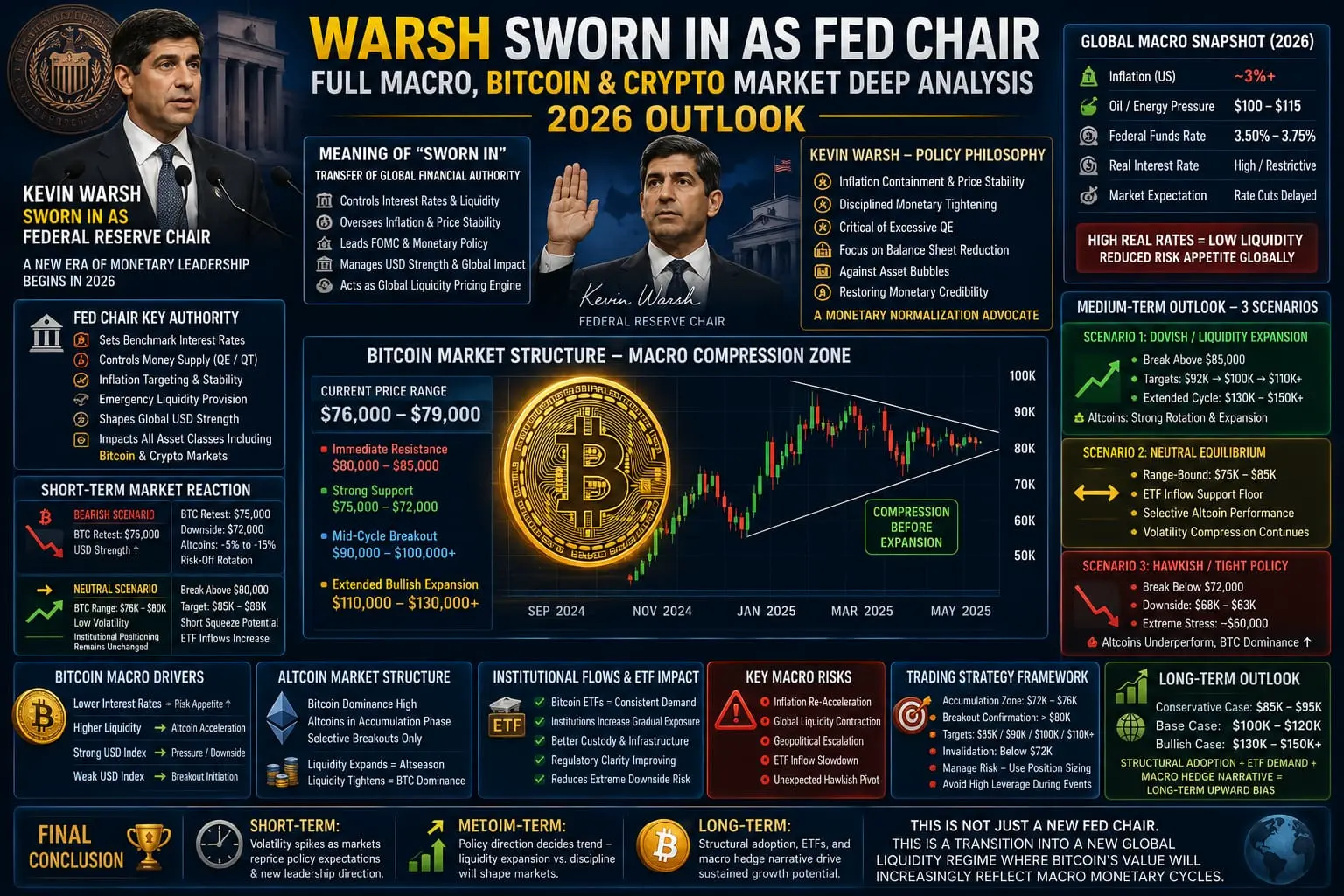
This transition carries amplified importance in 2026 because global financial markets are already operating in a highly sensitive equilibrium phase. Equity valuations are extended, bond yields remain elevated compared to post-2008 averages, and liquidity conditions are still uneven across regions. At the same time, Bitcoin is consolidating near historically elevated macro levels around $76,000 – $79,000, making the entire crypto market extremely reactive to even subtle shifts in forward guidance from the Fed.
In such an environment, the installation of a new Fed Chair is not merely symbolic—it functions as a global signal reset that forces institutional investors, sovereign funds, hedge funds, and algorithmic systems to reassess macro positioning in real time.
⭐ Meaning of “Sworn In” — Transfer of Global Financial Authority
When Kevin Warsh is sworn in as Fed Chair, it signifies the official and legal transfer of full monetary authority over the United States central banking system, including the Federal Open Market Committee (FOMC), which determines interest rate policy and liquidity conditions globally.
This authority includes several critical levers:
Control over benchmark interest rates that influence global borrowing costs
Regulation of money supply through quantitative tightening or easing cycles
Oversight of inflation targeting frameworks and price stability mandates
Emergency liquidity injections during financial stress or systemic risk events
Influence over global USD strength, which directly impacts emerging markets and crypto flows
In practical terms, the Fed Chair does not just influence the U.S. economy—it shapes global liquidity cycles. Every basis point change in expectations can shift capital flows worth trillions of dollars across equities, bonds, commodities, forex, and increasingly Bitcoin and digital asset markets.
This is why markets often react not just to policy actions, but to perceived policy direction under new leadership.
⭐ Kevin Warsh — Policy Identity and Monetary Philosophy
Kevin Warsh brings a historically grounded macro perspective shaped during the 2008 financial crisis era, where liquidity expansion and emergency interventions defined global monetary policy.
His economic philosophy is generally characterized by:
Strong emphasis on inflation containment and price stability
Preference for disciplined monetary tightening over prolonged stimulus
Critical stance toward excessive quantitative easing cycles
Focus on shrinking or stabilizing the Federal Reserve balance sheet
Concerns about asset bubble formation in prolonged low-rate environments
Support for restoring traditional monetary credibility and policy discipline
This positions Warsh as a “monetary normalization advocate” rather than an aggressive liquidity expansionist. In contrast to ultra-dovish regimes, his approach prioritizes structural stability over short-term growth stimulation.
However, modern financial realities complicate this stance. With Bitcoin and digital assets now integrated into institutional portfolios, even disciplined policy frameworks indirectly affect crypto markets through liquidity transmission channels.
Importantly, Warsh has acknowledged the growing narrative of Bitcoin as a macro hedge asset—often compared to digital gold—especially in environments where fiat debasement concerns increase.
⭐ Global Macro Environment — Inflation, Rates & Liquidity Pressure
Warsh assumes office in a macro landscape that is still structurally unresolved and highly sensitive:
Inflation remains sticky above central bank targets, hovering near ~3%+ levels
Energy-driven cost pressures continue to create secondary inflation waves
Oil-linked inflation volatility remains elevated in the $100 – $115 pressure equivalent zone
Federal Funds Rate remains restrictive in the 3.50% – 3.75% corridor
Market expectations for immediate rate cuts remain limited or delayed
This creates a high real interest rate environment, where nominal rates remain elevated relative to inflation stability expectations. Historically, such environments reduce speculative liquidity and compress valuation multiples in high-risk assets.
For crypto markets, this translates into reduced marginal inflows, slower altcoin rotations, and increased dominance of Bitcoin as the primary liquidity anchor asset.
However, this environment also builds latent pressure—meaning when policy eventually shifts, the expansion phase tends to be sharper and more violent in terms of price movement.
⭐ Bitcoin Market Structure — Critical Macro Compression Zone
Bitcoin is currently positioned within a macro consolidation structure that reflects equilibrium between institutional accumulation and macro uncertainty.
Key structural zones:
Current trading range: $76,000 – $79,000
Immediate resistance: $80,000 – $85,000
Strong support base: $75,000 – $72,000
Mid-cycle breakout zone: $90,000 – $100,000+
Extended bullish expansion: $110,000 – $130,000+
This compression phase indicates reduced directional volatility but increasing energy buildup beneath the surface. Historically, such structures precede major expansion or contraction cycles depending on macro liquidity direction.
The market is essentially waiting for a catalyst from Fed communication, inflation data, or liquidity expectations.
⭐ Short-Term Market Reaction — Volatility Expansion Risk
Fed Chair transitions typically trigger rapid repricing cycles as markets reassess policy trajectory assumptions.
Bearish short-term scenario:
BTC retest zone: $75,000
Extended correction risk: $72,000
Altcoin drawdowns: 5% – 15%
Temporary USD strength increase
Risk-off rotation into cash and bonds
Neutral scenario:
BTC remains in tight range: $76,000 – $80,000
Low directional volatility
Institutional positioning remains unchanged
Bullish liquidity surprise scenario:
Break above $80,000 resistance
Momentum extension toward $85,000 – $88,000
Short squeeze in leveraged positions
Increased ETF inflows and speculative rotation
⭐ Medium-Term Outlook — Policy Direction Determines Trend Cycle
📈 Scenario 1: Liquidity-Friendly / Dovish Shift (Delayed Easing Expectations)
If Warsh signals future rate cuts or softer monetary conditions, markets will immediately begin pricing in renewed liquidity expansion.
Bitcoin implications:
Structural breakout above $85,000
Mid-cycle expansion toward $92,000
Psychological milestone at $100,000
Extended bullish phase toward $110,000 – $125,000
Potential euphoric cycle extension above $130,000
Liquidity expansion increases risk appetite across all digital assets, accelerating capital rotation into higher beta altcoins.
⚖ Scenario 2: Neutral Policy Equilibrium
If Warsh maintains a balanced stance without aggressive tightening or easing:
Bitcoin remains range-bound between $75,000 – $85,000
ETF inflows provide structural support floor
Altcoins show selective performance rather than broad rally
Market volatility compresses but does not trend
This scenario represents consolidation before eventual macro breakout.
📉 Scenario 3: Hawkish Tight Policy Regime
If inflation control becomes dominant priority:
Liquidity remains constrained
USD strength increases pressure on risk assets
Bitcoin loses momentum below resistance zones
Downside structure forms around $72,000 support
Deeper correction zones: $68,000 – $63,000
Extreme macro stress scenario: ~$60,000
This would represent a liquidity contraction phase, typically unfavorable for altcoins and speculative assets.
⭐ Bitcoin Macro Drivers — Structural Sensitivity Model
Bitcoin price behavior is increasingly driven by macro liquidity dynamics:
Lower interest rates → expansion in risk appetite
Higher liquidity conditions → altcoin acceleration cycles
Strong USD index → consolidation or correction pressure
Weak USD → breakout phase initiation
Warsh’s historically disciplined monetary stance initially suggests tighter liquidity conditions before any potential easing cycle emerges later.
⭐ Altcoin Market Structure — Rotation Dynamics
Altcoins behave as amplified versions of Bitcoin liquidity cycles.
Current structure:
Bitcoin dominance remains elevated
Altcoins remain in accumulation phase
Selective breakout behavior in strong fundamentals only
If liquidity expands:
Ethereum potential expansion toward $6,000 – $8,000+
Mid-cap altcoins: 2x – 5x potential cycles
High-beta assets: extreme volatility expansion phases
If liquidity tightens:
Capital rotation consolidates into Bitcoin
Altcoins underperform structurally
Market becomes BTC-dominant risk environment
⭐ Institutional Flows & ETF Impact — Structural Demand Layer
Institutional participation now acts as a stabilizing structural force:
Bitcoin ETFs create consistent demand absorption
Pension funds and asset managers increase gradual exposure
Custody infrastructure improves institutional accessibility
Regulatory clarity enhances long-term allocation confidence
This reduces extreme downside volatility compared to previous crypto cycles, even during macro stress phases.
⭐ Key Disruption Scenarios
Inflation re-acceleration above expectations
Global liquidity contraction cycles
Geopolitical escalation affecting energy pricing
ETF inflow slowdown or stagnation
Unexpected hawkish pivot from Fed communication
These factors can temporarily override structural bullish narratives.
⭐ Trading Strategy — Macro-Aligned Framework
Accumulation Zone:
$72,000 – $76,000 (long-term positioning region)
Breakout Confirmation:
Above $80,000 sustained closure
Momentum Targets:
$85,000
$90,000
$100,000
$110,000+
Risk Management:
Protective invalidation below $72,000
Avoid excessive leverage during Fed communication events
Hedge exposure during macro volatility spikes
Scale positions rather than all-in entries
⭐ Long-Term Outlook — Bitcoin as Macro Liquidity Asset
Bitcoin continues evolving from a speculative digital asset into a macro-sensitive liquidity instrument influenced by global monetary cycles.
Long-term valuation structure:
Conservative cycle: $85,000 – $95,000
Base institutional adoption case: $100,000 – $120,000
Full liquidity expansion cycle: $130,000 – $150,000+
ETF-driven structural demand, sovereign exposure trends, and macro hedge narratives all reinforce long-term upward structural bias.
⭐ Transition Into a New Liquidity Regime
The swearing-in of Kevin Warsh as Fed Chair represents the beginning of a transitional macro regime rather than an immediate directional catalyst. Markets are entering a phase defined by uncertainty, repricing, and expectation adjustment.
In the short term, volatility dominates as traders and institutions recalibrate policy assumptions. In the medium term, direction will depend heavily on whether monetary policy evolves toward discipline or gradually transitions toward liquidity support. In the long term, structural adoption forces—including ETFs, institutional allocation, and macro hedge narratives—are likely to dominate price formation.
Bitcoin is therefore entering a three-layer cycle environment:
Short-term: volatility compression and expansion spikes
Medium-term: policy-driven directional formation
Long-term: structural liquidity expansion potential
Ultimately, this transition is not just about a new Fed Chair—it represents a broader shift in global liquidity architecture where Bitcoin’s valuation will increasingly reflect macro monetary cycles rather than purely speculative dynamics.
repost-content-media
  • Reward
  • Comment
  • Repost
  • Share
#PlatinumCardCreatorExclusive
In today’s rapidly advancing digital economy, financial systems are no longer limited to traditional banking structures. Instead, they are evolving into intelligent, interconnected ecosystems where digital assets, creator economies, and global payment technologies merge into a single unified experience.
Within this transformation, the Gate Square ecosystem introduces a powerful concept known as the Platinum Card Creator Exclusive, representing a premium-tier financial identity designed for creators, innovators, and high-engagement digital users.
This is not just
HighAmbition
#PlatinumCardCreatorExclusive
In today’s rapidly advancing digital economy, financial systems are no longer limited to traditional banking structures. Instead, they are evolving into intelligent, interconnected ecosystems where digital assets, creator economies, and global payment technologies merge into a single unified experience.
Within this transformation, the Gate Square ecosystem introduces a powerful concept known as the Platinum Card Creator Exclusive, representing a premium-tier financial identity designed for creators, innovators, and high-engagement digital users.
This is not just a financial tool — it is a complete ecosystem-driven lifestyle model that connects digital influence, financial access, and real-world usability in one seamless structure.
Introduction — Redefining Modern Financial Identity
The global financial landscape is shifting from static systems to dynamic digital ecosystems.
Users today expect:
Instant financial accessibility
Seamless digital-to-real-world transactions
Reward-based engagement systems
Creator-focused monetization opportunities
Secure and flexible asset management
The Platinum Card Creator Exclusive framework represents this evolution by offering a structured gateway into premium financial participation within the Gate Square ecosystem.
It reflects a new idea:
Financial identity is no longer just about money — it is about access, engagement, and ecosystem value.
Gate Square Ecosystem — The Core Digital Foundation
At the heart of this concept lies the Gate Square ecosystem, designed as a multi-layer digital financial environment where technology, creativity, and finance operate together.
This ecosystem is structured around four key pillars:
1. Digital Asset Connectivity Layer
The ecosystem integrates digital assets into a unified structure where users can interact with financial instruments in a smooth and simplified way.
Key aspects include:
Unified asset interaction framework
Seamless digital balance management
Cross-platform financial accessibility
Integrated transaction flow systems
2. Creator Economy Empowerment Layer
Creators are a central part of this ecosystem.
Instead of relying on traditional monetization models, creators are empowered through:
Performance-based reward structures
Engagement-driven growth systems
Tier-based recognition programs
Ecosystem participation incentives
3. Real-World Utility Integration Layer
One of the most important aspects is real-world usability.
The system enables:
Digital-to-real-world spending capability
Merchant-friendly payment integration
Flexible transaction usage
Cross-border usability potential
4. Premium Access & Tier System Layer
The ecosystem includes structured membership levels where users gain enhanced benefits based on participation and engagement.
The Platinum tier represents one of the highest levels, offering:
Priority ecosystem access
Enhanced reward multipliers
Exclusive financial features
Advanced user privileges
What is Platinum Card Creator Exclusive?
The Platinum Card Creator Exclusive concept represents a premium financial access identity within the Gate Square ecosystem.
It is designed for:
High-engagement creators
Active ecosystem participants
Digital economy contributors
Users seeking advanced financial flexibility
This concept brings together three major dimensions:
✔ Financial Utility
Enabling seamless digital-to-real-world transactions.
✔ Creator Empowerment
Providing structured reward systems and recognition layers.
✔ Ecosystem Exclusivity
Offering premium-tier access and enhanced benefits.
Core Features and Functional Structure
1. Unified Spending Experience
Users can utilize digital balances in real-world scenarios with simplified transaction flows.
2. Creator Reward Architecture
The system introduces a structured reward mechanism based on:
Engagement performance
Activity consistency
Ecosystem contribution
Content value generation
3. Advanced Security Framework
Security remains a foundational element, including:
Multi-layer authentication systems
Secure transaction processing
Transparent activity tracking
Risk-controlled operational structure
4. Global Financial Accessibility
The ecosystem supports cross-border financial interaction, allowing users from different regions to participate without traditional limitations.
5. Premium Tier Privileges
Platinum-level users receive:
Priority system processing
Exclusive financial features
Enhanced reward structures
Early access to ecosystem updates
Evolution of the Creator Economy
The creator economy is undergoing a major transformation.
Previously, creators depended heavily on:
Advertising revenue
Sponsorship deals
Platform-based monetization
Now, systems like Gate Square introduce a new model where creators become:
Financially integrated ecosystem participants
Reward-based contributors
Digital value generators
Independent income builders
The Platinum Card Creator Exclusive framework strengthens this shift by linking creativity directly with structured financial systems.
Market Positioning and Strategic Importance
This initiative positions Gate Square as a next-generation digital finance ecosystem, focusing on:
Integration of digital assets and creators
Innovation in engagement-based financial participation
Expansion into global accessibility
Differentiation through premium financial identity layers
Economic Impact Overview
The broader implications include:
Increased adoption of digital financial tools
Diversification of creator income sources
Ecosystem-driven user engagement growth
Greater global financial inclusion
Balanced Perspective
While highly innovative, long-term success depends on:
Stable ecosystem development
User trust and adoption growth
Continuous technological improvement
Regional regulatory alignment
🚀 Future Outlook
This model can evolve into:
Integrated digital identity systems
Adaptive reward optimization frameworks
Expanded real-world merchant integration
Advanced creator financial networks
The Platinum Card Creator Exclusive within the Gate Square ecosystem represents a forward-thinking evolution of digital finance, combining:
Creator empowerment
Premium financial access
Digital asset usability
Ecosystem-based rewards
Global financial participation
It reflects a broader shift where financial value is increasingly defined by engagement, creativity, and ecosystem contribution, rather than traditional systems alone.
repost-content-media
  • Reward
  • Comment
  • Repost
  • Share
#HYPE再度领涨
HYPE — Bulls vs Bears:
The Event That Shook the Market
On May 22, HYPE — the native token of the Hyperliquid decentralized exchange — surged another 15% in a single day, reaching $58.97. This price level represents a staggering 134% gain year-to-date, a figure that has left the entire crypto market watching in awe. While Bitcoin is down 12% over the same period, HYPE has completely decoupled and charted its own trajectory, rising from roughly $25 in early 2026 to now knocking on the door of $60.
But the real drama did not end with the price surge. In the 24 hours surrounding this e
HighAmbition
#HYPE再度领涨
HYPE — Bulls vs Bears:
The Event That Shook the Market
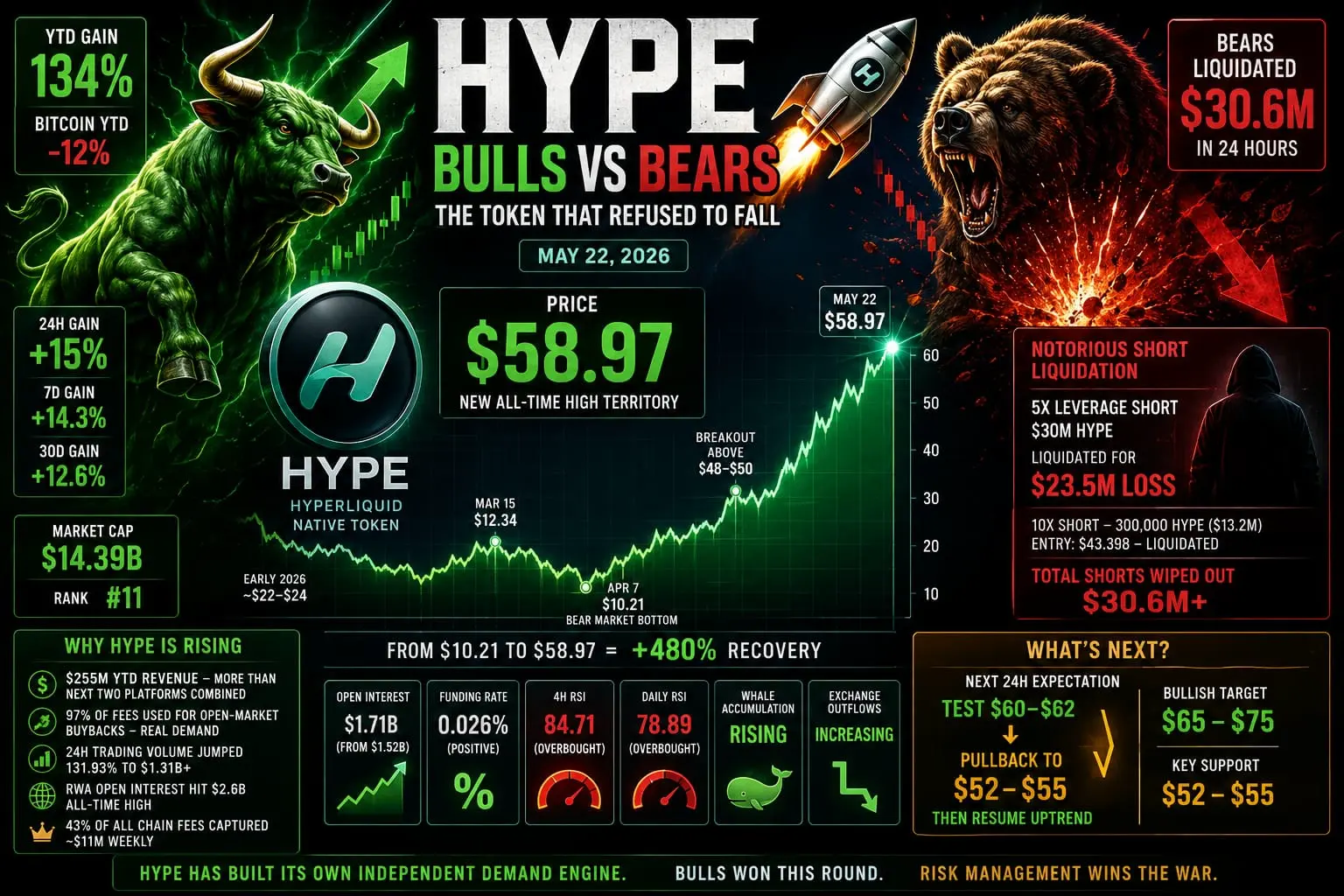
On May 22, HYPE — the native token of the Hyperliquid decentralized exchange — surged another 15% in a single day, reaching $58.97. This price level represents a staggering 134% gain year-to-date, a figure that has left the entire crypto market watching in awe. While Bitcoin is down 12% over the same period, HYPE has completely decoupled and charted its own trajectory, rising from roughly $25 in early 2026 to now knocking on the door of $60.
But the real drama did not end with the price surge. In the 24 hours surrounding this explosive move, short sellers who had positioned at higher levels were hit with what the community calls a "precise pinpoint explosion." Liquidation data shows that bears lost more than $30.6 million in forced closures within a single 24-hour window. One notorious short seller who borrowed 5x leverage to short $30 million worth of HYPE was liquidated for a $23.5 million loss alone — one of the single biggest individual liquidation losses this year. The cascade of forced buying from these liquidated shorts actually amplified HYPE's upward momentum, creating a feedback loop where each liquidation pushed the price higher, triggering more liquidations.
Key Price Milestones
To understand the scale of this rally, consider the following price journey. HYPE started 2026 near the $22-$24 range, still reeling from a brutal correction that had dragged it down from late 2025 highs. By mid-March it had stumbled to $12.34, and on April 7 it touched a low of $10.21 — a moment that many analysts labeled the bear market bottom. From that April low of $10.21, the token has now climbed to $58.97, representing an approximately 480% recovery from its lowest point this year.
The most critical breakout happened in recent days when HYPE finally cleared its last major resistance zone at $48-$50. This level had rejected the market multiple times earlier in 2026, and many traders viewed it as the final barrier before price discovery could begin. Once buyers broke through that region, the price accelerated aggressively toward $58-$60, pushing the market deep into all-time high territory. The previous ATH of $59.26, reached on September 18, 2025, is now just a few dollars away.
The year-to-date performance numbers tell the story clearly: starting from approximately $25 at the beginning of 2026, HYPE has climbed to $58.97, a 134% gain. The 24-hour gain alone was 15%, and over the past 7 days the token is up approximately 14.3%. Over the past 30 days, the gain stands at roughly 12.6%. The market cap has expanded from roughly $9.3 billion earlier in the rally to more than $13 billion during the latest breakout phase, and it currently sits near $14.39 billion, making HYPE the 11th largest cryptocurrency by market capitalization.
Why HYPE Is Rising — The Real Drivers
The rally is not purely speculative. There are fundamental and structural forces behind this move that distinguish HYPE from typical pump-and-dump tokens.
Hyperliquid has quietly become crypto's dominant fee generator, pulling in $255 million in year-to-date revenue — more than the next two platforms combined. It accounts for roughly one-third of all revenue across the top 10 protocols. Nearly all of that revenue comes from perpetual trading fees, and approximately 97% of it accrues back to HYPE holders through automated open-market buybacks. This means that as trading volume on the platform increases, the token benefits directly through real demand in the open market, not through inflationary rewards.
Trading volume on the Hyperliquid chain jumped roughly 131.93% in a single day, climbing above $1.31 billion. This massive increase in usage over a very short period explains why HYPE has been outperforming almost every major altcoin. The rally is supported by real demand from traders actively using the platform.
But perhaps the most transformative development is Hyperliquid's evolution from a crypto perpetual exchange into a multi-asset platform targeting real-world assets, pre-IPO markets, and global financial infrastructure. The real-world asset trading on Hyperliquid reached a new all-time high of $2.6 billion in open interest, double the amount from just two months ago. Tokenization perpetuals covering the S&P 500, oil, and commodities have grown considerably amid geopolitical turbulence. Matt Hougan, CIO of Bitwise, has argued that the platform is targeting the "$600 trillion global asset market" and that "Hyperliquid is not a crypto app — it's a super app."
The platform now captures 43% of all chain fees, approximately $11 million weekly. This product dominance is what creates HYPE's own independent demand engine, separate from Bitcoin's macro cycles. As Bitrue Research Institute's research lead noted, "This TradFi rotation and permissionless market creation give HYPE its own independent demand engine."
The Liquidation Story — How Bears Got Destroyed
The liquidation event that accompanied HYPE's surge deserves detailed examination. The data reveals that HYPE contracts had been heavily skewed toward bearish exposure before the breakout. A cluster of approximately $28.9 million in short liquidations was sitting above the $35 resistance level earlier in the rally. When HYPE crossed $35 decisively, forced short liquidations amplified the upside volatility and shifted market sentiment.
But the real devastation came at higher levels. As HYPE broke through $48-$50 and surged toward $58-$60, the cascading liquidations multiplied. One trader who borrowed 5x leverage to short $30 million worth of HYPE was liquidated for $23.5 million. Other short positions, including a notable 10x short of 300,000 HYPE tokens worth $13.2 million with an average entry price of $43.398, were also wiped out. In total, more than $30.6 million in short positions were liquidated within 24 hours.
The mechanism is straightforward but devastating for shorts: when HYPE's price rose rapidly, leveraged short positions reached their liquidation thresholds. The forced buying required to close these positions pushed the price even higher, which in turn triggered more short liquidations. This cascade effect is what the community calls a "short squeeze," and it is exactly what happened to HYPE's bears during this rally.
Can You Still Chase HYPE at $58.97?
This is the question every trader is asking right now. The answer requires examining both bullish and bearish arguments in detail.
On the bullish side, the structural case remains very strong. HYPE has formed a series of higher highs and higher lows throughout 2026, which is the textbook definition of a strong uptrend. The breakout above $48-$50 was backed by volume increasing over 130%, not a thin move on low participation. The old resistance zone at $48-$50 has now flipped to support, meaning that as long as HYPE holds above this area, the broader bullish structure remains intact. The on-chain data also supports the bullish case: whale accumulation is rising, exchange outflows have increased, and the average transaction size continues to grow. The funding rate has flipped positive at 0.026%, signaling that long traders are willing to pay shorts to hold their positions — a sign of bullish conviction. Open interest has expanded from $1.52 billion to $1.71 billion, indicating fresh capital entering the market.
Multiple analysts have set targets in the $65-$75 range if HYPE can break and sustain above $60 cleanly. The longer-term forecasts from CoinLore project HYPE could reach $73.60 by the end of 2026, and the Cryptopolitan prediction model sees a range of $81-$96 by 2027. Bitwise's CIO has publicly stated that the platform is undervalued even at current prices, given the scale of the market it is targeting.
On the bearish side, there are legitimate reasons for caution. The 4-hour RSI has climbed to 84.71, an extremely overbought reading. The daily RSI stands at 78.89. While overbought readings do not necessarily mean an immediate reversal, they often signal that a consolidation or cooldown period is expected before the next major move. The vertical nature of the recent breakout — over 20% in a single day — is historically unsustainable without at least a temporary pullback. CoinCodex's 1-month prediction model actually forecasts a pullback toward $44.34, which is below the current level. The nearest support zone now sits between roughly $52 and $55, and if HYPE fails to hold that area, a deeper retracement toward $48-$50 or even $42-$38 becomes possible.
Additionally, the macro environment introduces uncertainty. While HYPE has decoupled from Bitcoin, a severe broader market downturn could still spill over. The prediction market Myriad showed that just on May 15, only 14% of participants believed HYPE would reach $52 in May — that probability has now jumped to 85%, which itself suggests the market may have front-run too much of the expected upside.
My Verdict: HYPE in the Next 24 Hours — Bull or Bear?
Based on all the evidence above, my assessment for the next 24 hours leans toward a brief bearish cooldown followed by a resumed bullish trend.
Here is the reasoning. HYPE at $58.97 is within striking distance of the all-time high at $59.26. The momentum to push through this level is clearly present — volume has exploded, whale accumulation is strong, and the fundamental catalysts around Hyperliquid's expansion into real-world assets and TradFi markets are accelerating, not slowing down. However, the short-term technicals are screaming overheated. An RSI of 84.71 on the 4-hour chart and 78.89 on the daily chart means the market needs breathing room. In the next 24 hours, I expect HYPE to test the $60 region, potentially even touching $60-$62, but then face a pullback toward the $52-$55 support zone. This kind of consolidation is not a bearish reversal — it is a healthy reset that would allow momentum indicators to cool down while preserving the broader uptrend structure.
For traders considering a new position at current prices, the risk-reward is tilted unfavorably for aggressive long entries right at $58.97. A more prudent approach would be to wait for a pullback toward $52-$55 and enter there, with the $48-$50 zone as a stop-loss reference. For those already holding long positions, maintaining exposure makes sense, but tightening stop-losses to the $52-$55 zone would protect against a sharp reversal while still allowing participation in any continuation toward $65 and beyond.
For short sellers, this is a dangerous moment. The market structure is firmly bullish, fundamental demand is real and growing, and the liquidation cascade has already demonstrated how costly it can be to bet against HYPE's momentum. Any short position at current levels should be sized very small and strictly limited to a tactical trade targeting a temporary overbought cooldown, not a structural bearish thesis.
The Bottom Line
HYPE's surge to $58.97 is backed by real fundamentals — exploding trading volume, dominant fee generation, expanding real-world asset offerings, and genuine demand from an actively growing ecosystem. The bears who got liquidated for $30.6 million were not just unlucky; they were structurally wrong about the direction of a token that has built its own independent demand engine separate from Bitcoin's macro narrative.
But every rally needs a breather. The next 24 hours will likely see HYPE push toward $60, then cool down to the $52-$55 zone before deciding its next major move. The longer-term trend remains bullish, and the path to $65-$75 is open if the $48-$50 support holds. In this battle between bulls and bears, the bulls have clearly won the current round — but smart bulls know that patience and risk management matter more than chasing the last dollar of a vertical move@Gate_Square @Gate广场_Official #TradfiTradingChallenge
repost-content-media
  • Reward
  • Comment
  • Repost
  • Share
#30YearTreasuryYieldBreaks5%
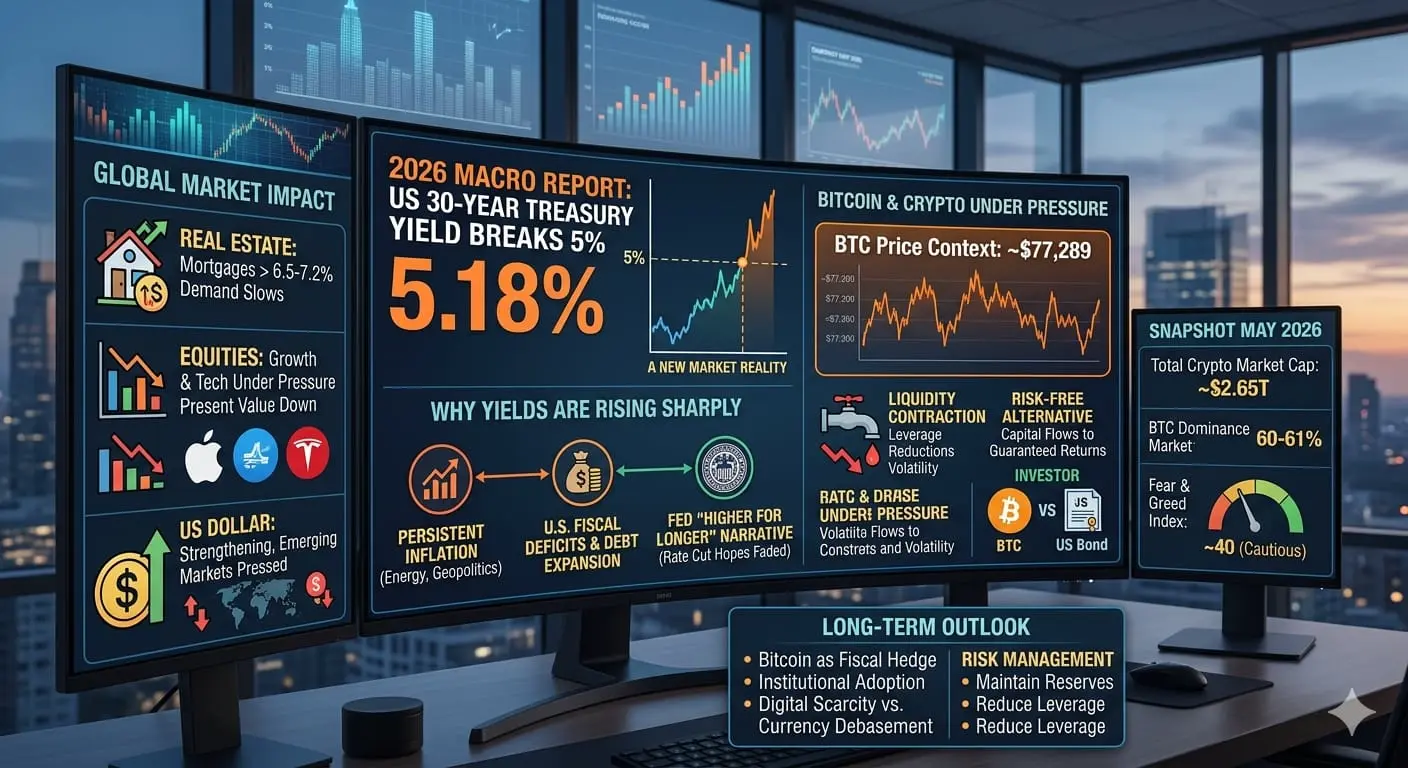
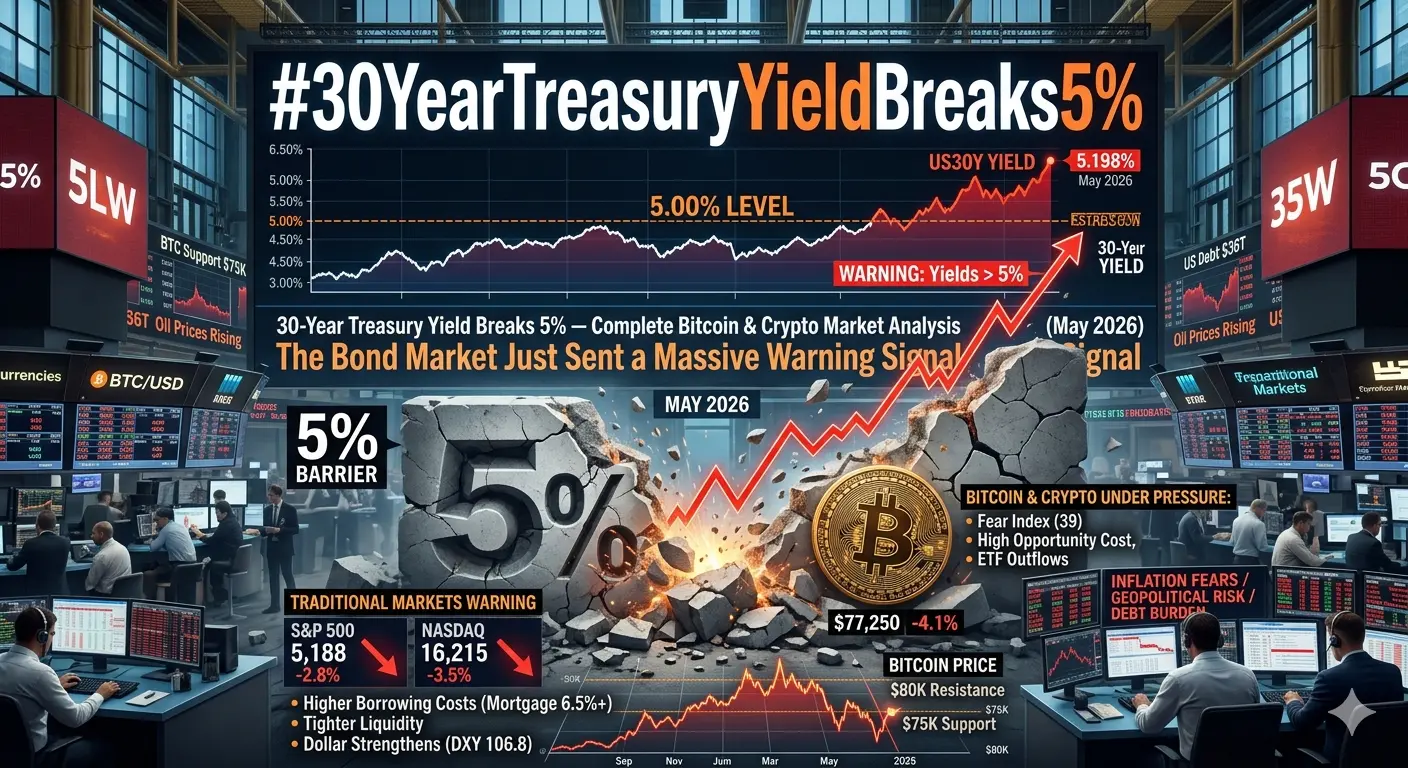
Global financial markets are entering one of the most important macroeconomic transitions of recent years as the U.S. 30-Year Treasury Yield rises above the critical 5% level, recently trading around 5.15%–5.22%, creating major pressure across stocks, bonds, real estate, commodities, and cryptocurrencies.
This move is not being viewed as a normal fluctuation because long-term Treasury yields are considered one of the strongest indicators of inflation expectations, future liquidity conditions, economic confidence, and investor risk perception. When long-duration y
HighAmbition
#30YearTreasuryYieldBreaks5%
Global financial markets are entering one of the most important macroeconomic transitions of recent years as the U.S. 30-Year Treasury Yield rises above the critical 5% level, recently trading around 5.15%–5.22%, creating major pressure across stocks, bonds, real estate, commodities, and cryptocurrencies.
This move is not being viewed as a normal fluctuation because long-term Treasury yields are considered one of the strongest indicators of inflation expectations, future liquidity conditions, economic confidence, and investor risk perception. When long-duration yields rise aggressively, it signals that investors are demanding significantly higher compensation to lock capital away for decades due to concerns surrounding inflation, government debt, and long-term economic uncertainty.
The 30-Year Treasury Yield represents the annual return investors receive after purchasing long-term U.S. government bonds, which are traditionally considered among the safest financial assets globally because they are backed by the United States government itself.
When yields remain around 2%–3%, markets usually interpret conditions as stable with manageable inflation and strong monetary confidence. However, once yields move above 5%, investor psychology changes dramatically because it reflects fears that inflation may stay elevated for longer while borrowing costs and fiscal risks continue rising.
A simple way to understand this situation is that investors are no longer comfortable lending money to governments for 30 years unless they receive much higher returns to compensate for future uncertainty and declining purchasing power.
One of the biggest reasons Treasury yields are rising sharply in 2026 is the return of inflation pressure across global markets. Oil prices have remained elevated due to geopolitical tensions in the Middle East, creating fears regarding transportation costs, manufacturing expenses, and food inflation across the global economy.
At the same time, investors are increasingly worried about the rapidly growing U.S. fiscal deficit and long-term debt burden because the government continues issuing enormous amounts of Treasury bonds to finance spending while interest payments themselves are becoming larger and more expensive.
Federal Reserve expectations have also shifted significantly because markets previously expected multiple interest-rate cuts during 2026, but stronger inflation data and resilient economic conditions are forcing traders to reconsider that outlook. Instead of aggressive easing, markets are now pricing in a “higher for longer” rate environment where interest rates may remain elevated much longer than originally expected.
Higher Treasury yields directly affect nearly every sector of the financial system because they increase borrowing costs across the economy.
Mortgage rates in the United States have climbed toward roughly 6.5%–7%, reducing housing affordability and slowing real-estate activity. Corporate borrowing costs have also increased sharply, forcing businesses to reconsider expansion plans, refinancing strategies, and long-term investments.
Technology and growth stocks are facing strong pressure because rising interest rates reduce the present value of future earnings, encouraging investors to shift capital away from risk-heavy sectors toward safer fixed-income investments that now offer attractive guaranteed returns.
The U.S. Dollar Index has strengthened significantly as global investors move capital into dollar-denominated assets to benefit from higher Treasury yields, creating additional pressure on international markets and emerging economies.
₿ Cryptocurrency markets are especially sensitive to liquidity conditions, interest rates, and macroeconomic uncertainty because Bitcoin, Ethereum, and altcoins generally perform best when liquidity is abundant and borrowing costs remain low.
When Treasury yields rise above 5%, investors suddenly gain access to relatively attractive “risk-free” returns through government bonds, reducing the relative attractiveness of high-volatility assets such as cryptocurrencies.
Bitcoin itself does not generate interest or dividends, which means higher Treasury yields increase the opportunity cost of holding BTC, especially for institutional investors managing large portfolios where stable fixed-income returns become more attractive during uncertain macroeconomic conditions.
Another major issue for crypto markets is liquidity tightening because higher rates reduce access to leverage and speculative capital flows that normally fuel aggressive rallies across Bitcoin and altcoins. As financial conditions tighten, volatility often increases sharply due to liquidations and weaker buying momentum.
As of May 2026, Bitcoin is trading around $76,500–$78,500 while facing strong macro-driven volatility caused by Treasury-yield pressure and inflation concerns.
Total crypto market capitalization remains near approximately $2.6 trillion–$2.75 trillion, while daily trading volume fluctuates around $75 billion–$82 billion as traders react to inflation data, Federal Reserve expectations, and geopolitical developments.
Bitcoin dominance remains relatively strong near 60%–61%, showing that investors currently prefer larger and more established digital assets over smaller speculative altcoins during uncertain macroeconomic conditions.
The Fear & Greed Index remains near the 38–42 range, reflecting cautious sentiment as traders hesitate to take aggressive risk exposure while Treasury yields continue rising.
The $80,000 region remains the most important resistance zone for Bitcoin because a sustained breakout above that level could potentially open momentum toward $85,000–$92,000 if liquidity conditions stabilize.
On the downside, the $75,000 area remains critical support because losing that level could expose Bitcoin to deeper corrections toward $72,000 and potentially even $68,000–$65,000 if Treasury yields continue climbing higher.
Markets are also closely watching Treasury yields themselves because sustained movement above 5.2%–5.3% could intensify pressure across both stock markets and cryptocurrencies simultaneously.
Historically, the last major period when 30-Year Treasury Yields traded consistently above 5% occurred around 2007–2008 before the global financial crisis, making current conditions psychologically significant for investors.
During the 2022 tightening cycle, aggressive Federal Reserve rate hikes pushed yields sharply higher and contributed to Bitcoin collapsing from nearly $69,000 toward approximately $15,500 while many altcoins lost between 80%–95% of their value due to severe liquidity contraction and panic selling.
Although current market conditions are different because spot Bitcoin ETFs and institutional participation provide stronger long-term support, macroeconomic forces still dominate short-term market direction.
Despite near-term pressure, some analysts remain optimistic regarding Bitcoin’s long-term outlook because concerns surrounding inflation, government debt expansion, and traditional financial-system instability may strengthen Bitcoin’s “digital gold” narrative over time.
Long-term investors continue arguing that periods of macro fear and liquidity tightening often create major accumulation opportunities for assets with strong scarcity models and expanding institutional adoption.
In this environment, disciplined risk management becomes extremely important because market volatility can increase rapidly whenever inflation reports, Federal Reserve communication, or geopolitical developments surprise investors.
Reducing leverage exposure, maintaining stablecoin reserves, using stop-loss strategies, and monitoring macroeconomic indicators such as bond yields, oil prices, and inflation data are becoming just as important as technical analysis for crypto traders in 2026.
The breakout of the U.S. 30-Year Treasury Yield above 5% represents one of the most important macroeconomic developments of 2026 because it reflects tighter financial conditions, persistent inflation concerns, stronger demand for safe returns, and growing uncertainty surrounding the global economy.
For Bitcoin and the broader crypto market, this environment creates significant short-term pressure through liquidity tightening and higher opportunity costs, while still supporting long-term narratives around digital scarcity and institutional adoption.
One reality is now clear:
Bitcoin and crypto markets are no longer isolated from traditional finance because Treasury yields, inflation expectations, Federal Reserve policy, government debt, and global liquidity conditions have become central forces driving digital-asset markets in 2026.
repost-content-media
  • Reward
  • Comment
  • Repost
  • Share
#Web3SecurityGuide
Web3 has transformed the financial world by giving users direct ownership of digital assets without relying on traditional banks or centralized institutions. Blockchain technology allows people to control their own wealth, interact with decentralized applications, trade globally, and participate in the digital economy with full financial freedom.
However, this freedom comes with major responsibility.
In traditional finance, banks manage security systems, fraud protection, and account recovery processes. In Web3, users are fully responsible for protecting their wallets, priv
HighAmbition
#Web3SecurityGuide
Web3 has transformed the financial world by giving users direct ownership of digital assets without relying on traditional banks or centralized institutions. Blockchain technology allows people to control their own wealth, interact with decentralized applications, trade globally, and participate in the digital economy with full financial freedom.
However, this freedom comes with major responsibility.
In traditional finance, banks manage security systems, fraud protection, and account recovery processes. In Web3, users are fully responsible for protecting their wallets, private keys, and assets. If a wallet is compromised or a seed phrase is exposed, transactions cannot usually be reversed.
As cryptocurrency adoption continues expanding in 2026, cyber threats inside the blockchain ecosystem are also increasing rapidly. Phishing attacks, wallet drainers, fake applications, malicious smart contracts, social engineering campaigns, and exchange impersonation scams are now more advanced than ever before.
Understanding Web3 security is now one of the most important skills for every crypto user.
The Foundation of Crypto Ownership
The most important principle in blockchain security is:
“Not Your Keys, Not Your Coins.”
This means ownership of crypto assets depends entirely on who controls the private keys.
Important components of every wallet include:
🔑 Private Key — The secret code controlling access to funds
🔑 Public Address — The wallet address used to receive assets
🔑 Seed Phrase — Backup recovery phrase used to restore wallets
🔑 Smart Contract Permissions — Approvals allowing applications to access tokens
Anyone with access to the seed phrase or private key can fully control the wallet.
This is why crypto security begins with protecting recovery information properly.
Modern Web3 Threat Landscape
The Web3 ecosystem now faces multiple categories of cyber threats, including:
• Phishing websites
• Fake exchange login pages
• Wallet drainers
• Malicious browser extensions
• Address poisoning attacks
• Fake customer support accounts
• AI-generated scam campaigns
• Fake airdrops and giveaways
• Social engineering attacks
• Smart contract exploits
• SIM swap attacks
• Malware targeting wallet files
Many attacks no longer rely on technical hacking alone. Instead, attackers often manipulate users emotionally through urgency, fear, excitement, or fake investment opportunities.
Seed Phrase Protection — The Highest Priority
Your seed phrase is the master backup for your wallet.
If someone gains access to it: • They can restore your wallet anywhere • They can transfer all assets instantly • They can bypass passwords and device security
Because of this, proper seed phrase storage is critical.
Best practices include:
✅ Write seed phrases on physical materials
✅ Store backups in secure offline locations
✅ Use fireproof or metal backup solutions
✅ Keep multiple copies in separate locations
✅ Protect backups from water and physical damage
Never: ❌ Save seed phrases in screenshots
❌ Store phrases in cloud drives
❌ Share phrases through messaging apps
❌ Enter phrases into websites
❌ Give phrases to support agents
Legitimate exchanges and wallet providers will never ask for your recovery phrase.
Hardware Wallet Security
Hardware wallets remain one of the strongest security solutions for long-term crypto storage.
Popular hardware wallet providers include: • Ledger
• Trezor
• SafePal
• Keystone
These devices store private keys offline, reducing exposure to online attacks.
Benefits of hardware wallets: ✅ Offline key storage
✅ Protection from malware
✅ Secure transaction signing
✅ Physical verification screens
✅ Better long-term storage security
Most experienced investors use cold wallets for large holdings and hot wallets for daily activity.
The 80/20 Security Strategy
Professional crypto users often follow the 80/20 protection strategy:
• 80–90% of holdings stay in cold storage
• 10–20% remain in hot wallets or exchanges for active use
This reduces overall risk exposure significantly.
Even if a hot wallet is compromised, most funds remain protected offline.
Exchange Security — Safe Trading Practices
When using centralized exchanges such as gate.io, account protection becomes extremely important.
Recommended security settings include:
✅ Enable Google Authenticator 2FA
✅ Use strong unique passwords
✅ Activate anti-phishing codes
✅ Enable withdrawal whitelist protection
✅ Monitor login history regularly
✅ Avoid logging in through public WiFi
✅ Use separate emails for trading accounts
Gate.io also provides advanced security infrastructure, including risk monitoring systems, cold wallet storage solutions, and multi-layer account protection features.
However, personal account security still depends heavily on the user’s own habits and awareness.
Smart Contract Risks in DeFi
Every time users connect wallets to decentralized applications, they approve permissions that may access tokens or NFTs.
Malicious contracts may: • Drain wallets automatically
• Steal NFTs
• Abuse unlimited approvals
• Transfer assets without clear warnings
Before interacting with DeFi platforms:
✅ Research projects carefully
✅ Verify security audits
✅ Review community reputation
✅ Start with small amounts
✅ Check wallet transaction previews
✅ Revoke unnecessary approvals regularly
Security awareness is essential when exploring new protocols.
Address Poisoning Attacks
Address poisoning is becoming increasingly common across blockchain networks.
Attackers send small transactions from wallet addresses visually similar to legitimate ones. Users accidentally copy the fake address from transaction history and send funds to attackers.
Protection methods:
✅ Verify entire wallet addresses carefully
✅ Save trusted addresses in wallet books
✅ Avoid copying addresses from transaction history
✅ Double-check recipient information before confirming
Even experienced traders have lost significant funds through address poisoning mistakes.
Social Engineering Threats
Many attackers focus on manipulating human behavior instead of attacking blockchain technology directly.
Common tactics include: • Fake support messages
• Emergency account warnings
• Fake investment opportunities
• Giveaway scams
• Impersonation on Telegram or Discord
• Pressure to act immediately
Important reminder: No legitimate platform will ask for your seed phrase or private keys.
Always verify information through official channels before taking action.
Two-Factor Authentication (2FA)
Two-factor authentication adds another security layer beyond passwords.
Security ranking:
Hardware Security Keys
Authenticator Apps
SMS Verification
Authenticator apps such as Google Authenticator are generally stronger than SMS-based protection because SMS systems may face SIM swap attacks.
Browser & Device Security
Crypto security also depends heavily on device protection.
Recommended practices: ✅ Keep operating systems updated
✅ Remove suspicious browser extensions
✅ Avoid cracked software
✅ Use antivirus protection
✅ Lock devices securely
✅ Separate crypto activity from general browsing
Many modern wallet drainers are hidden inside fake browser extensions or malicious software downloads.
DeFi & Yield Farming Risks
Decentralized finance offers high opportunities but also carries serious risks.
Before depositing funds into protocols: • Understand token utility
• Study liquidity conditions
• Review audit reports
• Analyze platform reputation
• Understand smart contract exposure
High rewards often come with elevated risks.
Careful research remains one of the strongest protections in DeFi.
NFT & Web3 Gaming Security
NFT ecosystems continue facing phishing attacks and fake mint scams.
Common risks include: • Fake NFT collections
• Malicious mint pages
• Wallet connection scams
• Fake marketplace listings
Users should: ✅ Verify official collection pages
✅ Avoid random mint links
✅ Review transaction approvals carefully
✅ Use separate wallets for testing new platforms
AI-Powered Crypto Scams
Artificial intelligence is making scams more convincing.
Modern threats now include: • AI-generated phishing emails
• Deepfake influencer videos
• Fake voice calls
• Automated social engineering campaigns
Scammers increasingly use realistic branding and professional-looking interfaces.
Always verify information through official websites and trusted channels.
Security Checklist
Daily: ✅ Verify wallet transactions
✅ Review URLs carefully
✅ Monitor account activity
Weekly: ✅ Check wallet permissions
✅ Update software
✅ Review browser extensions
Monthly: ✅ Audit wallets and accounts
✅ Update passwords
✅ Verify backup systems
Yearly: ✅ Test recovery procedures
✅ Update hardware wallet firmware
✅ Review complete security strategy
Web3 is creating a new era of digital ownership, decentralized finance, and blockchain innovation. However, the ability to control assets directly also means users must prioritize personal security at every level.
The strongest protection in crypto is not only technology — it is awareness, discipline, education, and responsible behavior.
Remember:
Protect your seed phrase carefully
Verify everything before signing
Security should become a daily habit
Responsible users survive long-term in Web3
Stay informed. Stay careful. Stay secure.
repost-content-media
  • Reward
  • Comment
  • Repost
  • Share
#TradfiTradingChallenge
#MU
Micron Technology is no longer just a semiconductor memory manufacturer; it has become a critical backbone of global artificial intelligence infrastructure. The AI revolution has completely reshaped the computing model, where GPUs alone are not enough—memory bandwidth, data transfer speed, and high-capacity storage have become equally essential.
Because of this shift, Micron now plays a highly important role in powering AI data centers, hyperscale cloud systems, machine learning clusters, and next-generation computing platforms.
Current Price & Market Performanc
MU-1.17%
HighAmbition
#TradfiTradingChallenge
#MU
Micron Technology is no longer just a semiconductor memory manufacturer; it has become a critical backbone of global artificial intelligence infrastructure. The AI revolution has completely reshaped the computing model, where GPUs alone are not enough—memory bandwidth, data transfer speed, and high-capacity storage have become equally essential.
Because of this shift, Micron now plays a highly important role in powering AI data centers, hyperscale cloud systems, machine learning clusters, and next-generation computing platforms.
Current Price & Market Performance (2026)
Micron has shown extraordinary momentum in 2026:
Current Price: $762.10
Intraday High: $764.90
Intraday Low: $727.97
Recent Close: $762.10
YTD Gain: +154% to +175%
1-Year Gain: ~+750%
Market Cap: ~$900 Billion
Simple idea:
The stock has surged from around $300 levels to $760+, which is a direct reflection of AI-driven demand.
AI Memory Supercycle — The Real Growth Engine
The AI supercycle is primarily powered by explosive memory demand.
Key Drivers:
Massive hyperscaler AI infrastructure spending (~$700B+)
Continuous expansion of large language models
Global data center growth at scale
Rapid enterprise AI adoption
Result:
Demand for both DRAM and HBM has significantly exceeded supply, leading to strong price increases across the industry.
HBM (High Bandwidth Memory) — Micron’s Core Weapon
HBM has become Micron’s most powerful growth segment.
HBM Revenue: ~$2 Billion per quarter
Annual Run Rate: ~$8 Billion+
2026 Supply: Nearly fully sold out
2027 Supply: Largely pre-booked
Simple explanation:
HBM acts as “high-speed fuel” for AI chips, and supply shortages in this segment are giving Micron strong pricing power.
Financial Performance — Record Growth Phase
Micron’s financial structure has improved dramatically due to the AI boom:
Revenue growth: ~3x year-over-year expansion
EPS Growth Forecast: ~+600% (FY2026)
FY2027 Expected Growth: +70% to +80%
Cloud memory segment: Record high revenue
Profit margins: Strong expansion trend
. Meaning:
The company is no longer just a cyclical manufacturer; it has become an AI growth engine.
Global Memory Market Crisis — Supply Shock
The memory industry is experiencing a historic supply-demand imbalance:
DRAM prices: sharp upward trend
HBM prices: 2x to 3x increase in many contracts
Production capacity: tight constraints
AI demand: continuously rising
Simple conclusion:
Demand > Supply = Strong pricing power for Micron
Analyst Targets — Mixed but Bullish Tone
Wall Street views remain mixed:
Street High Target: $1,100
Bullish Range: $1,000 – $1,200
Average Targets: $580 – $660
Conservative Views: ~$500
Important insight:
Current price (~$762) is already above average analyst targets, meaning expectations are highly aggressive.
Price Forecast — Possible Scenarios
Short-Term Scenario
Immediate Resistance: $765–$770
Breakout Zone: $800
Momentum Extension: $850
Near-term movement depends heavily on momentum continuation.
Medium-Term (2026 Outlook)
Base Case: $900 – $1,000
Bull Case: $1,100 – $1,200
Bear Case: $550 – $650
Long-Term (2027–2028 Outlook)
If AI demand remains strong:
Conservative Scenario: $1,200 – $1,500
Extreme Bull Case: $2,000
However, this depends entirely on sustained AI spending growth.
Risks — Important Reality Check
Despite strong momentum, risks still exist:
Semiconductor industry cyclicality remains
RSI above 70 indicates overbought conditions
Risk of AI spending slowdown
Competition from Samsung and SK Hynix
Strong prior rally ($300 → $760) already priced in
High expectations embedded in valuation
Meaning:
Volatility will remain high even within a strong bullish trend.
Technical Levels (Price Structure)
Resistance Levels:
$770
$800
$850
$900
Support Levels:
$730
$700
$680
$620
Trend outlook: Strong bullish structure, but pullbacks remain normal.
Trading Strategy — Practical Breakdown
Long-Term Investors
Buy dips near $680–$720
Hold for multi-year AI cycle
Target: $1,000+
Swing Traders
Entry: $720–$740 or breakout above $770
Targets: $800 / $850
Stop-loss: $680
Short-Term Traders
Intraday volatility: $20–$40 swings common
Momentum trading required
Strict risk management essential
Micron’s Future Outlook
Micron is no longer just a memory chip company; it has become a foundational pillar of AI infrastructure. Strong HBM demand, supply shortages, rapid earnings growth, and global AI expansion are positioning the company as a long-term structural winner.
However, in the short term, after such a strong rally, volatility and corrections remain natural.
2026: $900 – $1,200
2027–2028: $1,200 – $2,000 (extreme AI scenario)
Micron’s future is directly linked to AI demand growth—if AI continues expanding globally, Micron remains one of the key beneficiaries of that entire revolution.
repost-content-media
  • Reward
  • Comment
  • Repost
  • Share
#TradfiTradingChallenge
#BTC
Bitcoin (BTC) is currently trading around the $76,000–$78,500 region during one of the most important macroeconomic transition periods of the modern financial era, where inflation pressure, Federal Reserve uncertainty, institutional positioning, ETF demand, bond market volatility, and geopolitical tensions are all colliding simultaneously, creating elevated volatility across cryptocurrency markets and global risk assets. Bitcoin is no longer moving independently because every inflation report, Treasury yield movement, Federal Reserve statement, and geopolitical d
HighAmbition
#TradfiTradingChallenge
#BTC
Bitcoin (BTC) is currently trading around the $76,000–$78,500 region during one of the most important macroeconomic transition periods of the modern financial era, where inflation pressure, Federal Reserve uncertainty, institutional positioning, ETF demand, bond market volatility, and geopolitical tensions are all colliding simultaneously, creating elevated volatility across cryptocurrency markets and global risk assets. Bitcoin is no longer moving independently because every inflation report, Treasury yield movement, Federal Reserve statement, and geopolitical development now directly affects BTC price structure, trader psychology, leverage positioning, and long-term accumulation behavior.
Current Bitcoin Price Structure and Market Conditions
Bitcoin remains under pressure below the critical resistance region between $78,500 and $82,000 while defending the extremely important support zone between $75,000 and $76,000, which has become one of the most closely watched institutional accumulation regions in the digital asset market. This range is highly important because it may determine whether Bitcoin begins another expansion phase toward $90,000, $120,000, and eventually $150,000+, or whether the market enters a deeper corrective structure capable of revisiting $72,000, $68,000, or even the $60,000 psychological zone under severe macroeconomic stress conditions.
Technical Analysis and Chart Structure Outlook
From a technical perspective, Bitcoin’s structure remains mixed because BTC continues trading beneath the 20-day EMA, 50-day EMA, and 200-day EMA, which signals weakening short-term momentum and reduced bullish strength. Spot volume also remains relatively weak during recovery attempts, showing that buyers still require stronger confirmation before aggressively entering the market. However, Bitcoin continues showing resilience compared to previous correction cycles because every sharp dip toward the $75,000–$76,000 support region continues attracting long-term spot accumulation from institutional investors, ETF flows, and whale wallets.
Inflation Pressure and Macro Conditions
The macroeconomic environment surrounding Bitcoin has become increasingly complicated following the rise in inflation across the United States economy, where CPI climbed toward 3.8% year-over-year, representing the highest inflationary acceleration since May 2023. Rising inflation affects Bitcoin because hotter CPI data reduces the probability of Federal Reserve rate cuts, strengthens the US dollar, increases Treasury yields, tightens liquidity conditions, and reduces speculative appetite across cryptocurrencies and technology stocks. Markets now fear that inflation could remain elevated longer than expected due to energy market instability and global geopolitical uncertainty.
Treasury Yields and Federal Reserve Impact
The bond market has become one of the most important indicators for Bitcoin traders because rising Treasury yields signal tighter financial conditions across global markets. The 2-year Treasury yield approaching 4.05% shocked many bullish investors who previously expected aggressive monetary easing throughout 2025. Bitcoin historically performs strongest during periods of expanding liquidity, weaker dollar conditions, and falling interest rates. If the Federal Reserve remains hawkish for an extended period, Bitcoin may continue experiencing elevated volatility and delayed breakout momentum despite strong long-term fundamentals.
Federal Reserve Leadership and Market Expectations
The appointment of Kevin Warsh as Federal Reserve Chair represents another major macro variable influencing market expectations because traders are recalibrating assumptions regarding future monetary policy direction, inflation management, and economic stabilization efforts. Markets increasingly believe the Federal Reserve may prioritize inflation control over aggressive economic stimulus, especially if energy-driven inflation continues rising. Under these conditions, Bitcoin could remain highly reactive to inflation releases, labor market reports, Treasury auctions, and Federal Reserve policy statements.
Geopolitical Tensions and Bitcoin Volatility
The ongoing US-Iran conflict has become a major driver behind Bitcoin price instability because rising geopolitical tensions disrupted energy markets, accelerated gasoline prices, intensified inflation fears, and increased uncertainty across global financial systems. Historically, geopolitical instability creates short-term risk-off sentiment where investors temporarily reduce exposure to speculative assets including cryptocurrencies. However, prolonged geopolitical uncertainty can also strengthen Bitcoin’s long-term “digital gold” narrative because decentralized assets become increasingly attractive during periods of monetary instability and declining confidence in traditional systems.
Institutional Adoption and ETF Demand
Institutional participation remains one of the strongest bullish pillars supporting Bitcoin’s long-term trajectory because spot Bitcoin ETFs continue attracting inflows despite elevated volatility conditions, signaling that institutional capital still views BTC as a strategic long-term portfolio allocation. Large financial institutions, hedge funds, corporate investment structures, and sovereign-level capital continue increasing exposure either directly or indirectly through ETF products and publicly traded crypto-related companies. ETF demand continues absorbing significant circulating supply from the market, strengthening Bitcoin’s long-term scarcity narrative.
On-Chain Data and Whale Activity
On-chain data continues revealing important long-term accumulation behavior because long-duration holders are not aggressively distributing coins despite the correction from highs above $100,000. Historically, deeper bear markets become dangerous when long-term holders panic sell aggressively into weakness, but current blockchain metrics suggest many experienced investors continue holding positions while waiting for macroeconomic stabilization. Exchange reserves remain structurally lower than previous cycles while whale accumulation patterns continue showing relatively constructive behavior.
Market Sentiment and Trader Psychology
The market currently exists in a deeply divided state between aggressive long-term optimism and cautious short-term defensive positioning. Bullish traders continue targeting eventual price expansion toward $90,000, $120,000, $150,000, and even $200,000+ based on ETF demand, institutional adoption, and post-halving supply dynamics, while bearish traders argue that elevated inflation, restrictive monetary policy, weak volume structure, and deteriorating macro conditions could still trigger a larger corrective phase capable of sending BTC toward $68,000 or lower before a sustainable recovery develops.
Bullish Bitcoin Scenario
The bullish scenario for Bitcoin requires several important conditions aligning simultaneously, including a confirmed breakout above $82,000 with strong spot volume expansion, stabilization in inflation data, reduced geopolitical tensions, improving liquidity conditions, and continued ETF inflows. Under this scenario, Bitcoin could rapidly transition toward $90,000 resistance where momentum traders and institutional breakout algorithms could accelerate upside continuation toward $100,000–$120,000. If macro conditions improve significantly and liquidity expansion returns globally, extended targets between $150,000 and $200,000 may eventually become realistic over a multi-quarter timeframe.
Bearish Bitcoin Scenario
The bearish scenario remains equally important because failure to defend the $75,000–$76,000 support region could trigger cascading liquidation pressure throughout leveraged futures markets, potentially accelerating downside movement toward $72,000, $68,000, and the broader $60,000 support structure where major historical demand previously emerged. Such a decline would likely require worsening inflation data, escalating geopolitical instability, stronger US dollar conditions, rising Treasury yields, reduced ETF demand, and weakening risk appetite across equities and digital assets.
Trading Strategies and Risk Management
For short-term traders, the current Bitcoin market environment strongly favors disciplined risk management, smaller position sizing, tighter stop-loss structures, and strategic patience because volatility conditions remain elevated while macroeconomic direction remains uncertain. Breakout traders may focus on confirmed strength above $79,500–$82,000 with volume confirmation, while range traders continue watching reactions between the $76,000 support region and $78,500 resistance structure. Conservative investors may prefer maintaining balanced exposure with higher cash reserves until clearer macro confirmation emerges.
Long-Term Bitcoin Investment Outlook
For long-term investors, many analysts continue viewing the current $76,000–$78,500 region as a strategic accumulation phase within a broader multi-year institutional adoption cycle because Bitcoin’s long-term structural fundamentals remain intact despite macroeconomic turbulence. The combination of limited supply, increasing institutional integration, ETF-driven demand, long-term holder conviction, growing mainstream recognition, and ongoing monetary uncertainty continues supporting the thesis that Bitcoin may eventually achieve significantly higher valuations over the coming years if global liquidity conditions stabilize.
The coming months may become one of the most decisive periods in Bitcoin’s modern market history because the interaction between inflation data, Federal Reserve policy decisions, bond market volatility, geopolitical developments, ETF flows, institutional positioning, and global liquidity conditions will likely determine whether BTC enters another major expansion cycle toward six-figure territory or experiences a prolonged corrective consolidation phase before the next sustainable breakout emerges. Every CPI release, Federal Reserve statement, Treasury yield movement, and geopolitical development now carries enormous importance for Bitcoin traders because the cryptocurrency market has evolved into a globally interconnected macro-sensitive financial asset.
.@Gate_Square @Gate广场_Official
repost-content-media
  • Reward
  • Comment
  • Repost
  • Share
#TradfiTradingChallenge
#META
Meta Platforms is currently trading around $609.51–$610, positioning itself in one of the most important transition phases in company history. Despite strong revenue growth, massive AI investments, and dominant social media ecosystems, investor sentiment remains divided because of rising infrastructure spending and concerns regarding future profitability.
Meta remains one of the largest technology companies globally, controlling major platforms including Facebook, Instagram, WhatsApp, Threads, and Reality Labs. The company continues aggressively expanding its ar
HighAmbition
#TradfiTradingChallenge
#META
Meta Platforms is currently trading around $609.51–$610, positioning itself in one of the most important transition phases in company history. Despite strong revenue growth, massive AI investments, and dominant social media ecosystems, investor sentiment remains divided because of rising infrastructure spending and concerns regarding future profitability.
Meta remains one of the largest technology companies globally, controlling major platforms including Facebook, Instagram, WhatsApp, Threads, and Reality Labs. The company continues aggressively expanding its artificial intelligence ecosystem while simultaneously defending its advertising dominance against growing competition from TikTok, YouTube, and emerging AI-driven social platforms.
The stock has experienced elevated volatility throughout 2026, mainly due to investor concerns surrounding AI-related capital expenditures, margin pressure, and long-term monetization efficiency. However, many analysts still maintain bullish long-term expectations because Meta continues generating enormous cash flow and strong advertising growth.
1. Current META Stock Structure
Meta is trading inside a major consolidation range after correcting from previous highs near the $790–$800 region. Current price action suggests that the market is attempting to establish a long-term equilibrium zone around $600.
Important Technical Levels
Immediate Support Zone: $575 – $590
Main Psychological Support: $550
Resistance Area: $650 – $680
Major Breakout Resistance: $750 – $800
Technical analysts are closely watching whether META can maintain stability above the $600 region because this area may become the foundation for a second-half recovery rally. Several analysts have identified possible bullish formations including a double-bottom structure and falling wedge breakout setup.
2. Meta’s AI Expansion Strategy
Artificial Intelligence is now the central pillar of Meta’s long-term strategy. CEO Mark Zuckerberg is aggressively transforming the company into an AI-first ecosystem.
Meta is investing heavily in:
AI infrastructure
Data centers
Advanced GPUs
Recommendation algorithms
AI assistants
Smart glasses
Large language models
Creator monetization systems
The company dramatically increased its 2026 capital expenditure guidance to approximately $125B–$145B, creating market fears regarding profitability compression. Investors worry that AI spending may rise faster than actual monetization growth in the near term.
However, Meta management argues that these investments are necessary to secure long-term dominance in AI-driven advertising, consumer interaction, and digital infrastructure.
3. Advertising Business Remains Extremely Strong
Despite concerns surrounding spending, Meta’s core advertising engine remains highly profitable.
Recent quarterly results showed:
Revenue growth near 33% YoY
Strong advertising pricing growth
Increased ad impressions
Improved AI-powered recommendation systems
Continued Instagram and Reels monetization strength
Meta’s Family of Apps ecosystem still reaches billions of users globally, giving the company one of the most powerful advertising networks in the world. AI-enhanced targeting systems are also improving advertising efficiency for businesses and creators.
This advertising strength is the primary reason many institutional investors remain bullish despite current volatility.
4. Reality Labs and Metaverse Concerns
One of the biggest long-term concerns remains Reality Labs, Meta’s metaverse division.
Although Meta continues investing aggressively in:
Virtual Reality
Augmented Reality
Smart Glasses
Mixed Reality Devices
…the division still generates heavy losses. Investors remain uncertain about how quickly the metaverse ecosystem can become profitable.
Some analysts believe the metaverse strategy may eventually create another trillion-dollar ecosystem, while others view it as a long-term financial burden.
This uncertainty contributes significantly to META’s price volatility.
5. Market Sentiment and Investor Psychology
Investor sentiment surrounding META in 2026 is highly mixed.
Bullish View
Supporters argue that:
Meta remains undervalued compared with other AI leaders
AI monetization is still in early stages
WhatsApp monetization potential is enormous
Instagram and Reels remain dominant globally
Advertising cash flow remains extremely powerful
Long-term AI infrastructure could produce massive returns
Bearish View
Critics argue that:
AI spending is becoming excessive
Margins may continue declining
Regulatory risks remain high
Competition from TikTok and AI-native platforms is increasing
Metaverse investments may not generate meaningful returns
This balance between optimism and uncertainty is currently driving META’s large price swings.
6. Institutional and Wall Street Outlook
Most Wall Street analysts continue maintaining medium-to-long-term bullish expectations for META despite short-term volatility.
Several analyst forecasts currently place META targets between:
$750
$800
$840
Some aggressive bullish cases above $1,000
The primary reasoning behind these projections includes:
Strong revenue expansion
AI monetization growth
Dominance in digital advertising
Massive global user ecosystem
Attractive valuation relative to future earnings potential
Many analysts also note that META’s forward valuation remains lower than several competing AI-focused technology companies.
7. Bullish Scenario for META
If Meta successfully monetizes AI infrastructure while maintaining strong advertising growth, the stock could experience a major expansion cycle during late 2026 and beyond.
Potential Bullish Targets
First Expansion Target: $700
Major Recovery Target: $800
Extreme Bullish Scenario: $950 – $1,050
A breakout above the $650–$680 resistance region could significantly improve bullish momentum.
Key bullish catalysts include:
Strong quarterly earnings
Improved AI monetization
Lower inflation
Federal Reserve easing
Increased advertising demand
Successful AI assistant integration
Growth in WhatsApp business monetization
8. Bearish Scenario for META
META still faces meaningful downside risks if AI spending continues expanding faster than revenue growth.
Potential Bearish Risks
Weak earnings guidance
Falling operating margins
Slower ad growth
Regulatory penalties
Economic slowdown
AI monetization delays
Increased competition
Potential Bearish Price Zones
First downside region: $575
Major support zone: $520 – $550
Extreme bearish scenario: Below $500
Failure to hold the $575 support region could trigger larger institutional selling pressure.
9. Trading Strategy and Risk Management
Short-Term Traders
Short-term traders may focus on volatility ranges between:
Support accumulation near $580–$600
Profit-taking zones near $650–$700
Momentum confirmation is important because META remains highly sensitive to:
AI headlines
Earnings reports
Federal Reserve policy
Technology sector sentiment
Long-Term Investors
Long-term investors are primarily watching whether Meta can:
Sustain advertising growth
Successfully monetize AI
Maintain operating margins
Expand ecosystem dominance
Many investors view current price levels as long-term accumulation territory if Meta successfully executes its AI transition over the next several years.
10.
Meta Platforms remains one of the most important AI and technology companies globally. The company is currently navigating a difficult but potentially transformative phase involving massive AI infrastructure expansion, intense competition, and changing investor expectations.
At approximately $609, META sits at a major psychological and technical decision zone. The market is essentially debating whether Meta’s enormous AI spending will eventually generate another multi-year growth supercycle or become a prolonged profitability burden.
The long-term direction of META will likely depend on one core factor:
Can Meta successfully convert massive AI spending into sustainable monetization and earnings growth?
If the answer becomes yes, META could eventually revisit previous highs and potentially establish new all-time highs in future market cycles. If not, continued volatility and downside pressure may persist throughout 2026. @Gate_Square @Gate广场_Official
repost-content-media
  • Reward
  • Comment
  • Repost
  • Share
#TradfiTradingChallenge
#AMZN
Amazon is currently trading in the $268–$270 range, and at this level the stock is not simply moving as a normal equity anymore but instead behaving like a macro-sensitive mega-cap AI infrastructure asset that is being continuously repriced by global institutional capital flows, ETF rotations, sovereign wealth allocations, and long-duration growth funds.
The key observation in 2026 is that Amazon is no longer being evaluated purely on e-commerce revenue cycles, but rather on a blended valuation framework that includes AWS cloud dominance, artificial intelligence
HighAmbition
#TradfiTradingChallenge
#AMZN
Amazon is currently trading in the $268–$270 range, and at this level the stock is not simply moving as a normal equity anymore but instead behaving like a macro-sensitive mega-cap AI infrastructure asset that is being continuously repriced by global institutional capital flows, ETF rotations, sovereign wealth allocations, and long-duration growth funds.
The key observation in 2026 is that Amazon is no longer being evaluated purely on e-commerce revenue cycles, but rather on a blended valuation framework that includes AWS cloud dominance, artificial intelligence infrastructure expansion, enterprise computing demand, logistics automation, and long-term digital advertising growth, meaning that the stock behaves more like a hybrid between a cloud computing index and an AI infrastructure proxy rather than a traditional retail company.
At $268, Amazon is sitting in a consolidation zone after an aggressive macro-driven expansion phase that took the stock from approximately $212 in March 2026 to $278.56 at the May peak, representing a rapid multi-week expansion cycle that added hundreds of billions in market capitalization and pushed the company dangerously close to the psychological $3 trillion valuation threshold, which remains a key institutional milestone for capital reallocation decisions.
Multi-Layer Market Behavior
Amazon’s price structure in 2026 is best understood as a three-phase institutional cycle rather than a simple rally-and-correction pattern.
Phase 1 — Accumulation Breakdown (March 2026)
Price: $210–$225 range
This phase was driven by macro uncertainty, elevated interest rates, and fears surrounding global trade tensions. Institutional buyers were quietly accumulating positions while retail sentiment remained neutral to bearish.
Phase 2 — Expansion Impulse (April–May 2026)
Price: $225 → $278.56
This phase represented a strong expansion cycle fueled by:
AWS acceleration to ~28% growth
Massive EPS surprise of +71%
AI infrastructure optimism
Strong advertising revenue expansion
Institutional FOMO rotation into mega-cap AI names
Phase 3 — Consolidation (Current)
Price: $265–$270 range
This phase reflects:
Profit-taking from short-term traders
Macro hesitation due to Fed policy uncertainty
Cooling momentum indicators
Institutional repositioning before next earnings cycle
This consolidation is not a breakdown; instead, it is a liquidity reset zone where market participants evaluate whether the next move will extend toward $300 or revert toward deeper support near $250.
AWS Supercycle — The Core Valuation Engine of Amazon
Amazon Web Services remains the most critical valuation driver in Amazon’s entire ecosystem, and in 2026 AWS is effectively functioning as a global AI infrastructure backbone that competes directly with Microsoft Azure and Google Cloud in enterprise-scale compute demand.
AWS is currently expanding not just in traditional cloud workloads but also in:
Generative AI model hosting
Enterprise AI training clusters
GPU-as-a-service infrastructure
Machine learning pipelines
Data lake scaling for corporations
Real-time AI inference systems
AWS growth at ~28% YoY and projected 29–34% range expansion scenarios is structurally significant because even small percentage increases in AWS growth rates produce disproportionately large impacts on Amazon’s operating income due to its extremely high-margin structure compared to retail operations.
At scale, AWS is effectively transitioning from a cloud service into a global AI utility layer for enterprise computing, meaning Amazon’s valuation multiple is gradually expanding toward high-growth infrastructure peers rather than retail or logistics benchmarks.
AI Capital Expenditure Cycle — $200B Mega Investment Phase
One of the most important structural developments in Amazon’s 2026 thesis is the aggressive $200 billion AI infrastructure investment cycle, which includes:
Global AI data center expansion
Custom silicon chip deployment
GPU cluster scaling
Machine learning optimization systems
AI inference infrastructure
Edge computing expansion
Cloud network reinforcement
This level of capital expenditure places Amazon among the most aggressive technology investors in modern financial history, and while it raises short-term concerns about margin compression, it simultaneously creates the foundation for a multi-year AI monetization supercycle.
The key market debate is not whether this spending is large, but whether it will generate sufficient future return on invested capital through AWS AI services, enterprise subscriptions, and cloud AI workload dominance.
If successful, this cycle could redefine Amazon’s earnings power entirely over the next decade.
Earnings Structure — Profitability Acceleration Despite Heavy Investment
Amazon’s Q1 2026 earnings demonstrated a rare combination of high revenue growth + massive margin expansion + strong AWS acceleration, which is unusual in a high-capex environment.
Key financial structure:
Revenue: $181.5B (+17% YoY)
EPS: $2.78 vs $1.63 expected
Operating income: $23.9B
AWS growth: 28% YoY
Operating leverage improving despite CapEx increase
This creates a dual narrative where Amazon is simultaneously:
Increasing investment aggressively
Expanding profitability faster than expected
This duality is the reason analysts continue raising targets even while warning about short-term margin volatility.
Technical Market Structure — Institutional Trend Integrity Still Intact
Amazon’s technical structure remains in a long-term bullish regime, even after recent consolidation.
Key technical framework:
50-day MA: ~$250.90
200-day MA: ~$231.50
Price: $268
Structure: Above both key moving averages
Trend: Long-term bullish (confirmed)
The RSI around 44–45 indicates that momentum has cooled but not reversed, which is typically a constructive condition in strong bull cycles because it resets overbought conditions without breaking structural support.
Resistance remains concentrated near:
$278.56 (ATH)
$300 psychological zone
$313 consensus target
$350–$370 institutional bull case range
Institutional Sentiment & Valuation Expansion Cycle
Institutional sentiment toward Amazon is increasingly driven by AI infrastructure valuation logic, meaning traditional P/E comparisons are becoming less relevant compared to revenue growth durability and cloud computing dominance.
Analyst consensus remains strongly bullish:
Average target: $313.55
High target: $350–$370
Low target: $207
The upward revision cycle across major institutions suggests that Amazon is undergoing a gradual multiple expansion phase, where valuation increases are being justified not by speculation but by structural earnings and AWS growth acceleration.
Risk Expansion Layer — Macro + Structural + AI Execution Risks
Amazon still faces several multi-layer risk factors:
Macro Risks
High interest rate environment
Global liquidity tightening
Consumer spending slowdown
Energy price volatility
Company Risks
AI monetization lag relative to CapEx spending
Margin compression from infrastructure expansion
Retail margin pressure from global competition
Regulatory and antitrust scrutiny
Structural Risks
Over-investment in AI infrastructure before demand fully materializes
Cloud competition intensification
Slower-than-expected enterprise AI adoption cycles
Extended Price Scenarios (Multi-Cycle Projection)
Conservative Scenario
$300–$310 → steady AWS expansion + stable macro
Moderate Scenario
$313–$330 → AI monetization acceleration + $3T stabilization
Aggressive Scenario
$350–$370 → full AI infrastructure dominance + margin expansion
Extreme Bull Cycle
$400+ → multi-year AI supercycle with exponential AWS demand growth
Bear Scenario
$207–$230 → macro recession + AI spending slowdown
Trading Framework — Institutional Style Strategy Mapping
Current Zone Strategy ($265–$270)
Entry: Accumulation range
Stop: $250
Target: $278 → $300 → $313
Breakout Strategy ($278.56 break)
Entry: $280+
Target: $300–$330
Expansion: $350+ if volume confirms
Deep Value Strategy ($250 retest)
Entry: Major support accumulation
Stop: $230
Target: $300+ multi-leg move
Long-Term Structural Transformation Thesis
Amazon is currently evolving into a multi-layer global infrastructure company, simultaneously operating across:
Cloud computing (AWS)
Artificial intelligence infrastructure
Global logistics automation
Digital advertising ecosystem
Enterprise software services
Data intelligence platforms
This transformation means Amazon is no longer priced as a retail company but increasingly as a global AI infrastructure backbone with diversified revenue engines across multiple trillion-dollar industries.
Final Institutional Conclusion — Is Amazon Still in Expansion Mode?
At $268, Amazon remains in a structurally bullish consolidation phase following a major expansion cycle. The price action reflects digestion rather than reversal, and the long-term trend structure remains firmly intact above all major moving averages.
The key trigger for the next major expansion phase remains the $278.56 breakout level, because once that resistance is cleared with institutional volume, the market typically accelerates toward $300 and $313 extremely quickly, with potential extension toward **$350+ if AI monetization continues to scale faster than CapEx pressure builds.
In summary, Amazon is currently in a controlled consolidation inside a long-term AI-driven bull structure, where volatility is temporary but structural growth drivers remain intact and expanding..@Gate_Square @Gate广场_Official
repost-content-media
  • Reward
  • Comment
  • Repost
  • Share
#TradfiTradingChallenge
#XAUUSDT
Current Spot Price $4,508
Recent High (May 13) $4,715.29
Recent High (May 14) $4,688.84
Weekly Close May 17 $4,539.90
Weekly Close May 22 $4,542.91
April 30 Close $4,613.73
April 26 Weekly Close $4,709.31
April 12 Weekly Close $4,830.17
All-Time High Zone (May 2026) ~$4,830
Drop from ATH ~$322 (−6.7%)
YoY Change (May 2025 → May 2026) +41% ($3,335 → $4,508)
Gold has pulled back roughly $322 from its all-time high of approximately $4,830 recorded around mid-April 2026. The correction from $4,715 to $4,508 represents a near-term decline of roughly 4.4%, driven b
HighAmbition
#TradfiTradingChallenge
#XAUUSDT
Current Spot Price $4,508
Recent High (May 13) $4,715.29
Recent High (May 14) $4,688.84
Weekly Close May 17 $4,539.90
Weekly Close May 22 $4,542.91
April 30 Close $4,613.73
April 26 Weekly Close $4,709.31
April 12 Weekly Close $4,830.17
All-Time High Zone (May 2026) ~$4,830
Drop from ATH ~$322 (−6.7%)
YoY Change (May 2025 → May 2026) +41% ($3,335 → $4,508)
Gold has pulled back roughly $322 from its all-time high of approximately $4,830 recorded around mid-April 2026. The correction from $4,715 to $4,508 represents a near-term decline of roughly 4.4%, driven by a combination of rising US interest rates, a temporary easing of Middle East tensions during ceasefire speculation, and profit-taking after the extraordinary rally.
🔮 Analyst Forecast Targets — Where Can Gold Go?
Institution 2026 Target
JPMorgan $6,300 (end-2026)
UBS $6,200 (March/June/Sept 2026)
Deutsche Bank $6,000
Bank of America $5,000+
Ventura Securities $4,800
InvestingHaven $5,000–$5,500 range
Polymarket (May target) ≤$4,700 (already breached)
Key Takeaway: The consensus among major Wall Street banks is overwhelmingly bullish. JPMorgan's $6,300 target implies approximately 39% upside from the current $4,508 level. Even the more conservative Bank of America forecast of $5,000+ suggests roughly 11% potential upside. The median institutional target sits around $5,500–$6,000, meaning gold could theoretically climb another $1,000–$1,500 per ounce from here under sustained geopolitical and macroeconomic pressure.
⚔️ US–Iran Geopolitical Tension — The Strait of Hormuz Crisis
Timeline of Key Events
Date Event
Feb 28, 2026 US strikes on Iran begin; conflict erupts
Apr 12, 2026 Trump announces US naval blockade of Iranian ports & Strait of Hormuz after peace talks collapse
Apr 17, 2026 Iran briefly says Strait "completely open" but issues warning
Apr 18, 2026 Iran closes Strait again "until US lifts blockade"
Apr 22, 2026 Iran calls it "impossible" to reopen Strait amid ceasefire breaches; seizes foreign vessels
Apr 30, 2026 Iran Supreme Leader issues defiant statement — won't surrender control of Hormuz
May 9, 2026 The Guardian: "Neither US nor Iran can sustain standoff indefinitely"
May 14, 2026 Iran says ships entering Hormuz must cooperate; vessel seized
May 15, 2026 Oman caught between US and Iran — Tehran claims joint Hormuz management plan
May 17, 2026 Negotiations remain deadlocked; drone strike near UAE Barakah nuclear plant
May 19, 2026 Trump claims Iran attack "on hold" at request of Gulf allies
May 20, 2026 Iran says it coordinated passage of only 26 vessels out of Hormuz
May 21, 2026 ADNOC chief: full Hormuz flows won't return before Q1-Q2 2027 even if conflict ends now
May 22, 2026 Oil prices jump ~2% as Hormuz peace deal impasse continues; Brent at $104+
The Strait of Hormuz — What It Means
The Strait of Hormuz is a 21-mile-wide waterway between the Persian Gulf and the Gulf of Oman. Before the conflict, roughly 20% of global oil supply and significant LNG volumes passed through this chokepoint — approximately 14 million barrels per day from Saudi Arabia, Iraq, UAE, Kuwait, and Iran.
The IRGC (Islamic Revolutionary Guard Corps) has deployed what analysts call a "saturated asymmetric siege" — a multi-layered denial architecture combining naval, drone, missile, and mines that has rendered the waterway essentially impassable for commercial shipping. Only a trickle of vessels (26 in one recent count) have been allowed through under Iran's coordination system, and none are container ships.
The US has simultaneously enforced its own naval blockade, turning back or seizing roughly 70 commercial vessels by early May according to CENTCOM. This dual blockade — Iran blocking from one side, the US from the other — has created a historic maritime crisis.
Economic Impact of the Hormuz Closure
Iraq's April exports: Only 10 million barrels vs. normal 93 million/month (−89%)
Oil prices: Brent crude hit $104+ on May 22; previously spiked above $160 for physical crude in March
Wood Mackenzie warning: Prolonged closure through end-2026 could push oil to $200/barrel and trigger worst energy supply shock in 100+ years
Rapidan Energy: Closure through August risks recession rivaling 2008
ADNOC (UAE state oil): Full flows won't resume until Q1–Q2 2027 even if peace deal is signed now
UAE fast-tracking: Pipeline expansion through Fujairah to bypass Hormuz (doubling capacity by 2027)
UAE has quit OPEC amid production battles and global shortages
Global GDP impact: Growth projected to slow from 3% (2025) to 2.3% (2026) under prolonged closure scenario
Food security risk: LNG-fertilizer nexus disrupted, threatening Global South food supply in ways worse than 1973
🎯 How High Can Gold Go? — Upside Scenarios
Scenario 1: Prolonged Hormuz Closure + No Peace Deal (Most Bullish)
If the Strait remains closed through summer 2026 with no diplomatic breakthrough:
Oil → $130–$200/barrel (Rapidan/WoodMac scenarios)
Global recession risk escalates
Safe-haven demand intensifies dramatically
Central bank gold buying accelerates
Gold target: $5,500–$6,300 (aligning with JPMorgan/UBS targets)
Maximum theoretical spike: $6,500+ if oil reaches $200
Scenario 2: Partial Hormuz Opening / Ceasefire (Moderate Bullish)
Even a ceasefire won't restore normal flows immediately. ADNOC says Q1 2027 for full recovery. Markets would rally on peace headlines but supply constraints persist:
Oil drops to $80–$90 but remains elevated vs. pre-war $69
Gold dips on peace headlines then stabilizes as supply reality sets in
Gold target: $4,800–$5,200 range
Scenario 3: Full Resolution + Rate Cuts (Least Bullish / Consolidation)
Complete peace deal + Fed begins cutting rates:
Oil normalizes gradually through 2027
Gold consolidates after massive rally
Gold floor: $4,200–$4,400 with slow grind higher
Bottom Line
Even the least bullish scenario keeps gold above $4,200. The most likely scenario (prolonged stalemate with gradual partial reopening) targets $4,800–$5,500. The tail-risk scenario pushes toward $6,000–$6,300+. Gold's upside from $4,508 ranges from +6% to +39% depending on geopolitical trajectory.
📈 Technical Analysis — Key Levels
Level Price Significance
Resistance A $4,609–$4,595 Short-term resistance zone (LiteFinance)
Resistance B $4,700 Major resistance; Polymarket milestone; former weekly close
Resistance C $4,830 All-time high; ultimate short-term target
Current Price $4,508 Trading zone
Support A $4,400 Psychological & technical support
Support B $4,200 Major structural support floor
Support C $3,800 Deep correction level (unlikely without peace deal + rate hikes)
Current Technical Picture (May 22): Gold is trading in a short-term downtrend correction, approaching the resistance zone of $4,609–$4,595. The broader macro trend remains firmly bullish. A break above $4,600 would be a significant bullish signal. A break above $4,700 would confirm trend resumption toward ATH at $4,830.
🧠 Trading Strategy — Actionable Plan
Strategy 1: Buy on Dips (Primary Strategy)
Given the overwhelmingly bullish macro and geopolitical backdrop, the core strategy is accumulation on pullbacks:
Entry Zone Target Stop Loss Risk:Reward
$4,400–$4,500 $4,700 $4,200 1:2.5
$4,200–$4,300 (deep dip) $4,830 (ATH) $4,000 1:4
Breakout entry $4,610+ $5,000+ $4,500 1:5
Recommended approach: Scale in with partial positions at $4,500, add more at $4,400, and full position at $4,200 if reached. Set stop-losses at $4,000 maximum.
Strategy 2: Breakout Play
If gold clears $4,610 and holds above $4,700:
Enter on the $4,700 breakout confirmation
First target: $4,830 (ATH)
Second target: $5,000+
Stop: $4,550 (below breakout level)
Strategy 3: Range Trading (If Stuck Between $4,400–$4,600)
While gold consolidates in this range before the next catalyst:
Buy near $4,420–$4,450
Sell near $4,580–$4,600
Stop on both sides at range break
Risk Management Rules
Never risk more than 2–3% of total capital per trade
Use stop-losses on every position
Scale out of positions at targets (sell 50% at first target, trail the rest)
Keep 30–40% capital in reserve for deeper dip entries
Monitor Strait of Hormuz negotiations daily — any breakthrough triggers sharp volatility
🔑 Key Catalysts to Watch
Catalyst Impact Direction
Hormuz peace deal breakthrough Sharp volatility Gold ↓ short-term, then ↑ as supply reality persists
Hormuz closure prolonged Bullish acceleration Gold ↑↑
US interest rate cuts Strong bullish Gold ↑↑
US inflation data (CPI) Mixed Higher CPI = Gold ↑ (safe haven); Lower CPI + rate cut expectations = Gold ↑
Oil price spike to $130+ Very bullish for gold Gold ↑↑↑ (inflation + recession fears)
Drone/missile escalation in Gulf Very bullish Gold ↑↑↑
UAE pipeline completion Moderate bearish for oil, neutral for gold Limited Gold impact
China oil import cuts Bearish for oil, mixed for gold Could slow Gold if deflationary
📉 Why Gold Dropped from $4,830 to $4,508
Profit-taking: After a 41% annual rally, institutional and retail sellers took profits at record levels
US interest rate pressure: Rising rates increase the opportunity cost of holding non-yielding gold
Ceasefire speculation: Repeated peace headlines (April 17 "Strait completely open," May 19 "attack on hold") triggered temporary risk-on sentiment
Technical correction: Normal retracement after such an extreme rally — a 6.7% pullback is healthy within a bull trend
Strong US dollar: Dollar strength on rate expectations pressured gold inversely
This correction is likely temporary. The structural drivers (geopolitical crisis, supply shock, central bank demand, inflation) remain firmly intact and will continue pushing gold higher over the medium term.
🏁 Summary & Next Plan
Question Answer
Where is gold now? $4,508 (pulled back from ATH $4,830)
Where can it go short-term? $4,700–$4,830 if resistance breaks
Where can it go medium-term? $5,000–$5,500 (base case)
Maximum upside (tail risk)? $6,000–$6,300 (JPMorgan/UBS targets)
Downside floor? $4,200–$4,400 (strong support)
Best strategy? Buy dips at $4,400–$4,500; target $4,700+ then $5,000+
Biggest risk to bullish case? Rapid Hormuz peace deal + aggressive Fed rate cuts (short-term dip, medium-term still bullish)
Key event to watch? Strait of Hormuz negotiations — any breakthrough or breakdown
The bottom line: Gold is in a secular bull market driven by the greatest energy supply shock in modern history. The Strait of Hormuz crisis has removed 14 million barrels/day from global supply and won't be fully resolved until 2027 even under the best scenario. Every major bank targets $5,000–$6,300. The current $4,508 price represents a dip within a mega-trend — and dips in bull markets are buying opportunities.
Next immediate plan: Watch the $4,600–$4,610 resistance zone. A breakout above this level targets $4,700, then ATH at $4,830. On the downside, accumulate aggressively at $4,400 and $4,200 if reached. Keep stops at $4,000. Monitor Hormuz negotiations and oil prices daily
@Gate_Square @Gate广场_Official #TradfiTradingChallenge
repost-content-media
  • Reward
  • Comment
  • Repost
  • Share
#GateSquarePizzaDay
🍕 Bitcoin Pizza Day 2026: The Most Expensive Meal in Financial History
May 22, 2026 | BTC Current Price: $76,745
The Origin: Two Pizzas That Changed the World
On May 22, 2010, a Florida-based programmer named Laszlo Hanyecz posted a simple offer on the Bitcointalk forum: "I'll pay 10,000 BTC for two large pizzas." At the time, 10,000 BTC was worth approximately $41 — roughly the price of two Papa John's pizzas delivered to his doorstep in Jacksonville.
A 19-year-old named Jeremy Sturdivant, going by the nickname "Jercos," saw the post, called Papa John's from California,
HighAmbition
#GateSquarePizzaDay
🍕 Bitcoin Pizza Day 2026: The Most Expensive Meal in Financial History
May 22, 2026 | BTC Current Price: $76,745
The Origin: Two Pizzas That Changed the World
On May 22, 2010, a Florida-based programmer named Laszlo Hanyecz posted a simple offer on the Bitcointalk forum: "I'll pay 10,000 BTC for two large pizzas." At the time, 10,000 BTC was worth approximately $41 — roughly the price of two Papa John's pizzas delivered to his doorstep in Jacksonville.
A 19-year-old named Jeremy Sturdivant, going by the nickname "Jercos," saw the post, called Papa John's from California, paid with his debit card, and had the pizzas shipped across the country. Laszlo sent him 10,000 BTC for the favor. The transaction was confirmed. The pizzas arrived. And history was made.
This was the first known real-world purchase using Bitcoin. It was the moment Bitcoin stopped being a theoretical internet experiment and became something tangible — a currency that could buy actual goods in the physical world. That single transaction proved Bitcoin had real-world utility, and it would go on to spark one of the greatest financial revolutions in modern history.
The Price Journey: From $0.004 to $76,745
The sheer magnitude of Bitcoin's price appreciation over the past 16 years is staggering. Here is BTC's price trajectory through Pizza Day each year:
Year BTC Price (Pizza Day) 10,000 BTC Value
2010 $0.004 ~$41
2011 $6.12 ~$61,200
2012 $5.10 ~$51,000
2013 $123 ~$1.23M
2014 $523 ~$5.23M
2015 $241 ~$2.41M
2016 $439 ~$4.39M
2017 $2,109 ~$21.09M
2018 $8,355 ~$83.55M
2019 $7,958 ~$79.58M
2020 $9,060 ~$90.60M
2021 $37,340 ~$373.4M
2022 $29,492 ~$294.92M
2023 $26,774 ~$267.74M
2024 $70,190 ~$701.9M
2025 $110,568 ~$1.1B
2026 $76,745 ~$767.45M
At today's price of $76,745, those two pizzas would be worth roughly $767 million. From a $41 meal to a three-quarter-billion-dollar milestone — that is a return of approximately 18,726,000% over 16 years.
The Untold Story: Laszlo Hanyecz's Bigger Contributions
Most people know Pizza Day as the tale of "the guy who spent a billion dollars on pizza." But what most people miss is that Laszlo Hanyecz had already made far more significant contributions to Bitcoin before he ever ordered those pizzas.
The macOS Client: In April 2010, when Bitcoin was still just code on Windows and Linux, Hanyecz built the first macOS client for Bitcoin Core. Satoshi had only created versions for Windows and Linux. Hanyecz's work opened the door for Mac users to participate, and every macOS Bitcoin wallet in existence today traces back to that contribution.
GPU Mining Discovery: Weeks later, Hanyecz realized you could mine Bitcoin using graphics cards (GPUs) instead of CPUs. On May 10, 2010, he posted about using NVIDIA cards to mine Bitcoin, effectively igniting the first mining revolution. Bitcoin's hashrate surged 130,000% by the end of that year. This was the origin story of Bitcoin mining as we know it today — basement rigs, garage setups, and eventually industrial-scale mining farms.
Satoshi's Concern: Satoshi Nakamoto himself reached out to Hanyecz about GPU mining, worried it would concentrate coins too quickly and discourage CPU-only users. This conversation apparently troubled Hanyecz, who felt he had disrupted Bitcoin's early egalitarian spirit.
The Deeper Meaning of Pizza Day: Perhaps Hanyecz's famous pizza offer wasn't just about food. Maybe it was a form of atonement — a statement that Bitcoin should circulate, be used for real things, not just hoarded. Between April and November 2010, Hanyecz received and spent approximately 81,432 BTC — worth roughly $6.2 billion at today's prices. Whether he spent it all on pizza, gave it away to newcomers, or both, nobody knows for certain.
Jeremy Sturdivant: The Other Side of the Pizza
Jeremy Sturdivant, the teenager who facilitated the pizza delivery, sold those 10,000 BTC shortly after receiving them — reportedly to fund a trip with his girlfriend. If he had held, those coins would be worth roughly $770 million today.
Years later, Jeremy admitted he regrets selling. But his framing is surprisingly mature: he's not bitter about the lost fortune. Instead, he speaks about being proud to have participated in something that evolved from a niche project into a global phenomenon. He was just helping out. "It seemed fair to both parties, and well, who doesn't like pizza?" he said in an interview.
Laszlo shares a similar perspective: "I mined that Bitcoin and at the time it was like I was getting free food. I wouldn't have spent $100 million on pizza, right? But if I hadn't done that, maybe Bitcoin wouldn't have become so popular."
What Pizza Day Really Means for Crypto
Beyond the memes and the "what-if" regret, Bitcoin Pizza Day carries profound significance for the crypto community:
1. Proof of Real-World Utility
Those two pizzas were the first proof that Bitcoin could function as actual currency — not just a digital curiosity. The transaction demonstrated that a decentralized, peer-to-peer currency could facilitate real commerce between strangers across the internet.
2. The Power of Early Experimentation
Early adopters like Hanyecz were not waiting for Bitcoin to "moon." They were using it, spending it, testing it, and making it real. Pizza Day is a reminder that innovation requires people willing to experiment — even when the outcome is uncertain.
3. Small Moments Become Legendary
Nobody knew those pizzas would become historic. Nobody knew Bitcoin would become a trillion-dollar asset class. Nobody knew blockchain technology would disrupt industries worldwide. Yet here we are. And right now, somewhere in the crypto space, another "small moment" may be unfolding that people will laugh at today but celebrate decades later.
4. The Irony of Crypto Culture
Pizza Day also captures the humor of crypto culture — the same people who once dismissed Bitcoin are now asking "Is it too late to buy?" One green candle and everyone becomes a professional analyst. One red candle and suddenly everyone believes in "long-term investing." This emotional rollercoaster is now part of the blockchain experience.
BTC at $76,745: Where We Stand Today
As of Pizza Day 2026, Bitcoin trades at $76,745. While the price has seen significant swings — from the highs above $110,000 in 2025 to the current level — Bitcoin has firmly established itself as a global financial asset. Key developments shaping the current landscape include:
Institutional adoption: Major financial institutions, asset managers, and corporations now hold BTC on their balance sheets
ETF integration: Bitcoin ETFs have brought mainstream exposure to crypto assets
Regulatory clarity: Growing regulatory frameworks worldwide are providing structure for crypto markets
Layer 2 scaling: Advances in Lightning Network and other Layer 2 solutions are making Bitcoin transactions faster and cheaper
AI + Crypto convergence: The intersection of artificial intelligence and blockchain technology is creating new possibilities for decentralized applications
From an internet experiment mocked by outsiders to a trillion-dollar movement celebrated globally — Bitcoin's journey from two pizzas to institutional adoption is arguably the most extraordinary financial story of the 21st century.
The Community Celebration
The crypto community marks Pizza Day each year with events, memes, reflections, and gatherings across exchanges and social platforms. Gate Square has been buzzing with Pizza Day content — stories, artwork, memes, and trading screenshots flooding the platform as users celebrate this iconic moment in Bitcoin history.
Community posts on Gate Square highlight the enduring cultural impact of Pizza Day, from nostalgic reflections on Bitcoin's humble beginnings to memes about the "most expensive meal ever." The celebration is not just about regret — it is about honoring the spirit of experimentation, risk-taking, and belief in decentralized technology that has defined crypto from the very beginning.
The Lesson: Innovation Always Looks Ridiculous Before It Changes the World
Pizza Day's deepest lesson is this: the future always looks ridiculous before it changes the world. Bitcoin was dismissed as a hacker's toy. Cryptocurrency was called a bubble. Blockchain was labeled a fad. Yet from two pizzas worth $41, an entire financial revolution was born.
Whether you are a trader, holder, developer, or simply curious about crypto — Pizza Day is a reminder that participation matters. The early builders didn't wait for certainty. They experimented. They spent. They built. And occasionally, they bought pizza.
Happy Bitcoin Pizza Day 2026. 🍕@Gate_Square @Gate广场_Official #GateSquarePizzaDay
repost-content-media
  • Reward
  • Comment
  • Repost
  • Share
#30YearTreasuryYieldBreaks5%
Global financial markets have entered a major macroeconomic turning point after the U.S. 30-Year Treasury Yield surged above the critical 5% level for the first time since before the 2008 financial crisis, with yields recently touching nearly 5.19%–5.20%, creating strong pressure across stocks, bonds, commodities, real estate, and especially cryptocurrencies because investors now fear that inflation, government debt, and global instability may remain elevated for much longer than expected.
This move is not being treated as a normal fluctuation because the bond mar
HighAmbition
#30YearTreasuryYieldBreaks5%
Global financial markets have entered a major macroeconomic turning point after the U.S. 30-Year Treasury Yield surged above the critical 5% level for the first time since before the 2008 financial crisis, with yields recently touching nearly 5.19%–5.20%, creating strong pressure across stocks, bonds, commodities, real estate, and especially cryptocurrencies because investors now fear that inflation, government debt, and global instability may remain elevated for much longer than expected.
This move is not being treated as a normal fluctuation because the bond market is considered one of the smartest indicators of future economic conditions, and when long-term Treasury yields rise aggressively, it signals that investors are demanding much higher returns to compensate for growing risks involving inflation, fiscal deficits, geopolitical tensions, and uncertainty surrounding Federal Reserve policy.
What Does “30-Year Treasury Yield Breaks 5%” Actually Mean?
The 30-Year Treasury Yield represents the annual return investors receive after buying long-term U.S. government bonds, which are traditionally considered among the safest financial assets in the world because they are backed by the United States government itself.
When yields remain around 2%–3%, markets usually believe inflation is stable and economic conditions are healthy, but when yields suddenly climb above 5%, it means investors are becoming worried about future purchasing power, rising prices, excessive government borrowing, and long-term economic uncertainty.
A simple example explains this clearly because if someone lends money for thirty years during stable economic conditions, they may accept lower returns, but when inflation risks and financial uncertainty increase, lenders demand higher interest rates before agreeing to lock money away for such a long time, and that is exactly what is happening in Treasury markets right now.
Why Treasury Yields Are Rising in 2026
One major reason behind this surge is the return of inflation fears caused by rising oil prices and geopolitical tensions involving Iran and the Middle East because higher energy prices increase transportation, manufacturing, and food costs across the global economy, forcing investors to reconsider expectations for lower inflation.
Another important factor is the growing concern regarding massive U.S. government debt and fiscal deficits because America continues issuing enormous amounts of bonds to finance spending, while rising interest payments themselves are becoming a larger burden on the economy. Investors now demand higher yields as compensation for these long-term fiscal risks.
Markets are also rapidly changing expectations regarding the Federal Reserve because traders previously expected several interest-rate cuts during 2026, but stronger inflation data and resilient economic activity are now forcing investors to believe rates may stay “higher for longer,” while some analysts even discuss the possibility of additional rate hikes if inflation accelerates again.
At the same time, global bond markets have experienced aggressive selling pressure because investors are dumping long-duration government bonds, causing prices to fall and yields to rise sharply, creating one of the most important bond-market breakouts in years.
Impact on Traditional Financial Markets
Higher Treasury yields affect nearly every sector of the global financial system because they directly influence borrowing costs, mortgage rates, corporate financing, and stock-market valuations.
Mortgage rates in the United States have already climbed toward approximately 6.5% and above, making homes less affordable for consumers and slowing real-estate activity, while corporations now face significantly higher borrowing expenses for expansion and business operations.
Technology and growth stocks are under heavy pressure because higher interest rates reduce the value of future earnings, causing investors to sell riskier equities and rotate capital toward safer assets offering attractive guaranteed returns.
The U.S. Dollar Index has also strengthened because rising Treasury yields attract foreign capital into dollar-based assets, increasing global demand for the dollar and creating additional pressure on international markets and emerging economies.
Why Rising Treasury Yields Are Bearish for Bitcoin and Crypto
Cryptocurrency markets are highly sensitive to liquidity conditions because Bitcoin, Ethereum, Solana, and most altcoins perform best when interest rates are low, liquidity is abundant, and investors are aggressively seeking higher-risk opportunities.
When Treasury yields rise above 5%, investors suddenly have access to strong “risk-free” returns through government bonds, meaning many institutions and conservative investors reduce exposure to volatile crypto assets and move capital toward safer fixed-income investments.
Bitcoin itself does not generate interest or dividends, so higher Treasury yields increase the opportunity cost of holding BTC, especially for institutional investors managing large portfolios where stable returns become more attractive during uncertain economic conditions.
Another major issue is tighter liquidity because crypto markets depend heavily on leverage, futures trading, venture-capital inflows, and speculative participation, all of which weaken when borrowing costs rise and financial conditions tighten, often causing liquidations and stronger downside volatility.
Current Bitcoin and Crypto Market Situation
As of May 2026, Bitcoin has been trading roughly between $76,500 and $78,000 while facing strong volatility due to Treasury-yield pressure and broader macroeconomic uncertainty.
The total crypto market capitalization remains near approximately $2.67 trillion, while daily trading volume fluctuates around $77 billion–$80 billion as traders react aggressively to inflation data, Federal Reserve expectations, and geopolitical developments.
Bitcoin dominance has stayed relatively strong near 60%, showing that investors are favoring larger and more established digital assets over smaller speculative altcoins during uncertain conditions, while Ethereum dominance remains near 10%.
The Fear & Greed Index has moved toward fear territory around 39, reflecting weaker market confidence compared to earlier bullish periods, while ETF flows have become mixed with occasional outflows appearing whenever Treasury yields surge higher.
Ethereum, Solana, and many altcoins are facing stronger downside volatility than Bitcoin because altcoins are generally considered even riskier assets and therefore suffer deeper corrections during macroeconomic risk-off environments.
Historical Lessons From Previous Yield Spikes
The last time the 30-Year Treasury Yield traded above 5% was during 2007 shortly before the global financial crisis, making current conditions psychologically important for investors because elevated yields historically signal tighter financial conditions and reduced market liquidity.
The crypto market also experienced severe pressure during the 2022 tightening cycle when aggressive Federal Reserve rate hikes pushed yields sharply higher, causing Bitcoin to collapse from approximately $69,000 toward nearly $15,500 while countless altcoins lost between 80% and 95% of their value due to panic selling and liquidity contraction.
Although current conditions are different because spot Bitcoin ETFs and institutional adoption provide stronger long-term support for Bitcoin, macroeconomic conditions still remain the dominant short-term force influencing crypto markets.
Important Bitcoin Price Levels
The $80,000 region remains the most critical resistance level for Bitcoin because reclaiming and holding above that zone would signal strong resilience against macroeconomic pressure and could restore bullish momentum toward higher targets near $85,000–$90,000.
On the downside, the $75,000 area remains an extremely important support level because failure to hold above it could trigger deeper corrections toward $72,000 and potentially even $68,000 if Treasury yields continue climbing higher and global risk sentiment deteriorates further.
Analysts are also closely watching Treasury yields themselves because sustained movement above 5.2%–5.3% would likely create additional pressure across both stock markets and cryptocurrencies.
Could Bitcoin Still Benefit Long Term?
Despite short-term bearish pressure, some analysts believe Bitcoin’s long-term “digital gold” narrative could strengthen if rising yields are driven by fears surrounding excessive government debt, inflation instability, and declining confidence in traditional financial systems.
Stablecoin issuers such as USDT and USDC may also indirectly benefit because Treasury-backed reserves can now generate higher yields, improving profitability for certain parts of the crypto ecosystem.
Long-term Bitcoin supporters argue that periods of macroeconomic fear often create major accumulation opportunities because Bitcoin has survived multiple liquidity crises and tightening cycles before eventually recovering toward new highs.
Risk Management for Crypto Investors
During periods of elevated Treasury yields and tighter liquidity, disciplined risk management becomes extremely important because market volatility can increase rapidly whenever inflation reports, Federal Reserve statements, or geopolitical headlines surprise investors.
Reducing leverage exposure, maintaining stablecoin reserves, using stop-loss strategies, and avoiding emotional trading decisions are essential during uncertain macroeconomic conditions where sentiment can shift dramatically within hours.
Monitoring inflation data, oil prices, Federal Reserve communications, and Treasury-market behavior is now just as important for crypto investors as monitoring technical indicators or on-chain metrics because macroeconomic conditions increasingly dominate short-term crypto price action.
Final Conclusion
The 30-Year Treasury Yield breaking above 5% represents one of the most important macroeconomic developments of 2026 because it reflects rising inflation fears, massive fiscal concerns, tighter liquidity conditions, and growing uncertainty surrounding the global economy.
For Bitcoin and cryptocurrencies, this environment creates significant short-to-medium-term pressure through higher opportunity costs, stronger dollar conditions, and reduced investor appetite for speculative assets, while still leaving room for long-term bullish narratives centered around institutional adoption and Bitcoin’s role as a potential hedge against long-term fiscal instability.
The coming months will likely determine whether Bitcoin can maintain resilience above major support zones despite rising bond-market competition, or whether deeper corrections emerge as investors increasingly prioritize safety and guaranteed returns in a volatile macroeconomic environment.
One reality is now clear: crypto markets no longer move independently from traditional finance because Treasury yields, inflation expectations, Federal Reserve policy, government debt, and geopolitical developments have become central forces driving Bitcoin and the broader digital-asset ecosystem in 2026.
repost-content-media
  • Reward
  • Comment
  • Repost
  • Share
#30YearTreasuryYieldBreaks5%
Global financial markets have entered a major macroeconomic turning point after the U.S. 30-Year Treasury Yield surged above the critical 5% level for the first time since before the 2008 financial crisis, with yields recently touching nearly 5.19%–5.20%, creating strong pressure across stocks, bonds, commodities, real estate, and especially cryptocurrencies because investors now fear that inflation, government debt, and global instability may remain elevated for much longer than expected.
This move is not being treated as a normal fluctuation because the bond mar
HighAmbition
#30YearTreasuryYieldBreaks5%
Global financial markets have entered a major macroeconomic turning point after the U.S. 30-Year Treasury Yield surged above the critical 5% level for the first time since before the 2008 financial crisis, with yields recently touching nearly 5.19%–5.20%, creating strong pressure across stocks, bonds, commodities, real estate, and especially cryptocurrencies because investors now fear that inflation, government debt, and global instability may remain elevated for much longer than expected.
This move is not being treated as a normal fluctuation because the bond market is considered one of the smartest indicators of future economic conditions, and when long-term Treasury yields rise aggressively, it signals that investors are demanding much higher returns to compensate for growing risks involving inflation, fiscal deficits, geopolitical tensions, and uncertainty surrounding Federal Reserve policy.
What Does “30-Year Treasury Yield Breaks 5%” Actually Mean?
The 30-Year Treasury Yield represents the annual return investors receive after buying long-term U.S. government bonds, which are traditionally considered among the safest financial assets in the world because they are backed by the United States government itself.
When yields remain around 2%–3%, markets usually believe inflation is stable and economic conditions are healthy, but when yields suddenly climb above 5%, it means investors are becoming worried about future purchasing power, rising prices, excessive government borrowing, and long-term economic uncertainty.
A simple example explains this clearly because if someone lends money for thirty years during stable economic conditions, they may accept lower returns, but when inflation risks and financial uncertainty increase, lenders demand higher interest rates before agreeing to lock money away for such a long time, and that is exactly what is happening in Treasury markets right now.
Why Treasury Yields Are Rising in 2026
One major reason behind this surge is the return of inflation fears caused by rising oil prices and geopolitical tensions involving Iran and the Middle East because higher energy prices increase transportation, manufacturing, and food costs across the global economy, forcing investors to reconsider expectations for lower inflation.
Another important factor is the growing concern regarding massive U.S. government debt and fiscal deficits because America continues issuing enormous amounts of bonds to finance spending, while rising interest payments themselves are becoming a larger burden on the economy. Investors now demand higher yields as compensation for these long-term fiscal risks.
Markets are also rapidly changing expectations regarding the Federal Reserve because traders previously expected several interest-rate cuts during 2026, but stronger inflation data and resilient economic activity are now forcing investors to believe rates may stay “higher for longer,” while some analysts even discuss the possibility of additional rate hikes if inflation accelerates again.
At the same time, global bond markets have experienced aggressive selling pressure because investors are dumping long-duration government bonds, causing prices to fall and yields to rise sharply, creating one of the most important bond-market breakouts in years.
Impact on Traditional Financial Markets
Higher Treasury yields affect nearly every sector of the global financial system because they directly influence borrowing costs, mortgage rates, corporate financing, and stock-market valuations.
Mortgage rates in the United States have already climbed toward approximately 6.5% and above, making homes less affordable for consumers and slowing real-estate activity, while corporations now face significantly higher borrowing expenses for expansion and business operations.
Technology and growth stocks are under heavy pressure because higher interest rates reduce the value of future earnings, causing investors to sell riskier equities and rotate capital toward safer assets offering attractive guaranteed returns.
The U.S. Dollar Index has also strengthened because rising Treasury yields attract foreign capital into dollar-based assets, increasing global demand for the dollar and creating additional pressure on international markets and emerging economies.
Why Rising Treasury Yields Are Bearish for Bitcoin and Crypto
Cryptocurrency markets are highly sensitive to liquidity conditions because Bitcoin, Ethereum, Solana, and most altcoins perform best when interest rates are low, liquidity is abundant, and investors are aggressively seeking higher-risk opportunities.
When Treasury yields rise above 5%, investors suddenly have access to strong “risk-free” returns through government bonds, meaning many institutions and conservative investors reduce exposure to volatile crypto assets and move capital toward safer fixed-income investments.
Bitcoin itself does not generate interest or dividends, so higher Treasury yields increase the opportunity cost of holding BTC, especially for institutional investors managing large portfolios where stable returns become more attractive during uncertain economic conditions.
Another major issue is tighter liquidity because crypto markets depend heavily on leverage, futures trading, venture-capital inflows, and speculative participation, all of which weaken when borrowing costs rise and financial conditions tighten, often causing liquidations and stronger downside volatility.
Current Bitcoin and Crypto Market Situation
As of May 2026, Bitcoin has been trading roughly between $76,500 and $78,000 while facing strong volatility due to Treasury-yield pressure and broader macroeconomic uncertainty.
The total crypto market capitalization remains near approximately $2.67 trillion, while daily trading volume fluctuates around $77 billion–$80 billion as traders react aggressively to inflation data, Federal Reserve expectations, and geopolitical developments.
Bitcoin dominance has stayed relatively strong near 60%, showing that investors are favoring larger and more established digital assets over smaller speculative altcoins during uncertain conditions, while Ethereum dominance remains near 10%.
The Fear & Greed Index has moved toward fear territory around 39, reflecting weaker market confidence compared to earlier bullish periods, while ETF flows have become mixed with occasional outflows appearing whenever Treasury yields surge higher.
Ethereum, Solana, and many altcoins are facing stronger downside volatility than Bitcoin because altcoins are generally considered even riskier assets and therefore suffer deeper corrections during macroeconomic risk-off environments.
Historical Lessons From Previous Yield Spikes
The last time the 30-Year Treasury Yield traded above 5% was during 2007 shortly before the global financial crisis, making current conditions psychologically important for investors because elevated yields historically signal tighter financial conditions and reduced market liquidity.
The crypto market also experienced severe pressure during the 2022 tightening cycle when aggressive Federal Reserve rate hikes pushed yields sharply higher, causing Bitcoin to collapse from approximately $69,000 toward nearly $15,500 while countless altcoins lost between 80% and 95% of their value due to panic selling and liquidity contraction.
Although current conditions are different because spot Bitcoin ETFs and institutional adoption provide stronger long-term support for Bitcoin, macroeconomic conditions still remain the dominant short-term force influencing crypto markets.
Important Bitcoin Price Levels
The $80,000 region remains the most critical resistance level for Bitcoin because reclaiming and holding above that zone would signal strong resilience against macroeconomic pressure and could restore bullish momentum toward higher targets near $85,000–$90,000.
On the downside, the $75,000 area remains an extremely important support level because failure to hold above it could trigger deeper corrections toward $72,000 and potentially even $68,000 if Treasury yields continue climbing higher and global risk sentiment deteriorates further.
Analysts are also closely watching Treasury yields themselves because sustained movement above 5.2%–5.3% would likely create additional pressure across both stock markets and cryptocurrencies.
Could Bitcoin Still Benefit Long Term?
Despite short-term bearish pressure, some analysts believe Bitcoin’s long-term “digital gold” narrative could strengthen if rising yields are driven by fears surrounding excessive government debt, inflation instability, and declining confidence in traditional financial systems.
Stablecoin issuers such as USDT and USDC may also indirectly benefit because Treasury-backed reserves can now generate higher yields, improving profitability for certain parts of the crypto ecosystem.
Long-term Bitcoin supporters argue that periods of macroeconomic fear often create major accumulation opportunities because Bitcoin has survived multiple liquidity crises and tightening cycles before eventually recovering toward new highs.
Risk Management for Crypto Investors
During periods of elevated Treasury yields and tighter liquidity, disciplined risk management becomes extremely important because market volatility can increase rapidly whenever inflation reports, Federal Reserve statements, or geopolitical headlines surprise investors.
Reducing leverage exposure, maintaining stablecoin reserves, using stop-loss strategies, and avoiding emotional trading decisions are essential during uncertain macroeconomic conditions where sentiment can shift dramatically within hours.
Monitoring inflation data, oil prices, Federal Reserve communications, and Treasury-market behavior is now just as important for crypto investors as monitoring technical indicators or on-chain metrics because macroeconomic conditions increasingly dominate short-term crypto price action.
Final Conclusion
The 30-Year Treasury Yield breaking above 5% represents one of the most important macroeconomic developments of 2026 because it reflects rising inflation fears, massive fiscal concerns, tighter liquidity conditions, and growing uncertainty surrounding the global economy.
For Bitcoin and cryptocurrencies, this environment creates significant short-to-medium-term pressure through higher opportunity costs, stronger dollar conditions, and reduced investor appetite for speculative assets, while still leaving room for long-term bullish narratives centered around institutional adoption and Bitcoin’s role as a potential hedge against long-term fiscal instability.
The coming months will likely determine whether Bitcoin can maintain resilience above major support zones despite rising bond-market competition, or whether deeper corrections emerge as investors increasingly prioritize safety and guaranteed returns in a volatile macroeconomic environment.
One reality is now clear: crypto markets no longer move independently from traditional finance because Treasury yields, inflation expectations, Federal Reserve policy, government debt, and geopolitical developments have become central forces driving Bitcoin and the broader digital-asset ecosystem in 2026.
repost-content-media
  • Reward
  • Comment
  • Repost
  • Share
#DailyPolymarketHotspot
Will BTC Hit $75,000 or $85,000?
Bitcoin is currently moving through one of the most important macro-sensitive phases of 2026, where price action is no longer driven by retail hype alone but by a complex interaction of Treasury yields, oil shocks, ETF liquidity, geopolitical tension, institutional positioning, and technical compression zones.
As of mid-to-late May 2026, Bitcoin is trading around $77,500–$78,200, having already lost much of its early-month strength near the $80,000–$82,000 range. The market structure is now clearly shifting into a decision zone where e
BTC-2.51%
HighAmbition
#DailyPolymarketHotspot
Will BTC Hit $75,000 or $85,000?
Bitcoin is currently moving through one of the most important macro-sensitive phases of 2026, where price action is no longer driven by retail hype alone but by a complex interaction of Treasury yields, oil shocks, ETF liquidity, geopolitical tension, institutional positioning, and technical compression zones.
As of mid-to-late May 2026, Bitcoin is trading around $77,500–$78,200, having already lost much of its early-month strength near the $80,000–$82,000 range. The market structure is now clearly shifting into a decision zone where either $75,000 support gets tested, or a delayed recovery toward $85,000 resistance begins.
Current Market Structure (May 21, 2026)
Bitcoin is currently in a tight consolidation with bearish bias, reflected in both price action and momentum indicators.
Key price levels:
Current Price: $77,500 – $78,200
Recent High: $80,000 – $82,000
Recent Low: $76,000 area multiple retests
Critical Support: $76,000 → $75,000
Major Resistance: $80,000 → $82,500 → $85,000
Market behavior shows repeated rejection from higher levels, confirming that buyers are losing short-term momentum while dip buyers remain active near support.
Technical Indicators Overview
Bitcoin’s technical structure shows weak momentum continuation after multiple failed breakout attempts.
200-Day Moving Average:
BTC has faced five consecutive rejections from the 200-day MA, confirming:
Medium-term trend exhaustion
Lack of strong bullish continuation
Strong overhead resistance cluster
RSI Behavior:
3-day RSI: Neutral to bearish zone
7-day RSI: Weak momentum recovery attempts failing
No strong divergence confirming upside reversal yet
Market Structure:
Lower highs forming
Repeated liquidity sweeps below $78K
Strong demand zones concentrated around $75K–$76K
Macro Environment Pressure (Key Driver)
Treasury Yields Above 5%
The 30-year Treasury yield holding above 5.1%–5.2% is one of the strongest macro headwinds.
Impact:
Increases attractiveness of risk-free bonds
Reduces demand for high-volatility assets like Bitcoin
Strengthens USD liquidity
Delays risk-on capital rotation
This creates a structural disadvantage for BTC in the short term.
Inflation & Oil Prices
Oil is trading above $110 per barrel, which creates inflation pressure:
CPI remains elevated around 3.8%
Energy inflation feeds into core inflation lag effect
Federal Reserve becomes slower to ease policy
Impact on Bitcoin:
Delayed liquidity expansion
Reduced probability of immediate breakout
Increased volatility in risk assets
Geopolitical Risk Factor (Iran & Middle East Tension)
One of the most important hidden drivers in this phase is geopolitical uncertainty involving Iran and regional tensions.
Market Channels of Impact:
1. Oil Supply Risk
Any escalation risk increases:
Oil price spikes above $110–$120
Inflation expectations rise again
Global markets shift into defensive positioning
2. Risk-Off Capital Flow
In uncertainty:
Capital moves into USD and bonds
Crypto experiences short-term liquidity withdrawal
High leverage positions get reduced quickly
3. Sentiment Shock
Markets often react emotionally first:
Bitcoin sells off with equities initially
Later stabilizes as macro uncertainty gets priced in
Net effect: Short-term bearish, long-term neutral-to-positive
Liquidation Event Impact
Recent data shows:
$814M liquidations
Around 88% long positions wiped out
Over 123,000 traders affected
This is important because:
It resets leverage in the system
Removes excessive bullish positioning
Creates short-term downward pressure due to forced selling
Market often uses liquidation zones as liquidity magnets, especially near $75K.
Institutional Flow & ETF Behavior
ETF Flow Pattern:
Inflows during dips
Outflows during macro fear spikes
No strong directional conviction yet
Key Insight:
Institutions are currently reactive rather than aggressive
This means:
BTC rallies require catalysts
Dips attract stronger accumulation
Breakouts are slower and more controlled
Scenario Analysis (End of May 2026)
Scenario 1: $75,000 Test (Most Likely)
Probability: 55%–60%
Why this happens:
Rejection from $80K–$82K zone
Weak macro environment
Oil inflation pressure
High Treasury yields
Liquidation magnet below $76K
Expected behavior:
Price wick to $75K
Possible extension toward $73K–$74K
Strong bounce expected from demand zone
Scenario 2: Range Continuation ($76K–$80K)
Probability: 15%–20%
Conditions:
No major geopolitical escalation
Stable ETF inflows
Balanced leverage positioning
Market behavior:
Sideways consolidation
Choppy volatility
No clear breakout direction
Scenario 3: $85,000 Rally
Probability: 20%–25%
Requirements:
Oil prices stabilize or decline
Treasury yields fall below 5%
Strong ETF inflows return
BTC breaks and holds above $80K
Upside path:
$80K breakout
$82K–$83K consolidation
Expansion toward $85K resistance
On-Chain Structure (Long-Term View)
On-chain metrics show:
Strong long-term holder accumulation
Exchange reserves declining (less selling pressure)
HODL waves concentrated in mid-cycle zones
Extreme downside zones:
$70,000–$65,900 (macro accumulation region)
This suggests:
Long-term bullish structure remains intact
Short-term volatility does not break cycle trend
Key Support & Resistance Map
Support Zones:
$76,000 (first defense)
$75,000 (major liquidity zone)
$72,000 (breakdown support)
$68,000–$70,000 (macro floor)
Resistance Zones:
$78,000–$80,000 (short-term ceiling)
$82,000–$83,000 (breakout trigger)
$85,000 (major psychological resistance)
Market Psychology Summary
The market is currently driven by:
Fear of macro tightening
Uncertainty in energy markets
Geopolitical instability risk
Liquidity-driven price action
High leverage reset cycles
This is not a trend expansion phase
This is a compression + liquidity redistribution phase
Final Integrated Verdict (May 2026)
Bitcoin is statistically and structurally more likely to:
Test $75,000 before attempting $85,000
Core reasoning:
Macro conditions remain restrictive
Geopolitical tension increases volatility
ETF flows are not strong enough for breakout
Technical structure shows repeated rejection
Final Outlook
$75K Scenario: Most probable short-term outcome
$85K Scenario: Requires macro shift + catalyst
Range Phase: Secondary but possible outcome
Trading Risk Perspective
Avoid chasing upside above $80K without confirmation
Watch liquidity below $76K carefully
Accumulation zones remain strongest near $75K–$76K
Volatility is expected to remain elevated
repost-content-media
  • Reward
  • Comment
  • Repost
  • Share
#RWAMarketCapExceeds65Billion
Current Market Overview: The Historic $65B+ Breakthrough
The Real World Assets (RWA) sector in crypto has officially entered a new financial era in May 2026 after crossing the $65 billion market capitalization milestone, which is widely considered one of the most important structural transitions in modern digital finance. This is not a short-term rally or a speculative spike, but a long-term transformation where traditional financial instruments are gradually being rebuilt on blockchain infrastructure.
What makes this milestone so important is not just the numbe
HighAmbition
#RWAMarketCapExceeds65Billion
Current Market Overview: The Historic $65B+ Breakthrough
The Real World Assets (RWA) sector in crypto has officially entered a new financial era in May 2026 after crossing the $65 billion market capitalization milestone, which is widely considered one of the most important structural transitions in modern digital finance. This is not a short-term rally or a speculative spike, but a long-term transformation where traditional financial instruments are gradually being rebuilt on blockchain infrastructure.
What makes this milestone so important is not just the number itself, but the speed and consistency of growth behind it. The sector has expanded from approximately $5.8B in early 2023, to around $15.2B by the end of 2024, then to nearly $45B by the end of 2025, and now reaching $65B+ in mid-2026. This type of growth reflects a compounding institutional adoption curve rather than retail-driven speculation.
At a broader structural level, analysts estimate that the total real-world asset exposure represented on-chain—including stablecoin liquidity layers, tokenized funds, and indirect financial instruments—has already crossed $300B+ in combined value representation, making RWA one of the fastest-growing intersections between traditional finance and blockchain technology.
This expansion confirms a powerful reality: RWA is no longer a narrative or experimental concept. It is becoming a fully functional financial infrastructure layer that sits between global capital markets and decentralized systems.
Deep Understanding: What Exactly Are Real World Assets (RWA)?
Real World Assets refer to physical, financial, and legally enforceable instruments from traditional markets that are converted into blockchain-based digital tokens through a process known as tokenization.
In simple financial terms, tokenization means converting ownership rights or cash flow rights of real assets into programmable digital units that can move freely across blockchain networks.
These assets include:
Real estate properties and land ownership structures
Gold, silver, and commodity reserves
Government bonds, treasury bills, and corporate debt instruments
Private credit portfolios and lending agreements
Equity shares, index exposure, and fund-based products
Carbon credits, invoices, and supply chain receivables
The transformation is not just technological—it is structural. It changes how ownership is recorded, how value is transferred, and how financial exposure is accessed globally.
How RWA Tokenization Actually Works in Practice
The RWA ecosystem operates through a deeply layered financial architecture that connects traditional finance with blockchain systems.
First, a real-world asset is legally structured under a compliant framework. Then ownership rights or cash-flow rights are divided into digital tokens. These tokens are issued on blockchain networks, where they can be transferred, traded, or used as collateral.
The key mechanisms include:
Fractional ownership allows large-scale assets such as real estate or private credit pools to be divided into small accessible units, making previously inaccessible markets available to global investors.
24/7 trading infrastructure removes traditional market hour limitations, enabling continuous liquidity flow across global time zones.
Instant settlement reduces dependency on slow banking rails and enables near real-time clearing of transactions.
Transparency layers provided by blockchain systems allow verifiable ownership tracking, reducing counterparty uncertainty.
DeFi integration enables tokenized assets to be used in lending protocols, liquidity pools, and structured yield systems.
This combination creates a financial environment where traditional assets become programmable, liquid, and globally accessible.
Institutional Adoption: The Real Engine Behind Growth
One of the most critical forces behind the rapid expansion of the RWA sector is the entry of global institutional capital. Unlike earlier crypto cycles driven mainly by retail speculation, the current RWA growth is driven by regulated financial institutions, asset managers, and banking networks.
Major institutions actively participating include:
BlackRock, which has pioneered tokenized Treasury products and is leading institutional-scale experiments in blockchain-based fund issuance.
Franklin Templeton, which has expanded tokenized money market funds and is actively distributing regulated on-chain investment products.
JPMorgan Chase, which has developed blockchain settlement systems and collateral mobility infrastructure through its Onyx platform.
Goldman Sachs, which is exploring tokenized bonds, structured credit instruments, and digital asset market integration.
Fidelity Investments, which is building digital asset custody and tokenization infrastructure for institutional clients.
The presence of these institutions signals a fundamental shift: blockchain is no longer competing with traditional finance—it is becoming part of it.
Blockchain Market Structure Supporting RWA Growth
The RWA ecosystem is not dominated by a single chain, but rather a multi-chain financial architecture where different networks serve different institutional roles.
Ethereum remains the dominant settlement layer with approximately 33%+ market share, largely due to its deep DeFi integration and institutional-grade security assumptions.
Provenance Blockchain holds a significant share due to its focus on mortgage-backed securities and structured credit products.
XRP Ledger, and Solana collectively support trading, settlement, and high-speed execution layers depending on institutional requirements.
This multi-chain structure reflects a realistic financial system design rather than a single-ecosystem monopoly.
Key Asset Classes Driving RWA Expansion
The growth of RWA is heavily concentrated in several high-value asset categories.
Private credit remains the largest segment, representing a major portion of total RWA value. This includes tokenized loans, structured debt, and syndicated lending markets that were previously accessible only to institutional investors.
Tokenized U.S. Treasuries represent another major growth engine, offering stable yield exposure through blockchain-based fund structures.
Real estate tokenization is expanding as legal frameworks mature, allowing fractional ownership of high-value properties.
Commodity tokenization, especially gold-backed assets, provides a stable store-of-value layer within the blockchain ecosystem.
Emerging categories such as carbon credits, intellectual property rights, and supply chain receivables are gradually expanding the boundaries of what can be tokenized.
Market Growth Dynamics and Long-Term Projections
The RWA sector is currently experiencing exponential growth rather than linear expansion. Over the past two years, the market has grown by more than 200%–300%, driven primarily by institutional inflows and infrastructure maturity.
Short-term projections suggest continued expansion toward $100B+ by the end of 2026, while long-term estimates from financial research institutions project the sector could reach anywhere between $2 trillion to $30 trillion by 2030, depending on adoption rates.
Considering that global real-world asset markets exceed approximately $800 trillion in total value, even a small percentage shift toward tokenization represents massive capital inflows into blockchain systems.
Collateral Mobility: The Most Powerful Innovation
One of the most transformative concepts within RWA is collateral mobility.
In traditional finance, assets often lose productivity when used as collateral because they must be locked, sold, or transferred into restricted systems.
In tokenized systems, the same asset can remain yield-generating while simultaneously being used as collateral for borrowing or liquidity access.
This creates a dual-layer financial system where capital efficiency increases significantly, and liquidity becomes continuously active rather than static.
Global Impact and Emerging Market Opportunities
In emerging regions such as South Asia and other developing economies, RWA introduces access to global financial instruments that were previously difficult to reach.
Investors can gain exposure to USD-based yield products, fractional real estate investments, and global credit markets without traditional banking limitations.
At the same time, cross-border settlement becomes faster and more efficient, reducing friction in international capital flows.
However, regulatory frameworks remain uneven, and compliance structures vary significantly across jurisdictions, making governance a key factor in adoption.
Key Risks and Structural Challenges
Despite strong momentum, the RWA sector still faces several structural risks.
Regulatory uncertainty remains one of the most important challenges, as global frameworks are still evolving.
Liquidity fragmentation across different chains can reduce market efficiency.
Custody, compliance, and legal enforceability require continued institutional-grade development.
Smart contract vulnerabilities also remain a technical risk factor that must be addressed through audits and insurance mechanisms.
Future Outlook: The Next Financial Evolution (2026–2030)
The future of RWA is expected to move toward full-scale integration of global financial systems into blockchain infrastructure.
We are likely to see tokenized real estate markets operating at institutional scale, AI-powered financial structuring systems, automated yield distribution mechanisms, and fully interoperable global settlement networks.
As adoption increases, RWA will likely become one of the largest and most important financial sectors in the world, reshaping how ownership, liquidity, and capital flow operate globally.
Final Conclusion: A Structural Shift in Global Finance
The crossing of the $65B RWA milestone represents a fundamental transformation rather than a temporary market trend.
Financial systems are evolving from slow, fragmented, institution-heavy structures into programmable, liquid, and globally accessible networks powered by blockchain infrastructure.
RWA is effectively bridging the gap between traditional finance and decentralized systems, creating a unified financial layer where real-world value and digital liquidity coexist.
The long-term implication is clear: this is not a cycle, but a deep structural evolution that will continue shaping global markets for decades to come.
repost-content-media
  • Reward
  • Comment
  • Repost
  • Share
#GrayscaleBuysAndStakesOver510KHYPE
A major institutional development is unfolding in the crypto market where Grayscale is reported to have accumulated and staked over 510,000 HYPE tokens from the Hyperliquid ecosystem.
This is not a random market purchase. It is a structured, strategic, and highly calculated institutional positioning event that reflects multiple layers of intent:
Long-term exposure building in a high-growth trading ecosystem
ETF preparation and inventory accumulation strategy
Staking-based yield generation for compounding returns
Supply reduction in circulating markets
Parti
HighAmbition
#GrayscaleBuysAndStakesOver510KHYPE
A major institutional development is unfolding in the crypto market where Grayscale is reported to have accumulated and staked over 510,000 HYPE tokens from the Hyperliquid ecosystem.
This is not a random market purchase. It is a structured, strategic, and highly calculated institutional positioning event that reflects multiple layers of intent:
Long-term exposure building in a high-growth trading ecosystem
ETF preparation and inventory accumulation strategy
Staking-based yield generation for compounding returns
Supply reduction in circulating markets
Participation in decentralized financial infrastructure
At a market valuation range of approximately $50 – $56 per HYPE, this accumulation represents roughly $25 million to $29 million+ in deployed capital, depending on execution timing and price fluctuations.
The most important detail is not just the size of the purchase, but the fact that the tokens were immediately staked, meaning they were locked into the network rather than being kept liquid for trading.
This alone changes the market structure because it removes supply from circulation while increasing long-term holding pressure.
2. What Is HYPE?
HYPE is the native token of the Hyperliquid ecosystem, which is one of the most advanced decentralized trading infrastructures currently operating in the blockchain sector.
Unlike typical DeFi tokens, Hyperliquid is built as a full Layer-1 trading-focused blockchain, designed specifically for high-performance financial execution.
It supports:
Perpetual futures trading at scale
Spot trading markets with deep liquidity
Lending and borrowing protocols
High-frequency on-chain order book execution
Emerging real-world asset (RWA) integration frameworks
The network is powered by a specialized consensus mechanism called HyperBFT, which is optimized for:
Extremely fast block finality
Low latency trade execution
High throughput under heavy trading volume
Institutional-grade system performance
This makes Hyperliquid not just a DeFi protocol, but a full decentralized exchange infrastructure layer competing with centralized exchanges in performance terms.
3. HYPE Tokenomics — Structural Supply & Utility Model
The tokenomics of HYPE are designed around both utility and deflationary pressure:
Maximum supply: ~1 billion HYPE
Circulating supply: ~240M – 255M HYPE
Market capitalization: ~$12B – $14.5B+
FDV potential range: ~$40B – $50B+ in strong cycles
Core utility functions include:
Network staking for validation and reward generation
Governance participation in protocol upgrades
Fee settlement across trading infrastructure
Collateral usage in lending and derivatives systems
Ecosystem participation across DeFi modules
One of the strongest structural features is the buyback-and-burn mechanism, where protocol-generated revenue is used to continuously reduce circulating supply.
This creates a long-term deflationary environment where demand expansion directly impacts scarcity.
4. Market Performance & Price Behavior (May 2026)
HYPE has been one of the strongest performing large-cap altcoins in the current cycle.
Recent market structure shows:
Price range: $45 → $57+ intraday volatility swings
Current trading region: $55 – $57 zone
Market cap: $12B – $14.5B+ range
Year-to-date performance: approximately +100% to +120%+ growth
Intraday volatility: often 10% – 20% movements during news cycles
The asset consistently reacts strongly to:
ETF announcements
Institutional accumulation reports
Staking integration updates
Whale wallet movements
Market-wide liquidity expansions
This makes HYPE a high-beta institutional narrative asset within the current crypto cycle.
5. Institutional Strategy Behind Grayscale Position
Grayscale’s involvement is part of a larger ETF-driven capital strategy.
This includes:
Early accumulation before ETF approval
Building inventory for structured ETF products
Preparing staking-enabled yield generation exposure
Custody framework alignment with institutional standards
Long-term positioning in decentralized trading infrastructure
This shows a shift in institutional behavior:
Institutions are no longer just buying crypto assets—they are building financial products around crypto yield systems.
6. Why Staking 510K+ HYPE Is a Structural Market Event
Staking such a large amount of HYPE creates multiple cascading effects:
Supply Reduction Effect
A large portion of circulating supply is locked, reducing immediate sell pressure.
Scarcity Expansion Effect
Reduced liquidity increases sensitivity to demand spikes.
Institutional Commitment Signal
Staking indicates long-term conviction rather than short-term speculation.
Yield Compounding Effect
Staked assets generate rewards that increase total holdings over time.
Network Security Reinforcement
Large stakers contribute directly to protocol stability and validation strength.
This combination creates a multi-layer bullish structural environment for price discovery cycles.
7. ETF Competition Landscape — Major Catalyst Engine
The HYPE ETF ecosystem is rapidly evolving with multiple competing issuers:
21Shares ETF (early market entry, first mover advantage)
Bitwise ETF (staking-enabled yield structure)
Grayscale ETF (largest institutional brand influence, pending approval)
ETF flows are already showing strong momentum:
Multi-million dollar daily inflows during peak trading sessions
Rapid volume expansion across ETF-linked instruments
Demand exceeding some protocol-level supply reduction mechanisms
Continuous accumulation pressure from fund rebalancing cycles
This creates a structural imbalance where institutional demand continuously absorbs available supply.
8. Why Hyperliquid Is Attracting Massive Institutional Capital
Hyperliquid is not a typical crypto project. It functions as a real revenue-generating decentralized trading engine.
Key strengths include:
Dominance in decentralized perpetual futures trading
Extremely high trading volume across on-chain markets
Strong protocol revenue generation
Buyback-and-burn tokenomic cycle
Expanding ecosystem into RWAs and structured finance
High efficiency compared to traditional DeFi systems
At peak activity levels, Hyperliquid has accounted for a significant share of blockchain fee generation across the entire crypto ecosystem, highlighting real economic usage rather than speculative activity alone.
9. Whale Activity & Institutional Flow Expansion
Beyond Grayscale, multiple large-scale actors are actively accumulating:
Institutional custody withdrawals into cold storage systems
Multi-million dollar whale entries in single execution blocks
Venture capital-linked wallets increasing exposure positions
ETF seed capital deployment strategies across exchanges
Off-exchange accumulation patterns indicating long-term holding
Some transactions exceed 100K–500K HYPE per execution batch, showing clear institutional-scale accumulation behavior.
10. Market Risks & Structural Limitations
Despite strong momentum, several risks remain:
ETF approval is not guaranteed and depends on regulatory decisions
Staking integration inside ETFs remains conditional in certain jurisdictions
High volatility with potential for sharp corrections
Liquidity concentration risk during institutional accumulation phases
Competition from emerging decentralized trading platforms
These factors can cause sudden shifts in momentum even during strong bullish cycles.
11. Trading Strategy Section — How Traders Can Benefit From This Event
This institutional event creates multiple trading opportunities depending on strategy type.
1. Spot Accumulation Strategy (Long-Term Traders)
Build positions during market pullbacks instead of chasing highs
Accumulate gradually in structured price zones rather than full entry
Hold through medium-term cycles driven by ETF expansion narratives
Consider staking exposure if available for yield compounding
Focus on long-term structural growth rather than short-term volatility
This strategy benefits from supply tightening due to staking and ETF accumulation.
2. Breakout Momentum Strategy (Active Traders)
Enter positions only after confirmed breakout above key resistance zones ($55 – $58 range)
Wait for volume confirmation before entering trades
Target next liquidity zones during strong upward momentum phases
Take partial profits during extended moves to lock gains
Avoid entering during overextended news spikes
This strategy captures fast ETF-driven price expansions.
3. Swing Trading Strategy (News Cycle Traders)
Trade ETF announcements and staking news cycles
Capture 15% – 50% volatility swings in short-term movements
Enter after pullbacks instead of chasing green candles
Use structured stop-loss levels below support zones
Re-enter during consolidation phases for next momentum wave
This is one of the most effective approaches in high-volatility assets like HYPE.
4. Risk Management Strategy (Essential Layer)
Avoid high leverage during ETF-driven volatility
Always use stop-loss protection to reduce downside exposure
Diversify portfolio exposure instead of single-asset concentration
Reduce position size during major news events
Track Bitcoin trend as macro directional confirmation
Risk control becomes critical in institutional flow-driven markets.
5. Advanced Flow Strategy (Professional Traders)
Monitor ETF inflow data as a leading price indicator
Track whale accumulation wallets for early signals
Analyze staking supply changes for liquidity pressure shifts
Follow protocol revenue and burn rates as supply-demand signals
Align trades with macro crypto market liquidity cycles
This approach focuses on flow-based trading rather than price-only analysis.
12. Future Outlook (2026–2030)
If current momentum continues, Hyperliquid and HYPE may evolve into:
Core infrastructure for decentralized derivatives trading
Major ETF-backed institutional crypto exposure asset
High-yield staking-based financial instrument
Cross-chain liquidity aggregation hub
Integrated RWA trading and settlement environment
Potential price trajectory scenarios (depending on adoption):
Short-term expansion cycles: $60 – $80 range movements
Strong bullish cycles: $100+ speculative zone potential
Extreme adoption scenarios: higher valuations tied to ETF expansion
However, volatility and corrections will remain part of the long-term structure.
Final Conclusion — Structural Market Transformation
The accumulation and staking of over 510K HYPE by Grayscale represents a major turning point in crypto market structure.
It highlights a transition where:
Institutional capital is actively entering decentralized trading systems
ETFs are becoming dominant demand engines
Staking is transforming assets into yield-generating instruments
Liquidity is shifting from retail-driven to institution-driven cycles
Blockchain trading infrastructure is becoming a core financial layer
For traders, this environment offers high opportunity but also requires disciplined strategy, strict risk management, and awareness of rapid volatility cycles driven by institutional flows and ETF-based demand expansion.
repost-content-media
  • Reward
  • Comment
  • Repost
  • Share
#SpaceXOfficiallyFilesforIPO
On May 20, 2026, SpaceX officially filed its S-1 registration statement with the U.S. Securities and Exchange Commission (SEC), marking the formal beginning of its Initial Public Offering (IPO) process.
This event is one of the most significant milestones in modern financial and technological history because it represents the transition of SpaceX from a privately controlled aerospace company into a publicly traded global corporation.
The filing confirms that SpaceX is preparing to raise massive public capital through stock market listing, allowing institutional an
  • Reward
  • Comment
  • Repost
  • Share
  • Pinned